
Metal/radiometal-labeled PSMA inhibitors for PSMA-targeted imaging and radiotherapy
A radioactive, metal-based technology in the field of metal/radiometal-labeled PSMA inhibitors for PSMA-targeted imaging and radiotherapy, which can solve the problems of difficult RIT, unpredictable biological effects, prolonged circulation time, etc.
- Summary
- Abstract
- Description
- Claims
- Application Information
AI Technical Summary
Problems solved by technology
Method used
Image

Examples
Embodiment 1
[0312] Synthesis and Evaluation of Gadolinium (Gd)-Based Contrast Agents
[0313] overview
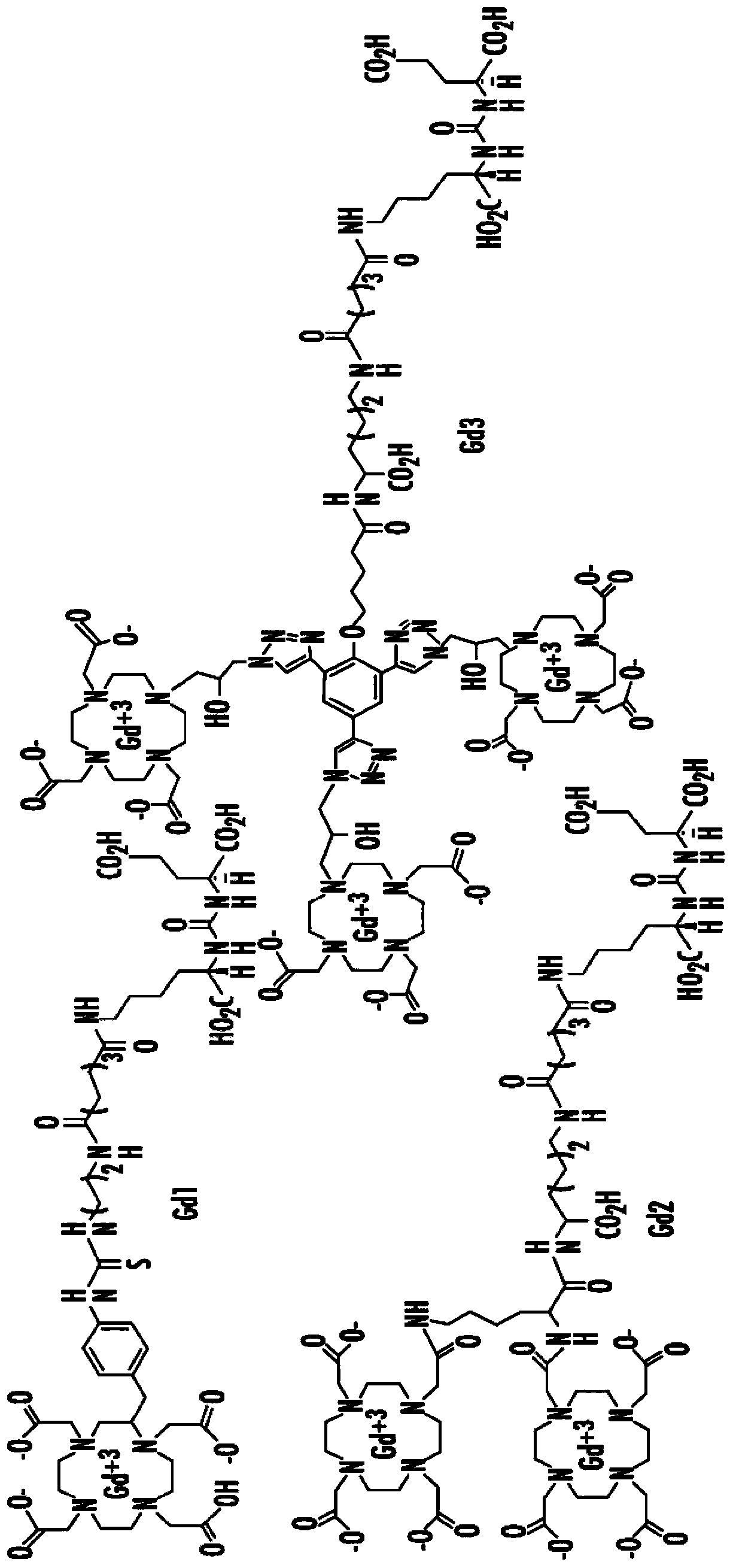
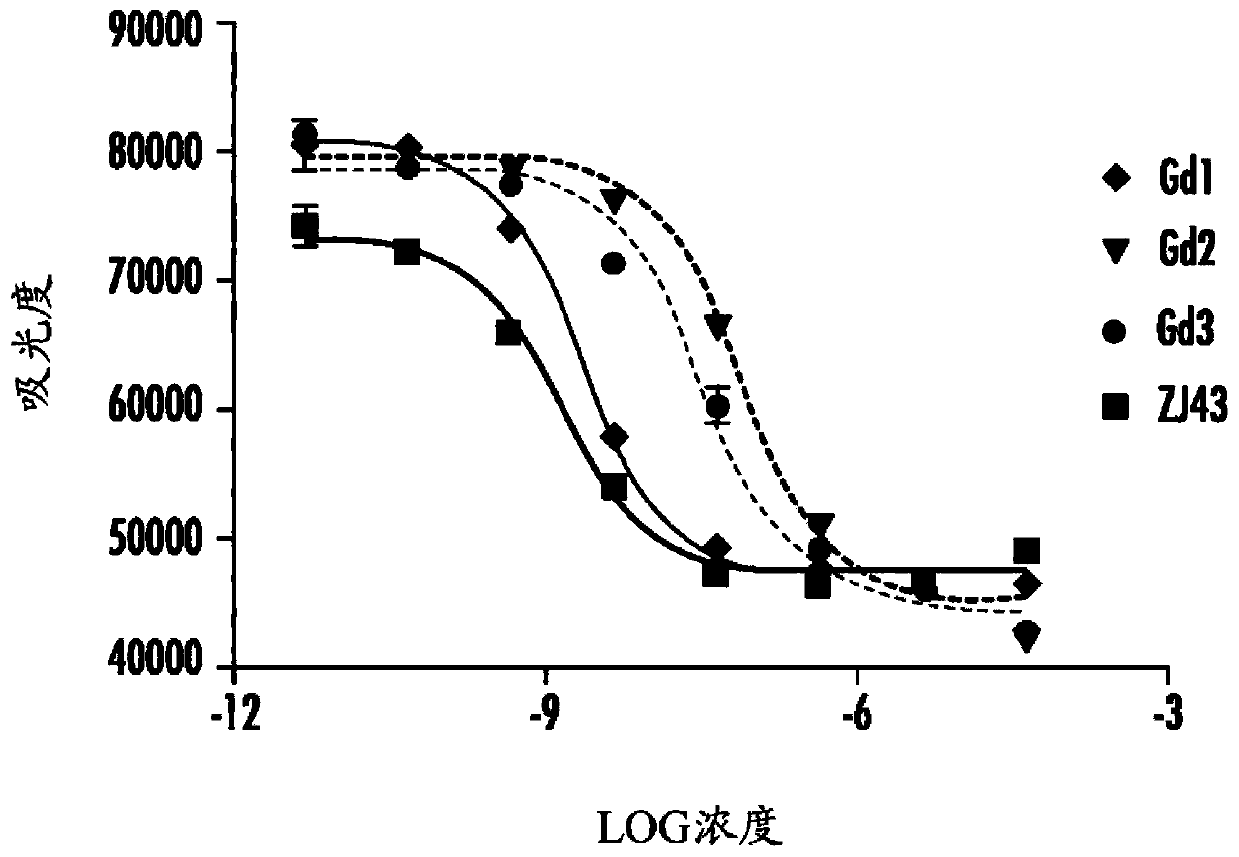
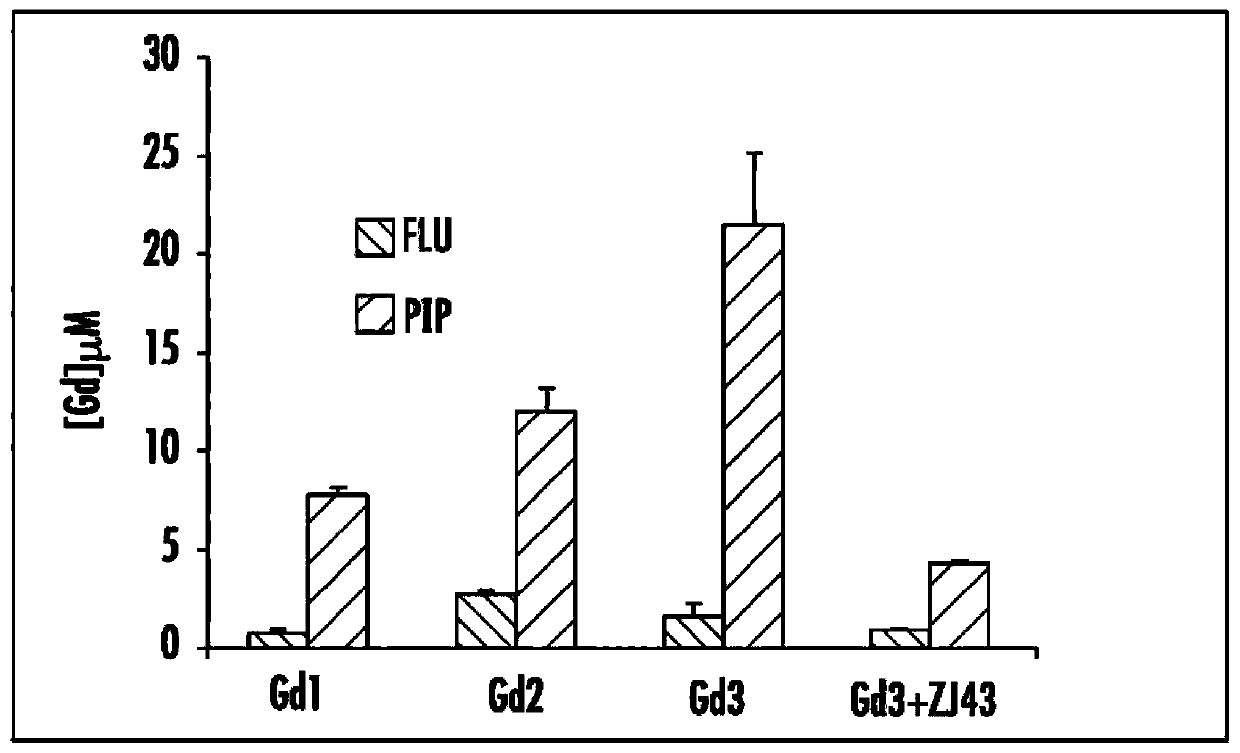
[0314] Magnetic resonance (MR) imaging is advantageous as it can simultaneously provide anatomical, functional and molecular information. MR molecular imaging can combine the ubiquity of this established clinical pattern and its high spatial resolution with in vivo molecular lineage profiling. However, due to the inherently low sensitivity of MR, high local concentrations of biological targets are required to generate discernible MR contrast. Due to the high concentration of prostate-specific membrane antigen (PSMA) in target cells, limited expression in non-target tissues, and accessibility on the cell surface, we hypothesized that prostate-specific membrane antigen (PSMA), for prostate cancer Attractive target for imaging and therapy, may serve as a suitable biomarker for MR-based molecular imaging. For this purpose, three high-affinity, low molecular weight gadolinium(Gd)(III...
Embodiment 2
[0347] Receptor concentration of PSMA
[0348] Number of receptors per cell (N.R.C.) = 4.9 x 10 6 one, r 细胞 =8.75μm
[0349]
[0350]
[0351] Therefore, in order to observe 0.05 seconds -1 change (approximately 10% enhancement, taking into account tissue T 0 1 = 2 seconds), requires relaxivity (if acceptor:contrast 1:1)
[0352]
Embodiment 3
[0354] 86 Preclinical Evaluation of a Y-Labeled Prostate-Specific Membrane Antigen Inhibitor for Dosimetry Estimation
[0355] overview
[0356] 86 Y (half-life=14.74h, 33%β + ) within an emerging class of positron-emitting isotopes with relatively long physical half-lives, enabling extended imaging of biological processes. Three low-molecular-weight 86 Preparation and biodistribution of Y-labeled PSMA-conjugated urea ( Figure 14 ), and the most pharmacokinetically favorable agent in non-human primates was used in the preparation of the corresponding 90 Y-and 177 Dosimetric Imaging of Lu-Labeled Reagents in Clinical Trials.
[0357] in preparation[ 86 Y]-4-6 used a multi-step synthesis. PSMA inhibition constants were assessed by competitive binding assays. In vivo characterization using tumor-bearing male mice up to 24h after injection by [ 86 Y]-4-6 PET / CT and passed [ 86 Y]-4 and [ 86Y]-6 biodistribution studies were performed. Record quantitative whole-bo...
PUM
| Property | Measurement | Unit |
|---|---|---|
| diameter | aaaaa | aaaaa |
Abstract
Description
Claims
Application Information
 Login to View More