
Method for reflecting task progress of message based distributed platform client
A distributed platform and client technology, applied in digital transmission systems, data exchange networks, electrical components, etc., can solve the problem that the client cannot truly reflect the progress of the server, and achieve the effect of improving usability
Patent Information
- Authority / Receiving Office
- CN · China
- Patent Type
- Patents(China)
- Current Assignee / Owner
- Publication Date
- 2007-10-03
- Estimated Expiration
- Not applicable · inactive patent
Smart Images
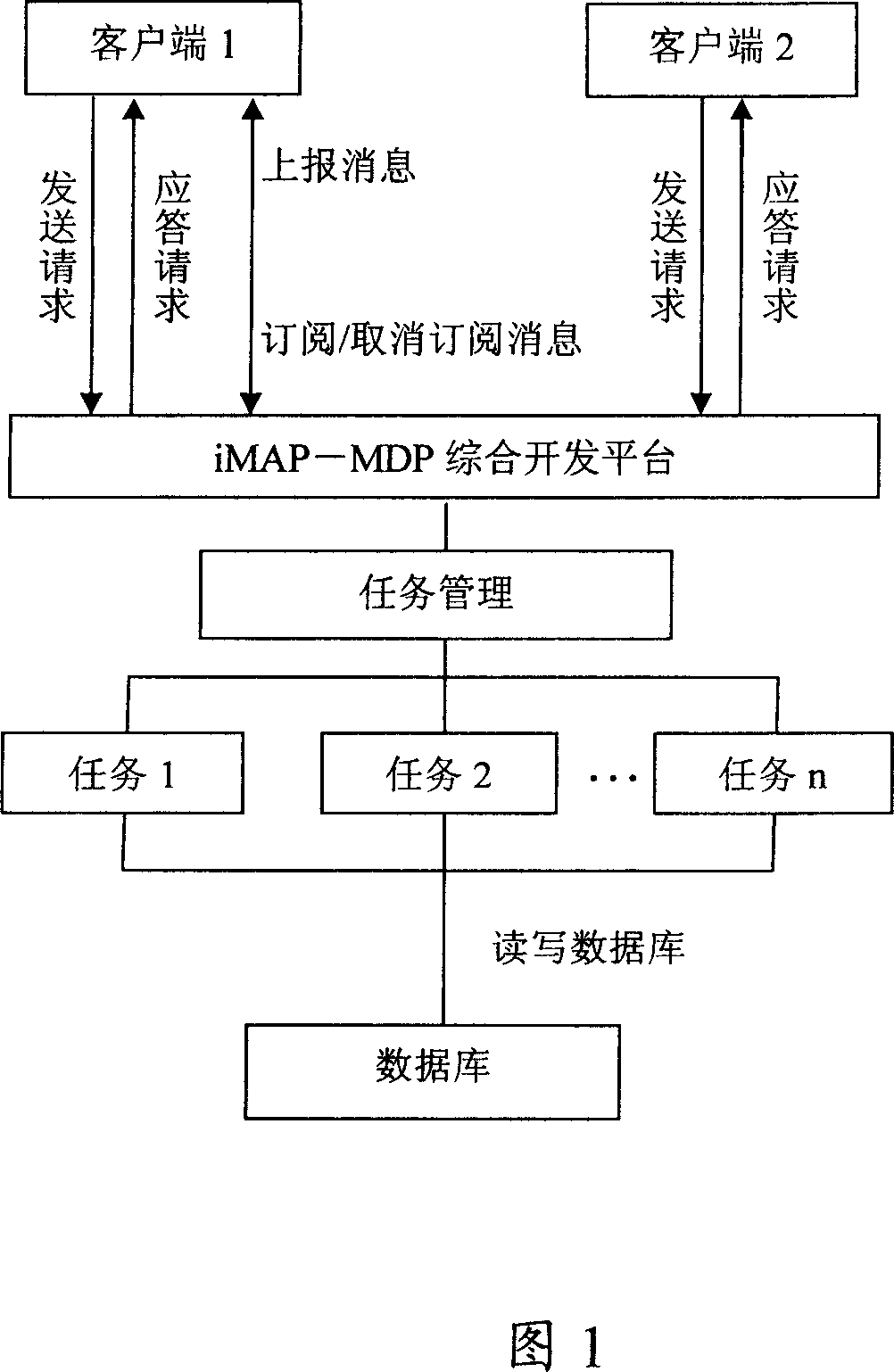
Figure 1 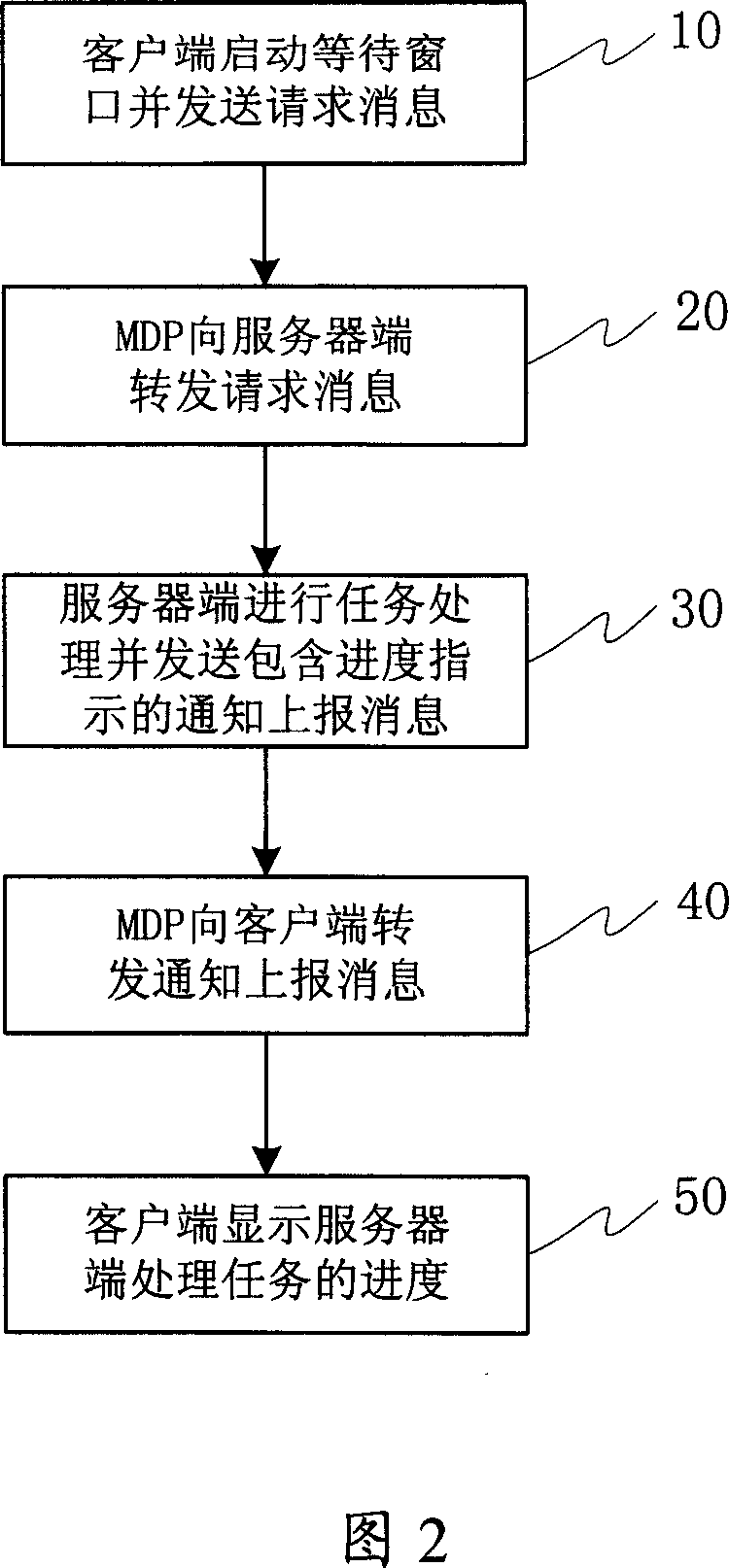
Figure 2 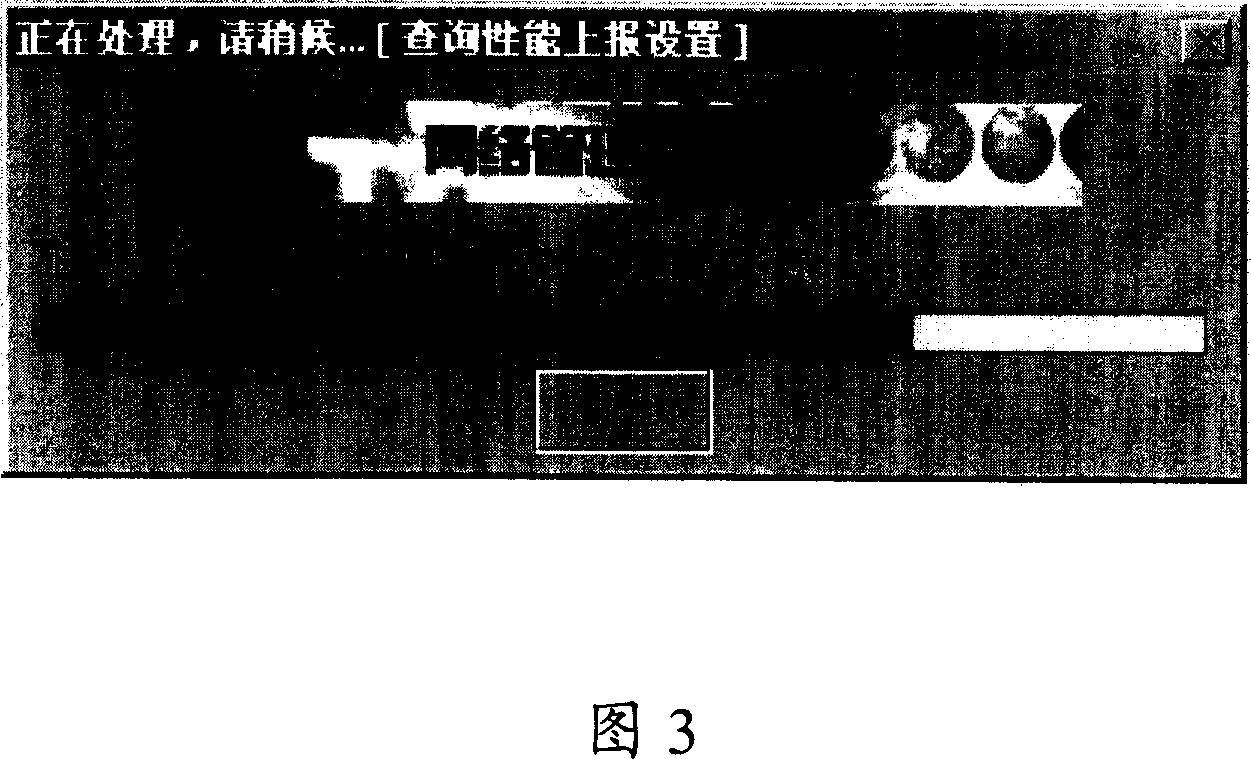
Figure 3
Abstract
Description
technical field
[0001] The invention relates to the message distributed platform technology in the communication system, in particular to the method for the client of the distributed platform to reflect the progress of the server. Background technique
[0002] In the distributed integrated management application development platform (iMAP-MDP), the message-based distributed platform (MDP) is responsible for the message delivery of the whole system. All other application processes in the system establish connections with the platform and exchange information through message passing. Under this structure, no direct connection is established between other application processes in the general system. In the iMAP-MDP platform, a client-server structure that is often adopted is that both the client (or front desk) and the server (or background) are used as an application program in the iMAP-MDP comprehensive platform. Refer to Figure 1.
[0003] There are generally two types of...
Examples
Embodiment Construction
[0026] Referring to Figure 1, in this architecture, the connection between the client (or "foreground") and the server (or "background") is not directly established, but through the functions provided by the MDP (subscribe, cancel Subscription (or de-subscription), request, and response) to realize message delivery, and the front desk can communicate with MDP through two communication interfaces: synchronous request and asynchronous request. If the foreground sends a synchronous request, the message processing module of the foreground is always in the state of waiting for a response, and a server-side task will process the corresponding task, and the foreground will continue to work until the processing is completed and a response message is returned. Therefore, in the prior art, the foreground cannot know the running progress of the server, and thus cannot provide the user with the execution status of the task.
[0027] After the synchronization message is sent in the foregro...