
Production process for refining dichlorohydrin by glycerol reaction distillation
A technology of dichloropropanol and reactive distillation, applied in the field of fine chemical industry, can solve the problems of low conversion rate, difficult scale, large consumption of raw materials and the like
Patent Information
- Authority / Receiving Office
- CN · China
- Patent Type
- Applications(China)
- Current Assignee / Owner
- Publication Date
- 2009-07-15
- Estimated Expiration
- Not applicable · inactive patent
Smart Images
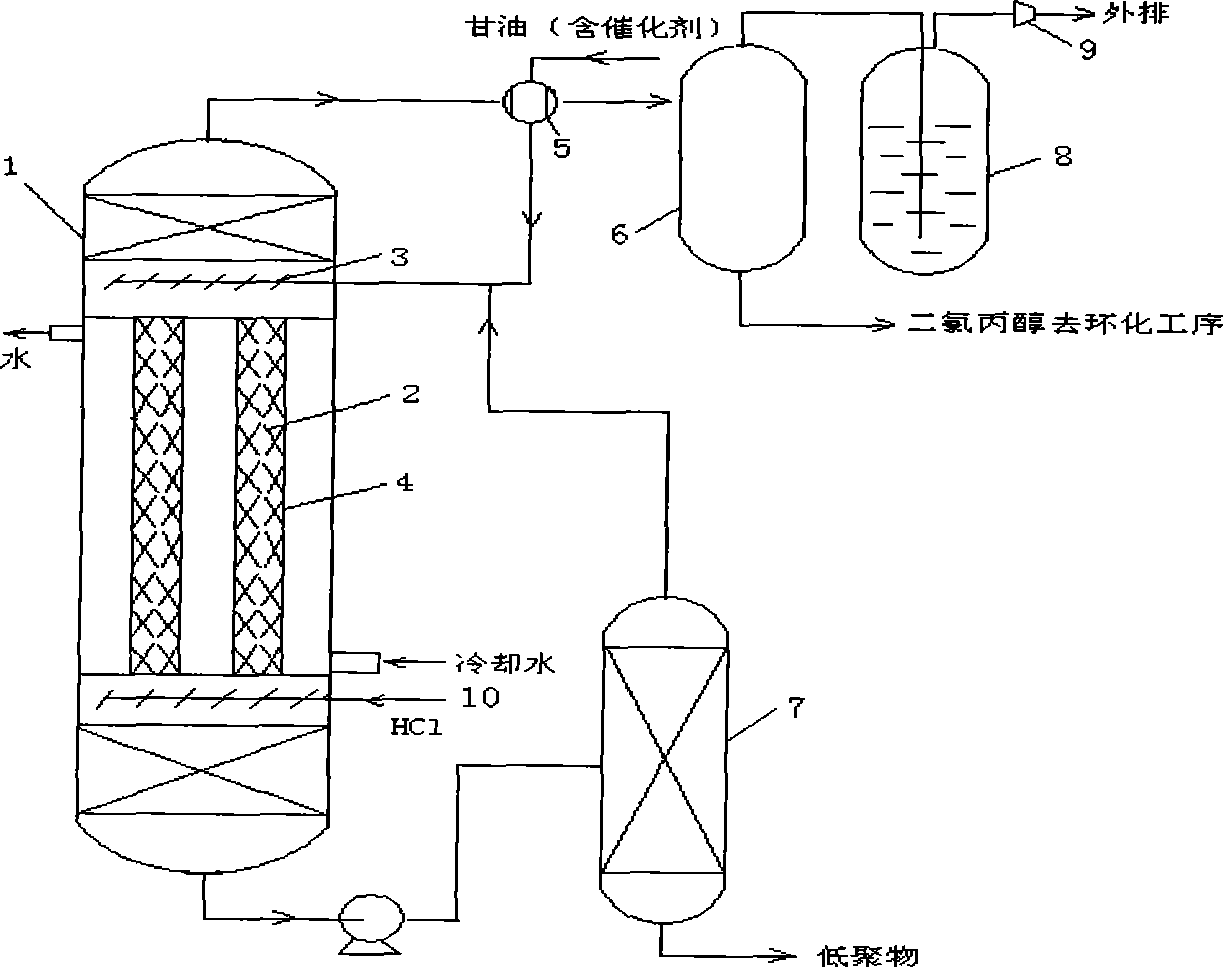
Figure 1 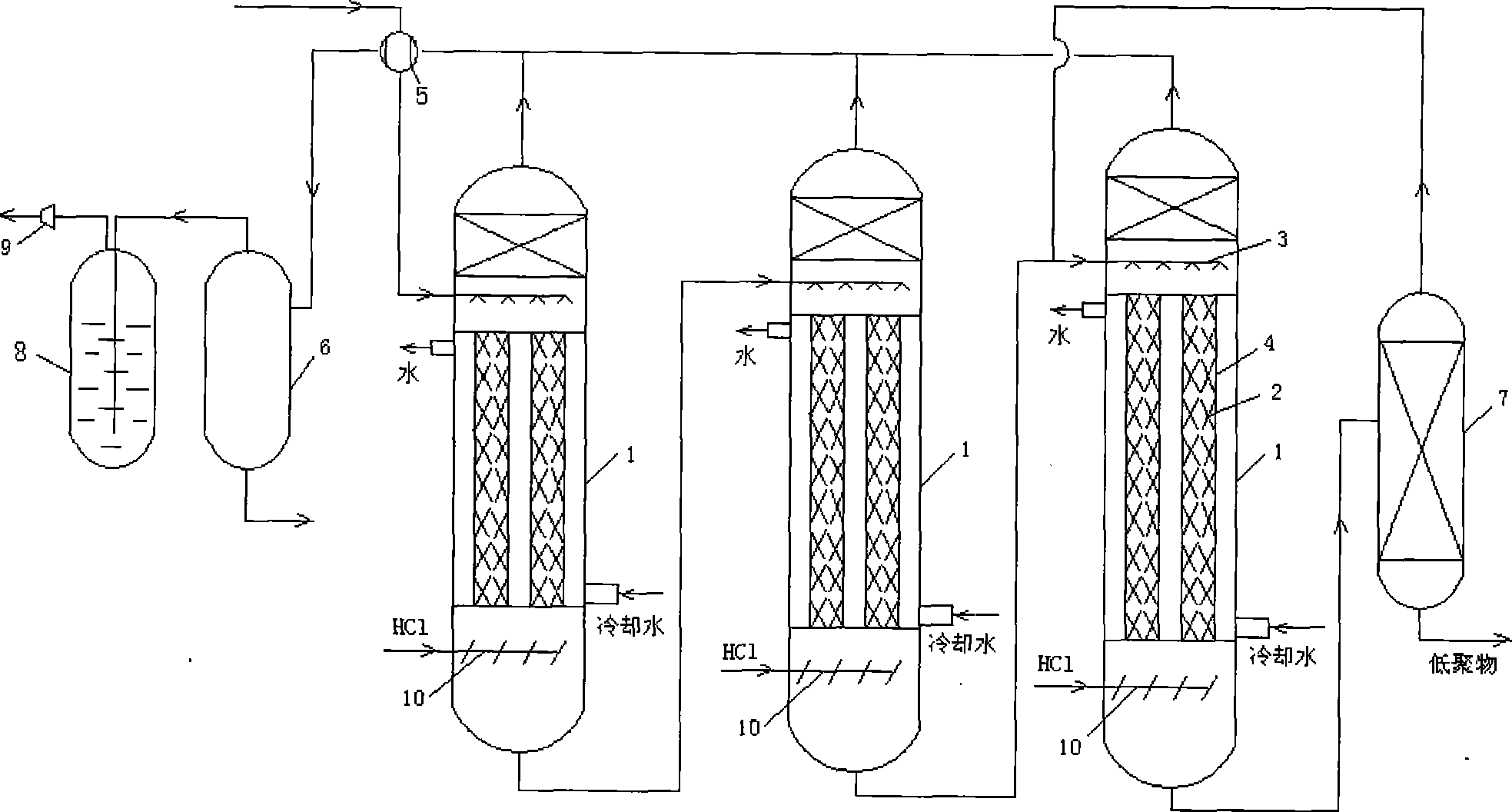
Figure 2
Abstract
Description
1. Technical Field
[0001] The invention provides a production process for preparing dichloropropanol by reactive distillation of glycerin, which belongs to the field of fine chemicals. 2. Background technology
[0002] At present, epichlorohydrin and its precursor dichloropropanol mainly have two production processes: propylene high temperature chlorination method, allyl alcohol method and glycerin chlorination method. The high-temperature chlorination of propylene has been the world’s main production method for epichlorohydrin and its precursor dichloropropanol. The production process is flexible, the process is mature, and the operation is stable, but there are high conversion rates, many by-products, and high energy consumption. Severe equipment corrosion, more waste water and slag, and higher and higher prices of propylene raw materials. The allyl alcohol method has mild reaction conditions, high yield, less by-products, and less sewage, but has many reaction steps, short cat...
Examples
Embodiment 1
[0015] Example 1: After the heat exchange, the raw material glycerin containing the homogeneous catalyst enters from the top of the tubular reaction rectification tower 1, and hydrogen chloride gas enters from the lower part of the packing 2 section of the tubular reaction rectification tower 1 through the gas distributor 10. The raw material glycerin and hydrogen chloride gas coming down from the liquid distributor 3 countercurrently pass through the 2 layers of packing and undergo absorption chlorination reaction rectification at 90~120℃ and 0.001~0.1MPa (absolute pressure); the heat of reaction passes through the cooling water between the tubes 4 Remove and maintain the reaction temperature; the monochloropropanediol, glycerol and glycerol oligomers at the bottom of the tubular reaction rectification tower 1 are sent to the heavy component separation tower 7 to recover the monochloropropanediol and glycerol under reduced pressure and return to the raw glycerin; The product gas ...
Embodiment 2
[0016] Example 2: After heat exchange, the raw material glycerin containing homogeneous catalyst enters from the top of the first-stage tubular reaction rectification tower 1, and hydrogen chloride gas passes through the gas distributor 10 from the lower part of the packing 2 of the tubular reaction rectification tower 1 Enter, the raw material glycerin and hydrogen chloride gas coming down from the liquid distributor 3 countercurrently pass through the 2 layers of packing, and undergo absorption chlorination reaction rectification at 90~120℃ and 0.001~0.1MPa (absolute pressure); the heat of reaction passes through the tube 4 The cooling water is removed and the reaction temperature is maintained; the liquid at the bottom of the first-stage tubular reactive distillation tower 1 is sent to the top of the second-stage tubular reactive distillation tower 1 as feed; The liquid is sent to the top of the three-stage tubular reactive distillation tower 1 as feed; the monochloropropanedio...