

Photoelectricity arc loop pingpong trainer
A loop ball and training device technology, which is applied in the field of sports training equipment, can solve the problem of not pulling the loop ball and achieve the effect of exerting force on time
Patent Information
- Authority / Receiving Office
- CN · China
- Patent Type
- Applications(China)
- Current Assignee / Owner
- Publication Date
- 2010-01-27
- Estimated Expiration
- Not applicable · inactive patent
Smart Images
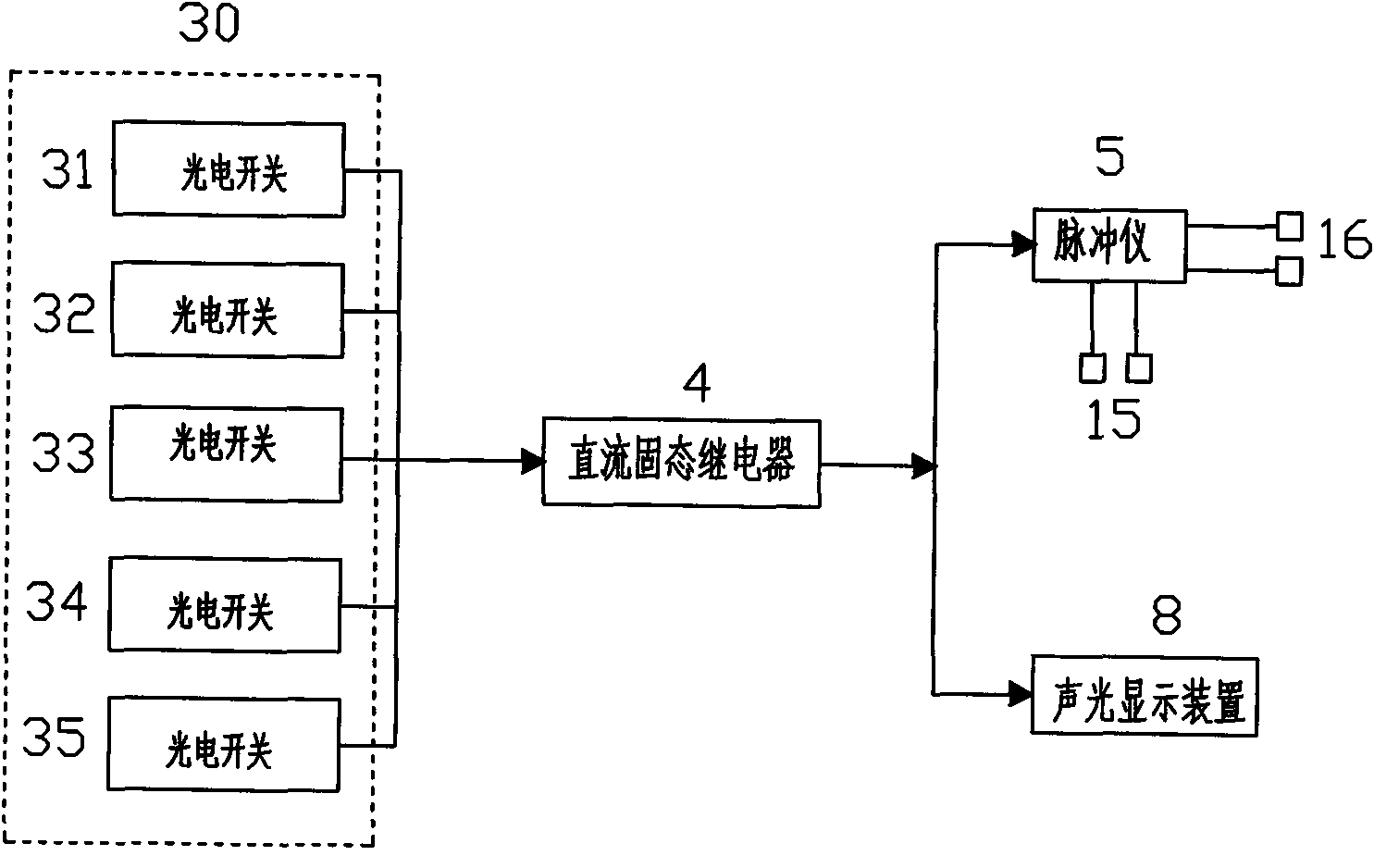
Figure 1 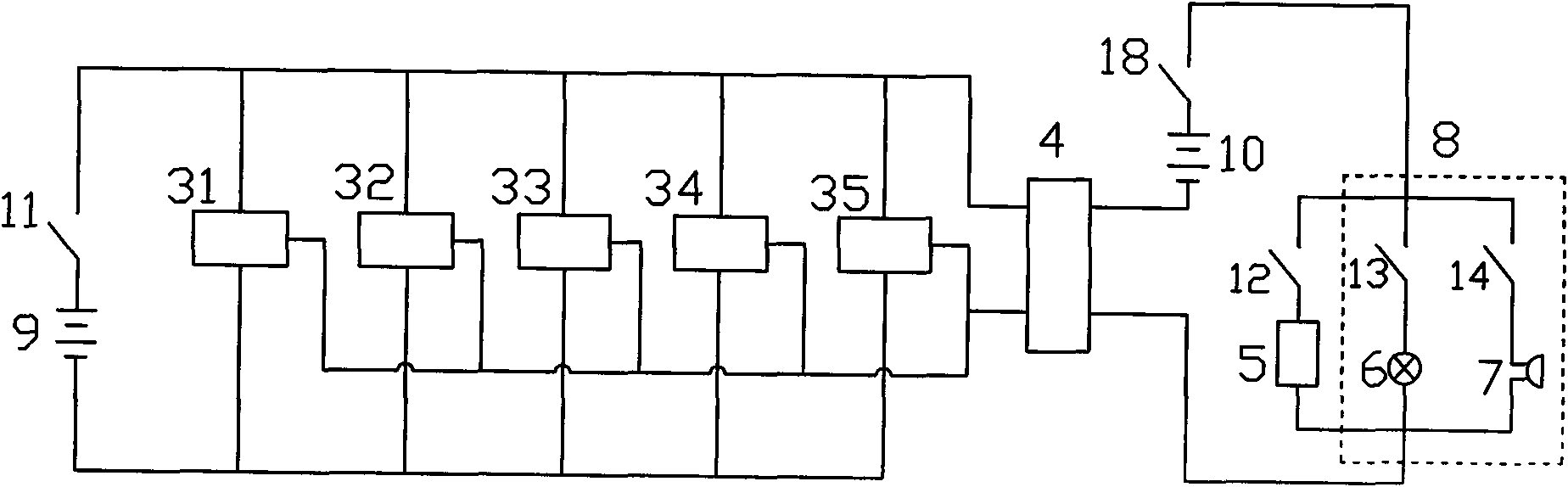
Figure 2 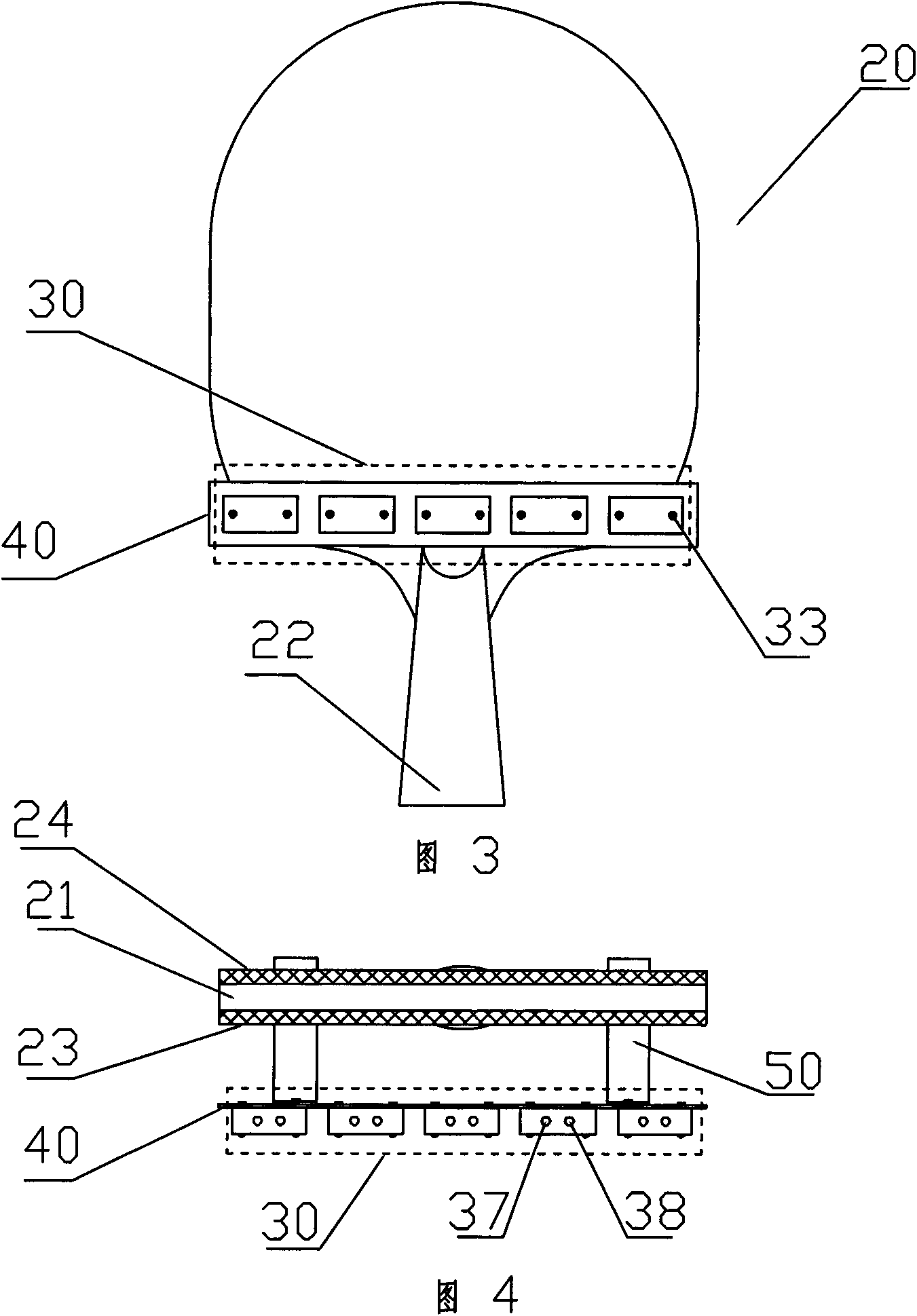
Figure 3
Abstract
Description
Technical field
[0001] The invention relates to sports training equipment, in particular to table tennis auxiliary training equipment. Background technique
[0002] Loop ball is one of the most basic and important techniques in table tennis competitions. It relies on the friction between the table tennis ball and the rubber on the racket surface to cause the table tennis ball to spin forward at high speed. The key to learning the loop ball is to increase the static friction time on the racket after the ping pong ball touches the racket, and implement explosive force by quickly retracting the forearm to make the ping pong ball produce angular acceleration and throw the ball out. But for beginners of arcing, when training arcing, either the static friction time on the racket after the table tennis touches the racket is short, and the arcing ball cannot be formed; or the instantaneous explosive power is insufficient and the rotation acceleration of the table tennis is not high. The...
Examples
Embodiment Construction
[0026] The following is a specific description in conjunction with the drawings and embodiments:
[0027] Such as figure 1 with figure 2 As shown, this embodiment is composed of a photoelectric switch group 30, a direct current solid state relay 4, a pulse meter 5 and two connected sets of electrodes 15 and 16, a set of acousto-optic display devices 8, power supplies 9 and 10. The light display device is a light-emitting diode (or bulb) 6 and a buzzer (or horn) 7. The photoelectric switch 30 in this embodiment is composed of 5 photoelectric switches, which are a photoelectric switch 31, a photoelectric switch 32, a photoelectric switch 33, and a photoelectric switch. 34. Photoelectric switch 35. The five photoelectric switches are connected in parallel. Each photoelectric switch includes a transmitter 37, a receiver 38 and a detection circuit. The photoelectric switch is used to sense the effect of the table tennis on the racket. When the moving table tennis blocks the light emi...