
Method for inducing and acclimating epidermal stem cells into nerve cells
A technology of epidermal stem cells and nerve cells, which is applied in the field of using epidermal stem cells to induce domestication into nerve cells, and can solve the problems of limited application scope of epidermal stem cells.
Patent Information
- Authority / Receiving Office
- CN · China
- Patent Type
- Patents(China)
- Current Assignee / Owner
- Publication Date
- 2013-04-03
- Estimated Expiration
- Not applicable · inactive patent
Smart Images
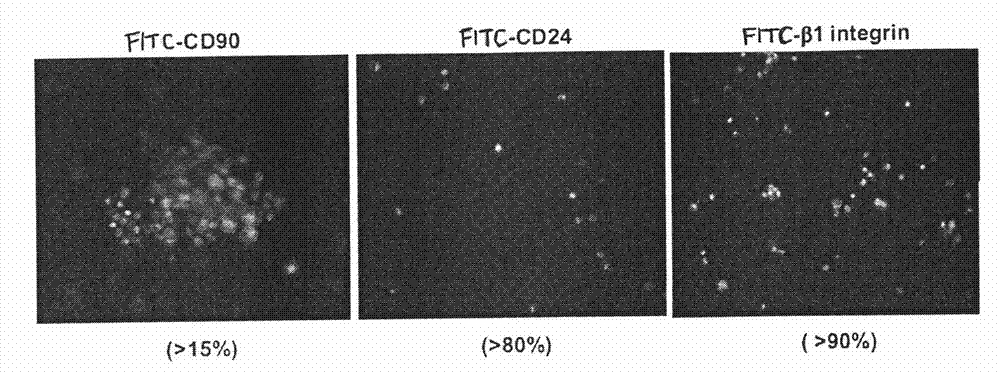
Figure 1 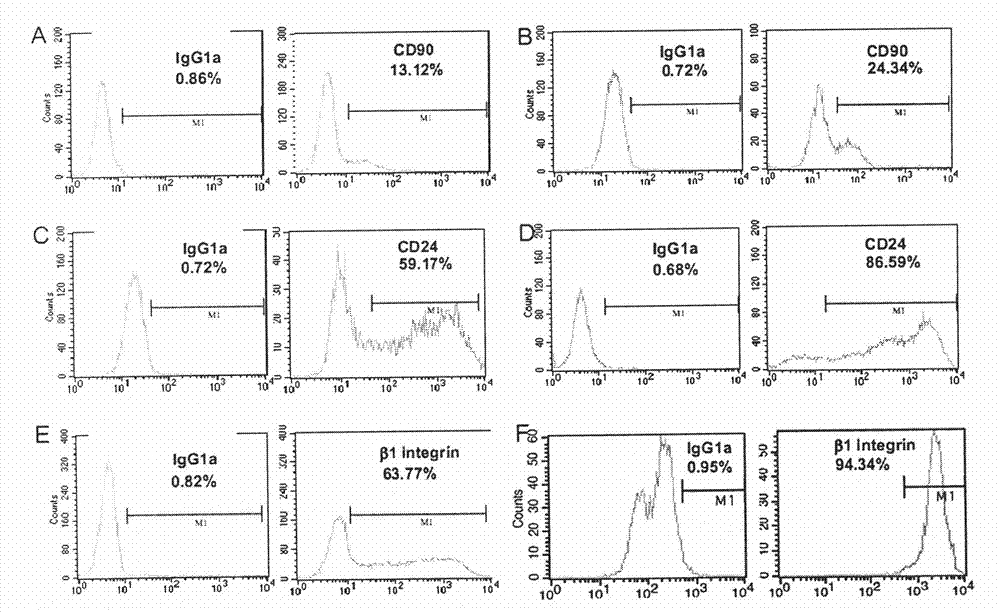
Figure 2 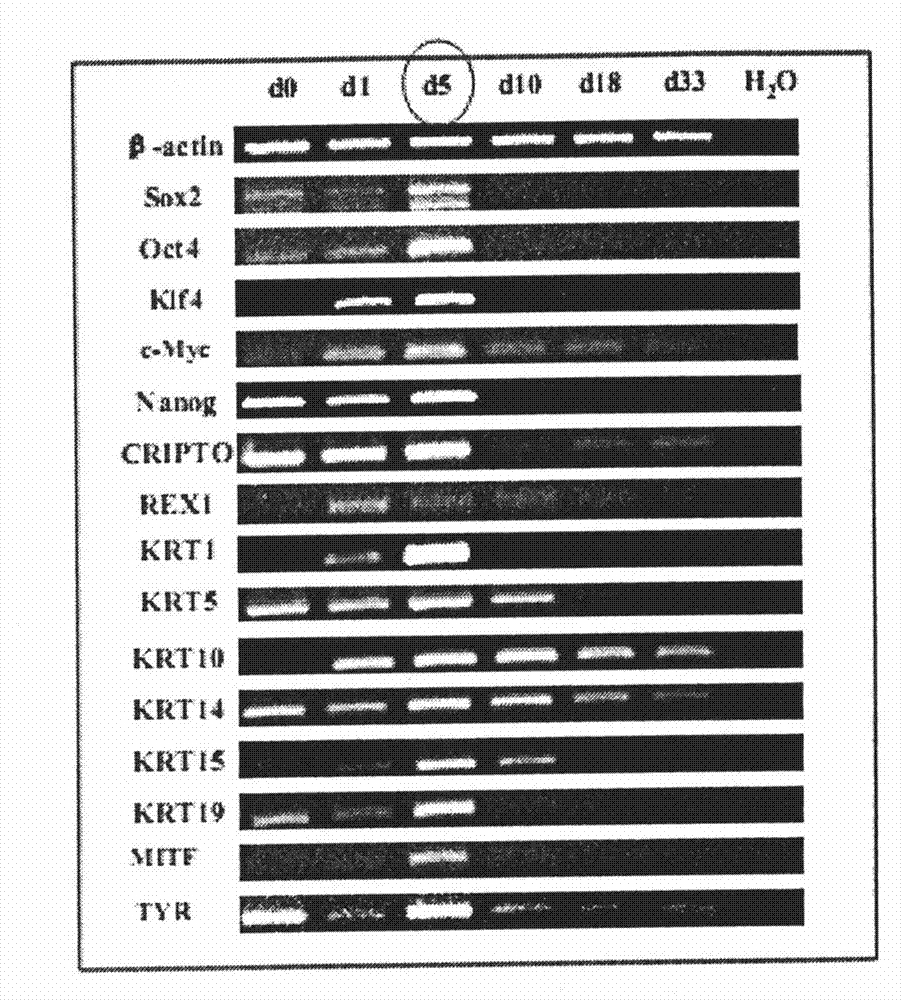
Figure 3
Abstract
Description
Technical field
[0001] The invention relates to a method for inducing cells, specifically a method for directional induction and domestication of epidermal stem cells into nerve cells. Background technique
[0002] Human research on epidermal stem cells has a history of decades, but because of their difficulty in inducing differentiation, they have been considered unipotent stem cells, that is, they can only differentiate into relevant components of the epidermis. Regenerative medicine is very popular in the field of medicine. The research of stem cells has occupied an important low position in the field of regenerative medicine. Because of their multi-differentiation potential, stem cells can differentiate into various tissues and organs under specific conditions, which has attracted the attention of scientists. . Embryonic stem cells are totipotent stem cells that can differentiate into all tissues and organs except the placenta. However, since the research of embryonic stem ...
Examples
Embodiment 1
[0035] Example 1 Preparation of epidermal stem cells before induction and domestication
[0036] 1. Preparation of epidermal stem cells:
[0037] Direct source and original source: With the consent of the patient, it was taken from a healthy circumcision patient in the 301 Hospital Surgical Clinic.
[0038] (1) Take fresh adult foreskin (isolated for about 1 to 4 hours, stored at 4°C);
[0039] (2) Soak the foreskin in a dilute iodophor solution (containing 20% iodophor) for 1 min;
[0040] (3) PBS / physiological saline rinse 3 times to wash away blood clots (to prevent affecting enzyme digestion);
[0041] (4) Trim the foreskin, remove the fat tissue, and then rinse with PBS / saline several times, and finally cut into 1cm 2 The left and right organizational blocks;
[0042] (5) Put the tissue block in a 6cm dish containing a solution of neutral protease (3mg / ml; D-hanks as solvent) and treat it at 4°C for 14-16h. If the treatment is not enough, place it in a 37°C incubator (or directly ...
Embodiment 2
[0118] Example 2 Directed induction and domestication of epidermal stem cells into nerve cells
[0119] 1. Medium composition
[0120] (1) One component and dosage of nerve induction medium are:
[0121] DMEM / F12 (Invitrogen, cat.no.11330-32); 2% FBS (Gibco, cat.no.10437010) 45ng / ml b-FGF (Invitrogen, cat.no.13256-029); 20ng / ml EGF( invitrogen, cat.no.); 0.5mM retinoic acid(RA)(sigmaR2625); 0.5mM valproic acid(Sigma, cat.no.T8552); 2000U / ml leukemiainhibitory factor(Chemicon, cat.lif1010); 100mM sodium pyruvate( sigma, cat.no.P2256); 0.5mM β-mercaptoethanol(sigma cat.no.m7522);
[0122] (2) The two components and dosage of nerve induction medium are:
[0123] DMEM / F12 (Invitrogen, cat.no.11330-32) 2% FBS (Gibco, cat.no.10437010); 20ng / ml b-FGF (Invitrogen, cat.no.13256-029); 20ng / ml EGF( invitrogen, cat. no.); 0.5 uM RA (sigma R2625); 1×B27 (invitrogen Cat. No. 17504); 100 ug / ml butylated hydroxyanisole (sigma, cat. no. B1253).
[0124] (3) The components and dosage of dry maintenance...
Embodiment 3
[0129] Example 3 Identification and result analysis of target cells
[0130] 1. Immunofluorescence identification of induced differentiation results
[0131] 1. Identification method: In the experimental verification of induced nerve cells, the immunofluorescence detection of neural cell marker (a-SMA) identification method is as follows:
[0132] (1) Take three weeks after induction and epidermal stem cells as controls, and wash the cells twice with PBS.
[0133] (2) Add 1ml of Tribule lysis solution pre-cooled at 4℃ to each six-well plate, and see that the cells are all lysed, about 5 minutes
[0134] (3) Use a ribozyme-free gun tip to aspirate the cell lysate into a 1.5ml centrifuge tube
[0135] (4) Add 200ul of chloroform, shake vigorously up and down four to five times to mix well
[0136] (5) 12000rpm, 5min 4℃. The liquid is divided into three layers, suck the upper transparent liquid layer into a new 1.5ml centrifuge tube
[0137] (6) Add an equal volume of isopropanol, mix upside ...