
Porous bracket material used for biomedicine and preparation method of porous bracket material
A porous scaffold and biomedical technology, applied in the field of biomedical material science and engineering, can solve the problems of poor hydrophilicity, unfavorable cell adhesion and growth, etc., and achieve low price, controllable pore size and distribution, and good biocompatibility Effect
Patent Information
- Authority / Receiving Office
- CN · China
- Current Assignee / Owner
- Publication Date
- 2012-05-30
- Estimated Expiration
- Not applicable · inactive patent
Smart Images
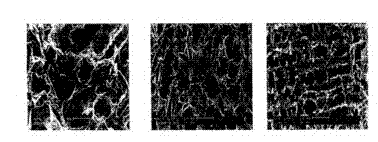
Figure 1 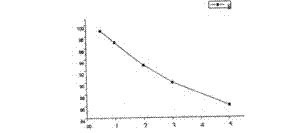
Figure 2 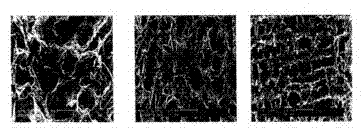
Figure 3
Abstract
Description
technical field
[0001] The invention belongs to the field of biomedical material science and engineering, and in particular relates to a biomedical porous scaffold material and a preparation method thereof. Background technique
[0002] Tissue engineering is an emerging discipline that uses the basic principles of engineering science and life science to research and develop biological substitutes to restore, maintain and improve tissue functions. The basic idea is: separate and cultivate cells in vitro, plant a certain amount of cells into a three-dimensional biomaterial skeleton with a certain shape, and continue to cultivate them, and finally form tissues and organs with a certain structure and implant them back into the body to achieve repair or repair. purpose of reconstruction. Polyhydroxybutyrate (PHB) is a high molecular polymer stored in the cells of microorganisms under unbalanced growth conditions, and is widely found in many prokaryotes in nature. PI-IB has many...
Examples
Embodiment Construction
[0015] 1. Get the polyhydroxybutyrate 4g that molecular weight is 4 * 105 and the polyethylene glycol 0.4g that molecular weight is 6000,
[0016] 2. Put into 80ml of chloroform, stir at 40°C for 2 hours, transfer the solution to a 100ml volumetric flask after complete dissolution, add chloroform solution to obtain 100ml polyhydroxybutyrate / polyethylene glycol chloroform solution (A): take SPAN60 0.12 g was dissolved in 60ml of deionized water at 70°C to obtain a stable template emulsion (B); take 20ml of the solution (A) and 0.5ml of the solution (B) and mix them together, and stir at 700 rpm for 3 hours until the solution is uniformly mixed and stable Afterwards, transfer to a 60mm glass petri dish, and place it in a -80°C low-temperature refrigerator for pre-freezing for 24 hours; control the temperature in the drying room of the freeze dryer to -50°C, and move the petri dish containing the pre-frozen body into the drying room; after the temperature balance Seal t...