
Dynamic power coordination control method for battery energy storage system
A battery energy storage system and dynamic power technology, applied in flexible AC transmission systems, AC network load balancing, etc., can solve the problems of reduced system reliability and short fault recovery time, and achieve short fault recovery time and anti-load disturbance capability. strong effect
Patent Information
- Authority / Receiving Office
- CN · China
- Current Assignee / Owner
- Publication Date
- 2012-07-11
- Estimated Expiration
- Not applicable · inactive patent
Smart Images
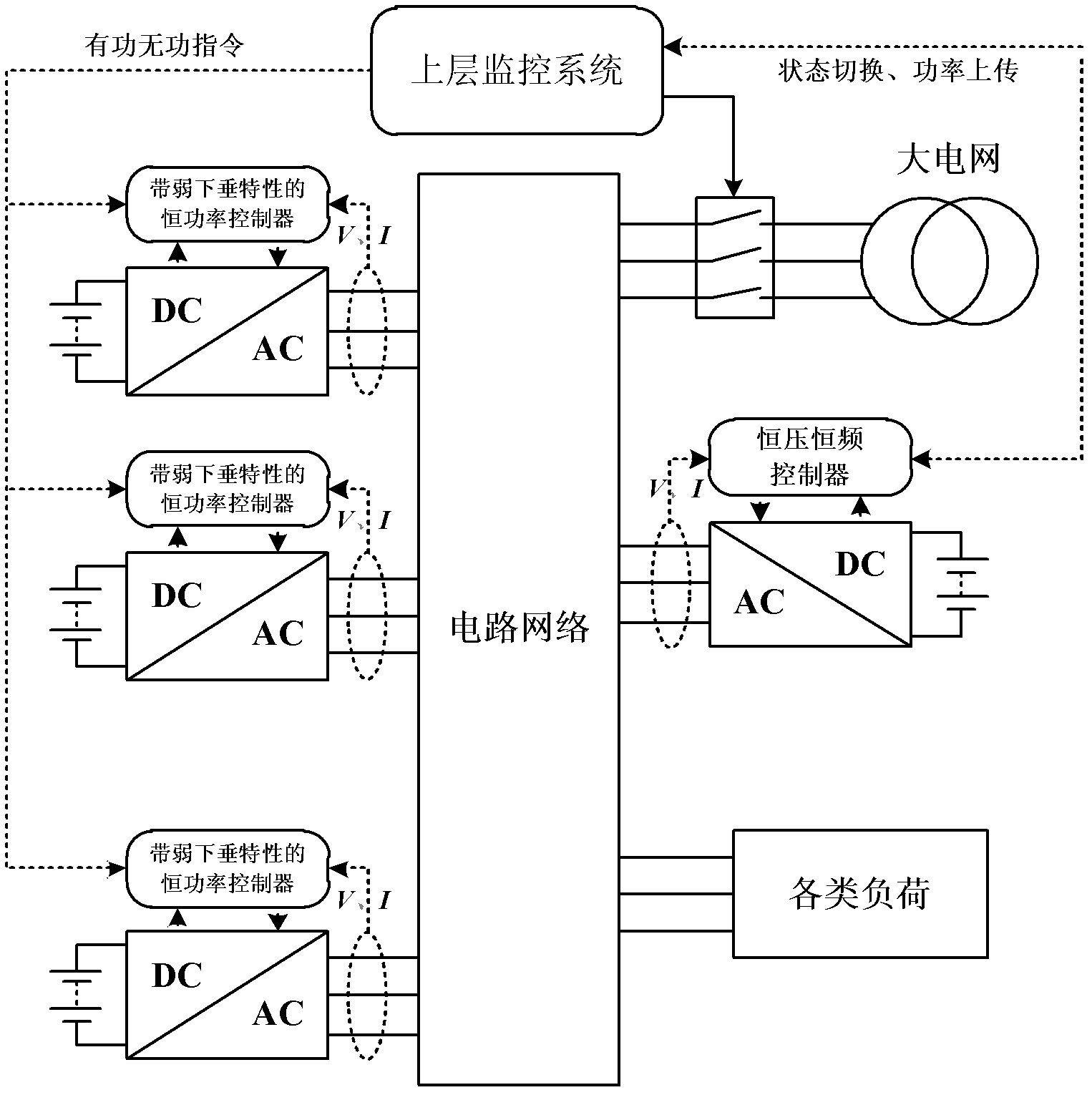
Figure 1 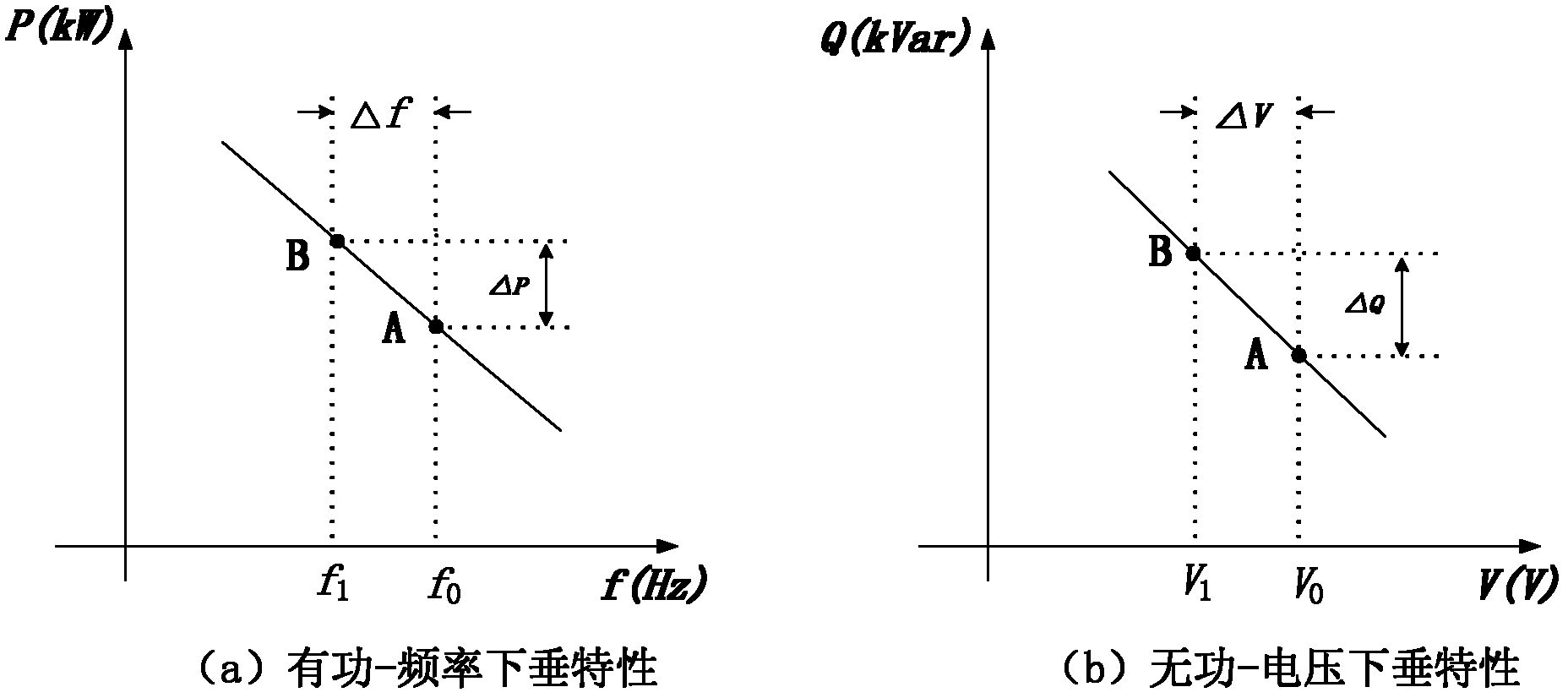
Figure 2 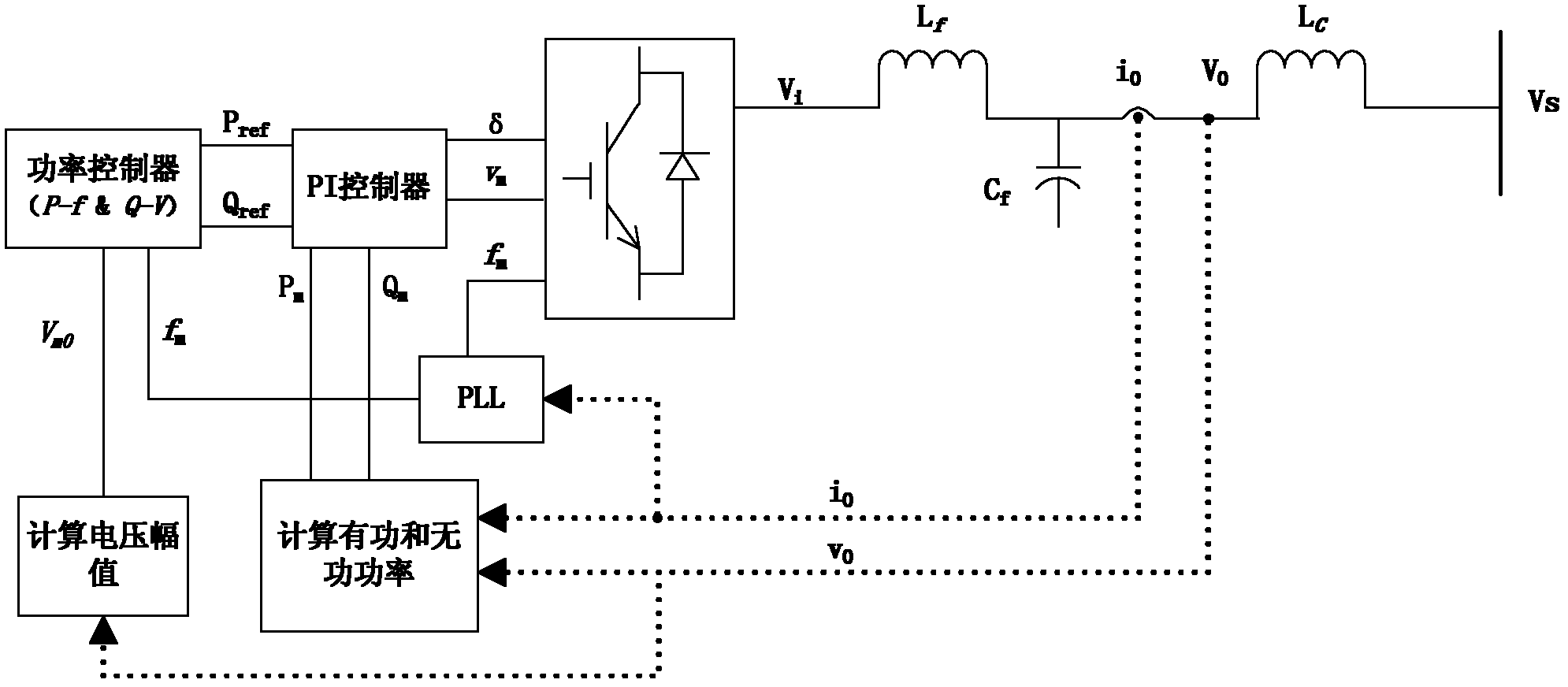
Figure 3
Abstract
Description
technical field
[0001] The invention relates to a dynamic power coordination control method of a battery energy storage system, in particular to a dynamic power coordination control method of a battery energy storage system containing multiple power converters (PCS), belonging to the dynamic power coordination control method of a battery energy storage system Modification technology of control method. Background technique
[0002] A major feature of the battery energy storage system (BESS) is that it can continue to provide emergency power supply for specific important loads when an abnormality occurs in the large power grid, forming an isolated microgrid, referred to as a microgrid. The state in which the battery energy storage system operates independently with a specific load is the island operation state. Since the battery energy storage system has two operating modes of grid-connected and islanded, the battery energy storage system usually operates in three working sta...
Examples
Embodiment
[0024] The structure diagram of the present invention is as figure 1 , 2 , 3, and 4, the technical solution of the present invention is: in a microgrid containing a large-scale energy storage system, multiple PCSs operate in parallel to supply power to the load, as attached figure 1 As shown in , using the master-slave control scheme, the PCSs running in parallel are divided into two types, one type adopts the constant voltage and constant frequency control mode, called the master node; the other type adopts the constant power mode with weak droop characteristics , become a slave node. Among them, there is only one master node, which is designated by the upper-level monitoring system. Generally, a PCS with a larger capacity is selected to act, and the rest of the PCS are slave nodes. In the steady state, the active and reactive power output by the slave node PCS is set by the power command issued by the monitoring system, and the output power of the master node PCS is dynami...