
Wave-absorbing metamaterial
A metamaterial and sheet-layer technology, applied in the field of microwave-absorbing metamaterials, can solve the problems that are difficult to meet the needs of practical applications, limit the application range of microwave-absorbing metamaterials, and achieve good microwave-absorbing effects
Patent Information
- Authority / Receiving Office
- CN · China
- Current Assignee / Owner
- Publication Date
- 2013-05-08
Smart Images
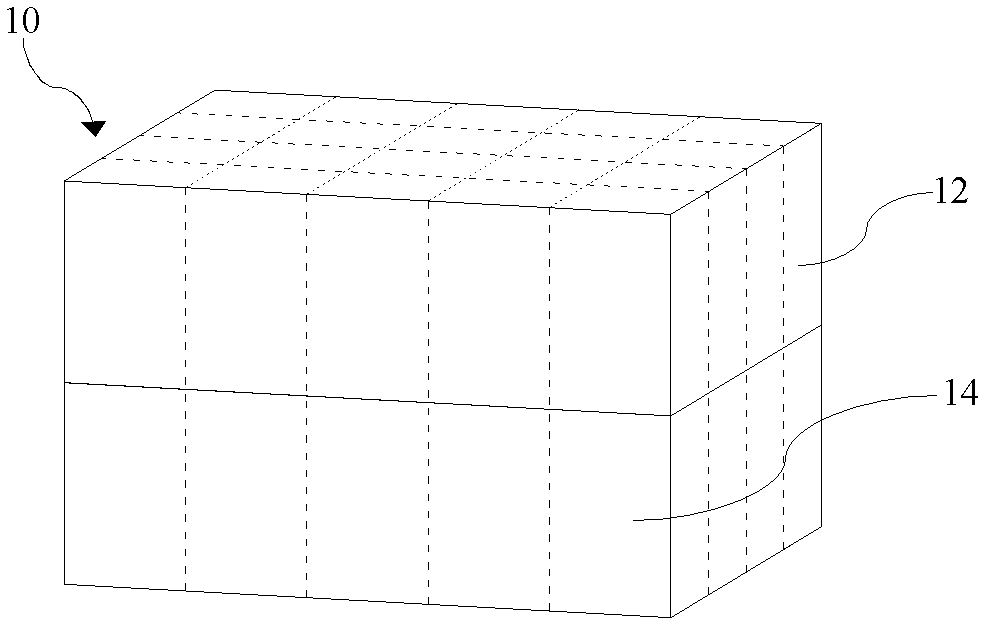
Figure 1 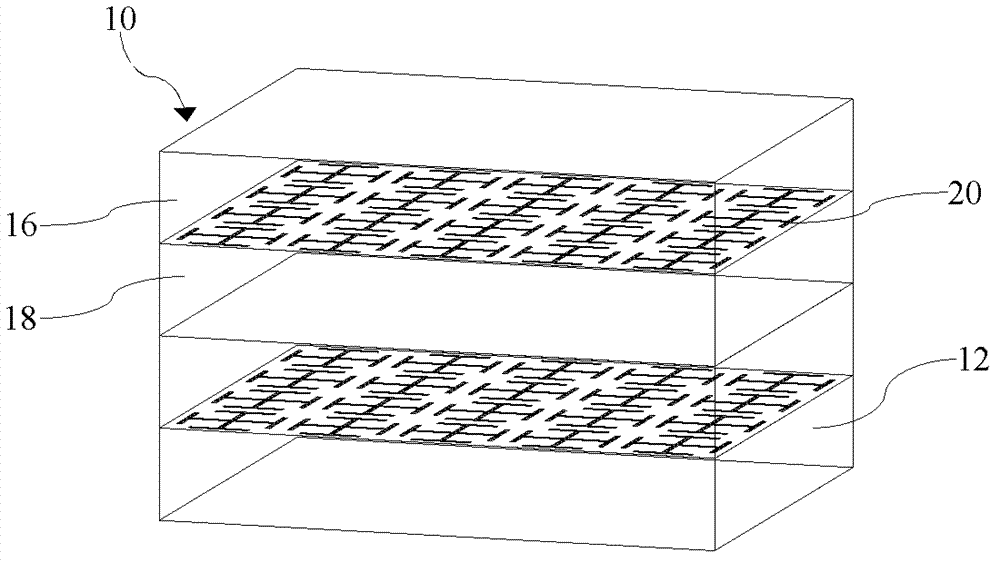
Figure 2 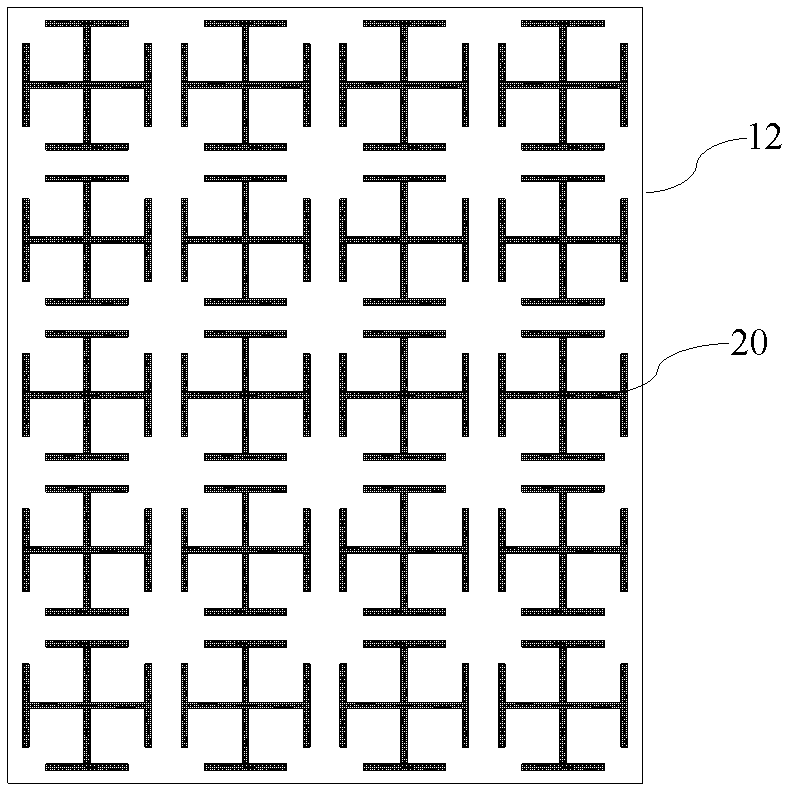
Figure 3
Abstract
Description
technical field
[0001] The invention relates to the field of electromagnetic communication, and more specifically, to a wave-absorbing metamaterial. Background technique
[0002] With the rapid development of electronic technology, the application of electromagnetic waves has become more and more extensive, which has brought many conveniences to people's lives, but at the same time, electromagnetic radiation is also increasing, and the problem of electromagnetic pollution has attracted more and more attention. Therefore, the development of wave-absorbing materials that can resist and weaken electromagnetic radiation has become a major topic in material science, and from another aspect, wave-absorbing materials are also a kind of electromagnetic stealth materials, which are widely used in many fields including military affairs. demand.
[0003] The working principle of the wave-absorbing material is to let the electromagnetic wave projected onto its surface propagate accordi...
Examples
Embodiment Construction
[0024] In order to overcome the deficiencies of the prior art, the present invention uses a mirror image layer identical to the metamaterial sheet to replace the metal coating on the outermost metamaterial sheet, and provides a new wave-absorbing metamaterial. For details, please refer to figure 1 , the absorbing metamaterial 10 includes at least two metamaterial sheets 12 stacked together along a direction perpendicular to the sheet surface. figure 1 Shown in is the situation where two metamaterial sheets 12 are directly attached to each other on the front and rear surfaces. In practice, the number of the metamaterial sheets 12 can be increased or decreased according to requirements. Each metamaterial The sheets 12 can also be arranged and assembled together at equal intervals. Generally, we artificially divide each metamaterial sheet 12 into several metamaterial units 14, and allow the size of each metamaterial unit 14 to be less than one-fifth, preferably one-tenth, of the...