
Solar cell panel dust removal device based on RF wireless transmission control
A technology of solar panels and dust removal devices, applied in photovoltaic power generation, electrical components, cleaning with electrostatic methods, etc., can solve the problems of unusable, complex structure, high energy consumption and high cost, and achieve avoiding distance restrictions, flexible adjustment, and control convenient effect
Patent Information
- Authority / Receiving Office
- CN · China
- Patent Type
- Applications(China)
- Current Assignee / Owner
- Publication Date
- 2014-09-03
- Estimated Expiration
- Not applicable · inactive patent
Smart Images
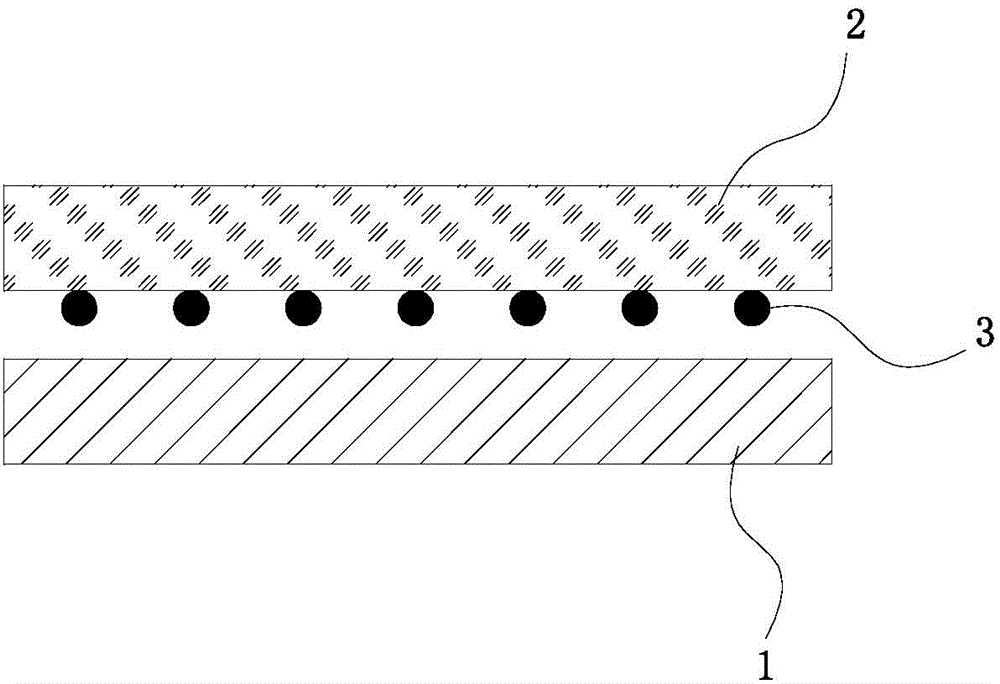
Figure 1 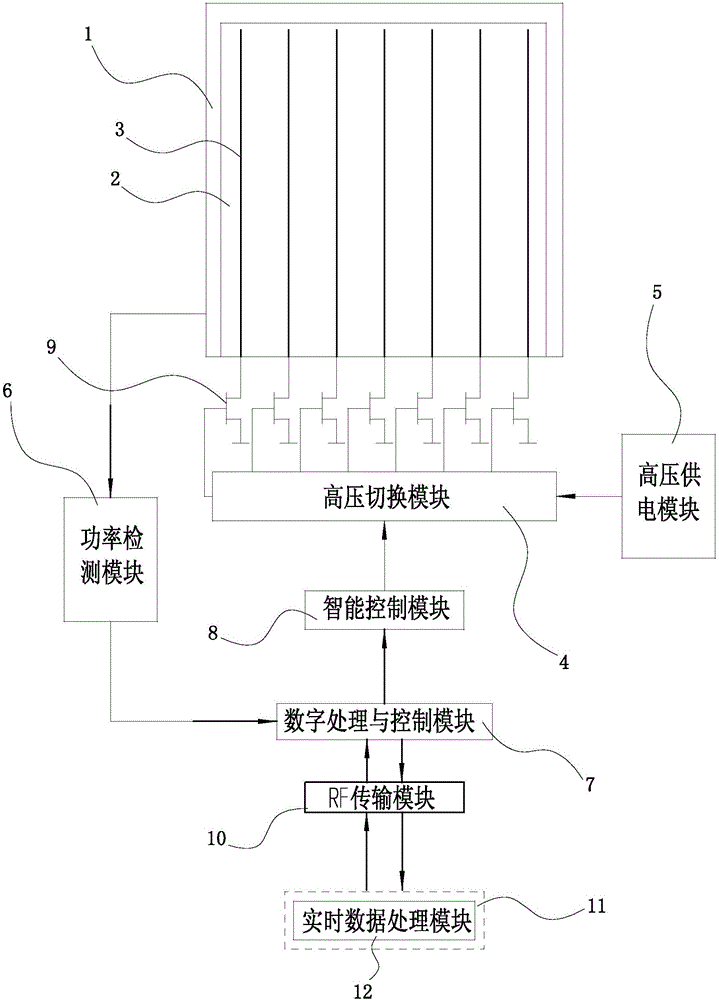
Figure 2
Abstract
Description
technical field
[0001] The invention relates to a solar battery panel, in particular to a dust removal device for a solar battery panel. Background technique
[0002] The glass plate on the surface of the solar panel is often prone to dust accumulation, which will lead to a sharp drop in the power generation efficiency of the solar panel and seriously affect the power generation efficiency of the solar power station. At present, the dust removal methods on the surface of solar panels mainly rely on several methods such as wind dust removal, ultrasonic dust removal, and scraper dust removal. The main disadvantages of the above dust removal methods are: the reliability of wind dust removal and scraper dust removal is not high. It is short and cannot be used in harsh environments; the disadvantages of ultrasonic dust removal are high cost and poor usability.
[0003] The electromagnetic plane dust removal device that has appeared so far uses a dust detection sensor and a pair ...
Examples
Embodiment Construction
[0011] The specific implementation manner of the present invention will be described below in conjunction with the accompanying drawings.
[0012] See figure 1 and figure 2 , the present invention includes a solar cell panel 1 and a glass protective layer 2, the lower surface of the glass protective layer 2 is equipped with a plurality of parallel electrodes 3, the ends of the electrodes 3 are respectively connected to a high-voltage switch 9, and the high-voltage switch 9 is electrically connected to a high-voltage switching module 4 , the high-voltage switching module 4 is powered by the high-voltage power supply module 5, and the high-voltage switching module 4 alternately applies high voltage to the electrodes 3, and a fluctuating electrostatic field is generated between the electrodes 3, and the dust on the glass protective layer 2 floats after being polarized by the electrostatic field and Fluctuation falls off; the output end of the solar panel 1 is connected with a p...