
Analysis method of corrosion action and corrosion effect of carbonate rock
A carbonate rock and carbonate technology, applied in the direction of material analysis using radiation, material analysis using measurement of secondary emissions, permeability/surface area analysis, etc., can solve the problem of quantitative analysis of carbonate rock dissolution Pore connectivity properties, single analysis content, little consideration of rock sample evolution, etc.
Patent Information
- Authority / Receiving Office
- CN · China
- Patent Type
- Applications(China)
- Current Assignee / Owner
- Publication Date
- 2015-03-11
Smart Images
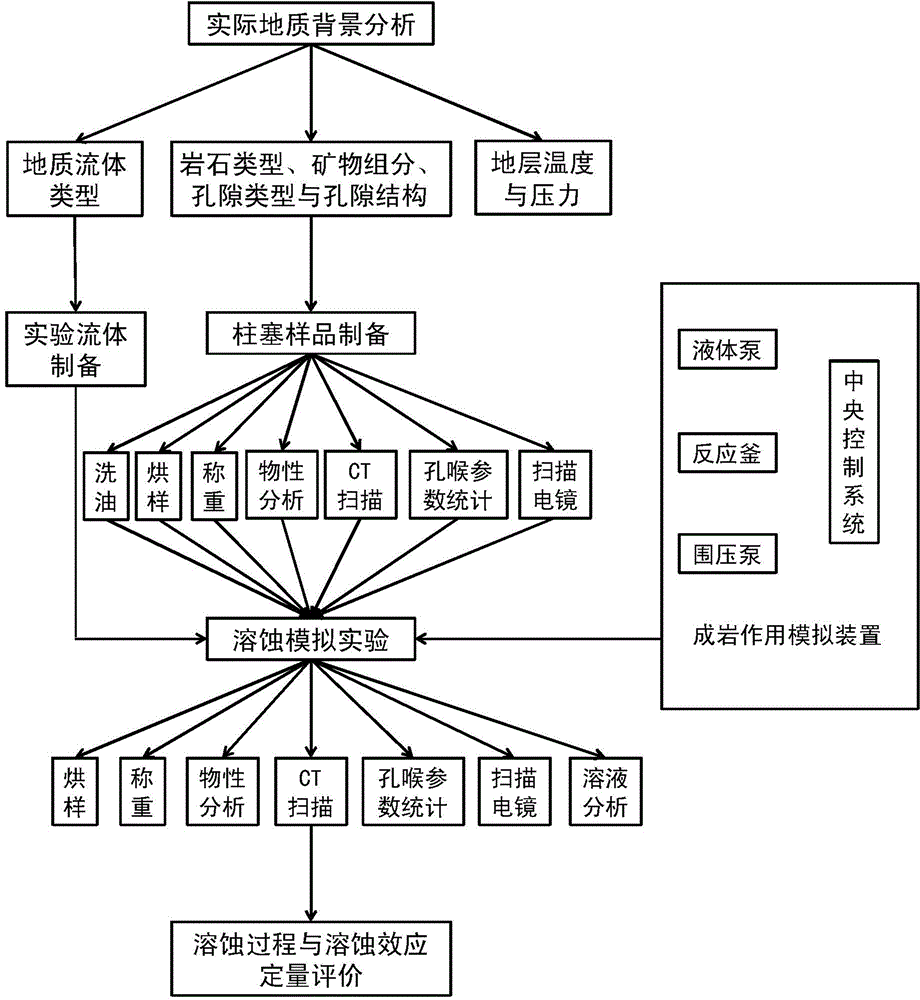
Figure 1 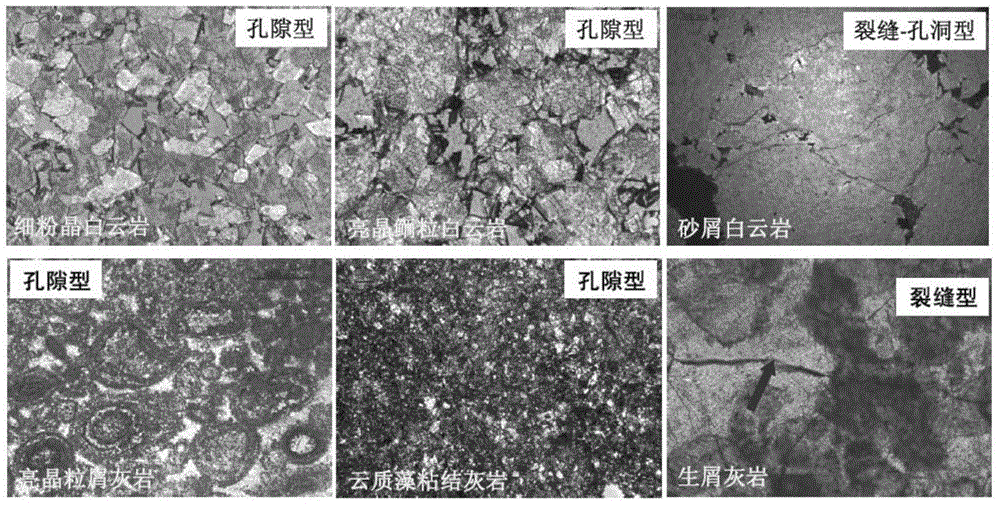
Figure 2 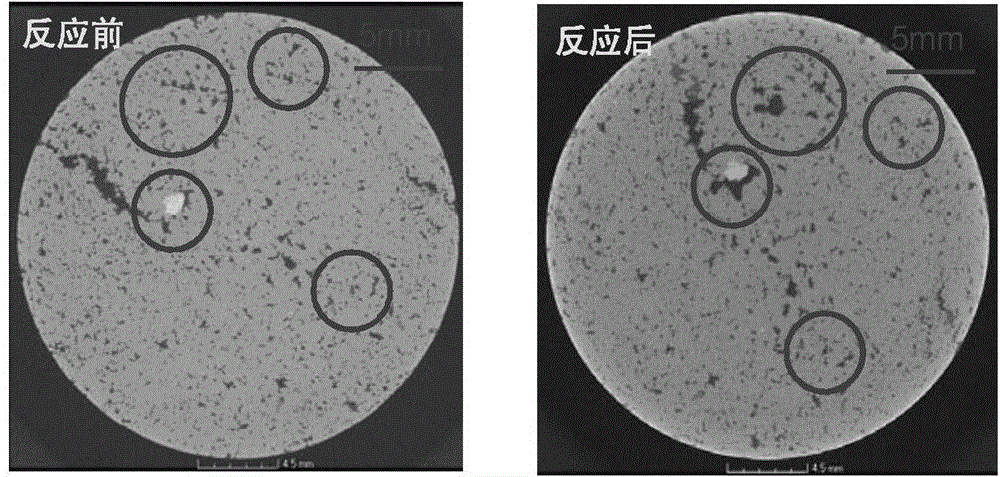
Figure 3
Abstract
Description
technical field
[0001] The invention relates to petroleum geological experiment analysis technology, in particular to an analysis method for comprehensively evaluating carbonate rock dissolution and dissolution effect. Background technique
[0002] Exploration practice shows that carbonate oil and gas fields are an important part of global oil and gas. The dissolved secondary pores and caves formed during the surface and burial of carbonate rocks are important oil and gas storage spaces, and they are also one of the important signs of high-quality carbonate rock reservoirs. In order to further understand the evolution mechanism of carbonate rock dissolution pores (caves) and connectivity properties, the conditions, process and controlling factors of carbonate rock dissolution have become a hot research topic for petroleum geologists.
[0003] The existing analysis techniques for carbonate rock dissolution are relatively simple, or the dissolution rate experiment of a single...
Examples
Embodiment 1
[0061] In recent years, many high-yield industrial airflows have been drilled in the Lower Triassic Feixianguan Formation and the Upper Permian Changxing Formation in the northeastern Sichuan area, represented by Puguang, Luojiazhai, Dukouhe, Huanglongchang, Wubaiti and Gaofengchang The discovery of a series of large and medium-sized marine carbonate gas fields in the Feixianguan Formation and Changxing Formation is a major breakthrough in the field of marine carbonate oil and gas exploration in southern China. Most of the high-quality reservoirs are developed in high-degree dolomitization. in the reef and shoal formations. In this example, aiming at the research hotspot of the pore development mechanism of carbonate rock reservoirs, the simulation experiments of different types of carbonate rock samples are carried out to quantitatively evaluate the process of carbonate rock dissolution and the dissolution effect.
[0062] See figure 1 As shown in the flow chart, this embodi...