
Hybrid latex comprising polymeric particles having core-shell structure and its preparation method
A technology of polymer particles and latex, which can be used in building construction, roofs using flexible materials, roof coverings, etc., and can solve problems such as increased cost
Patent Information
- Authority / Receiving Office
- CN · China
- Patent Type
- Applications(China)
- Current Assignee / Owner
- Publication Date
- 2015-10-07
- Estimated Expiration
- Not applicable · inactive patent
Smart Images
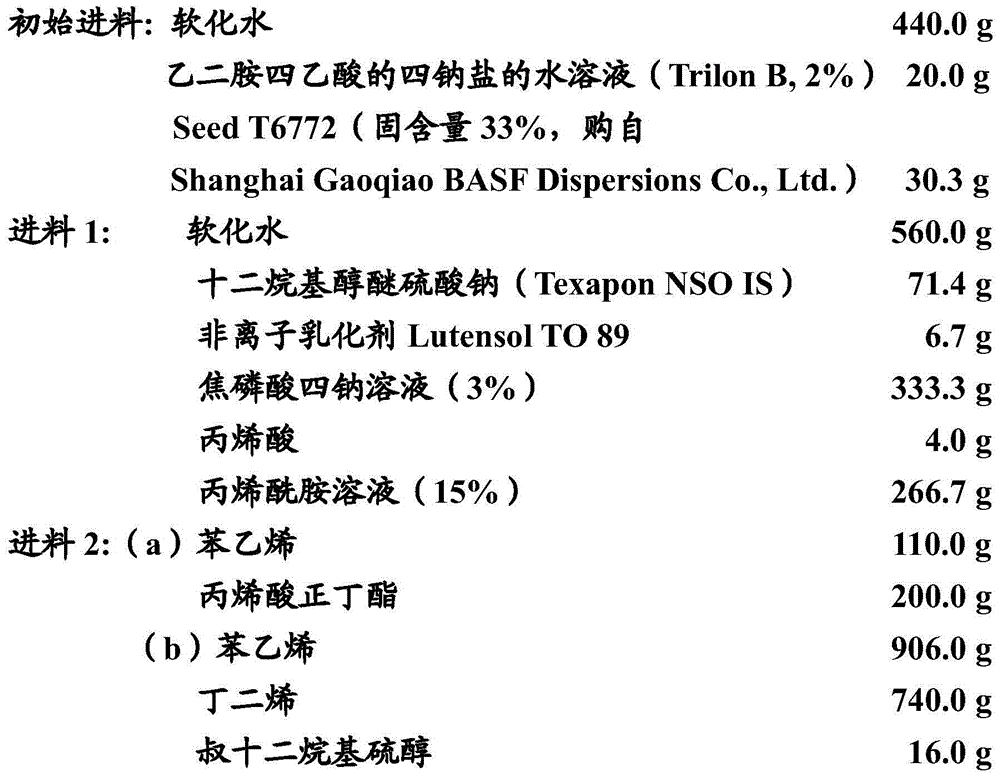
Figure 1 
Figure 2 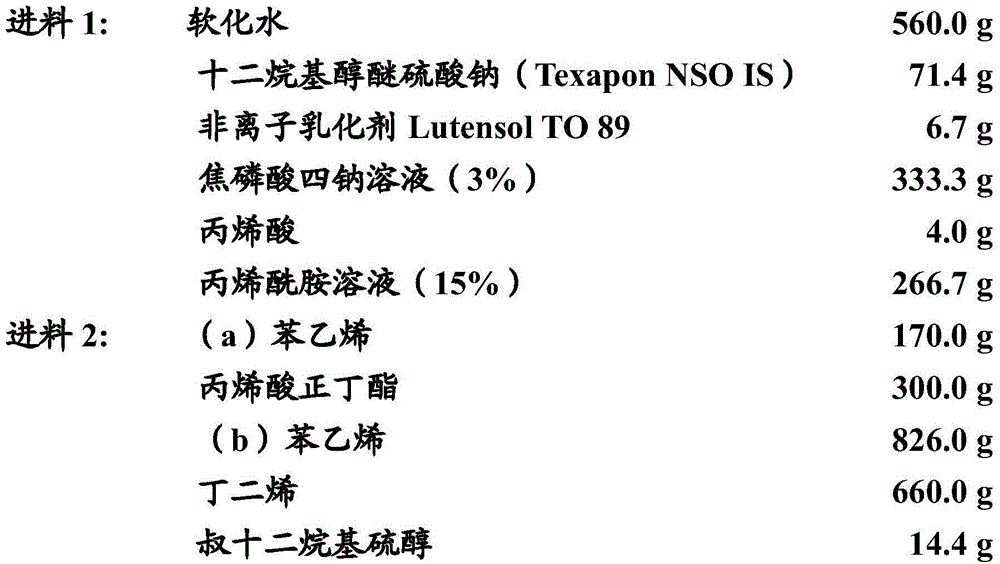
Figure 3
Abstract
Description
technical field
[0001] The present invention relates to a hybrid latex comprising polymer particles having a core-shell structure and a method for preparing the same. The invention also relates to the use of said hybrid latex in polymer waterproofing membranes and polymer-modified mortars. Background technique
[0002] Cement-based building materials are the basis of modern architecture and are widely used. However, tensile strength, adhesive strength, fracture toughness, impermeability, corrosion resistance, abrasion resistance, crack resistance, and durability are not desirable due to their porous and brittle nature, so , its application requires significant changes in some fields such as flexible cement-based waterproof membranes, cement-based tile adhesives, waterproof mortars, corrosion-resistant mortars, repair mortars, cement-based primers, and the like. The properties mentioned above can be significantly improved by modification of polymers, especially polymer emul...
Examples
Embodiment 1
[0041]
[0042]Under nitrogen, the initial charge was added to the stainless steel reactor with stirring (200 rpm). When the temperature in the reactor reached 70-90° C., 28.6 g of sodium persulfate solution (7%) were added within 5 minutes. Then feed 1, 200 g of sodium persulfate solution (7%) and feed 2 were added dropwise simultaneously and the addition time was 3-6 hours, wherein feed 2 was divided into two parts (a) and (b) dropwise Add, and first add part (a) dropwise and then add part (b) dropwise. After complete addition, the mixture was incubated at 70-90°C for 1-2 hours for post-polymerization. Then the mixture was cooled to 65-85° C., and 62.0 g of tert-butyl hydroperoxide solution (10%) and 69.2 g of acetone sodium bisulfite solution (13%) were added dropwise simultaneously and reacted for 1-3 hours. Then 60.0 g of sodium hydroxide solution (10%) were added under slow stirring, and the resulting mixture was cooled to room temperature, and 13.3 g of the fungici...
Embodiment 2
[0044]
[0045]
[0046] Under nitrogen, the initial charge was added to the stainless steel reactor with stirring (200 rpm). When the temperature in the reactor reached 70-90° C., 28.6 g of sodium persulfate solution (7%) were added within 5 minutes. Then feed 1, 200 g of sodium persulfate solution (7%) and feed 2 were added dropwise simultaneously and the addition time was 3-6 hours, wherein feed 2 was divided into two parts (a) and (b) dropwise Add, and first add part (a) dropwise, then add part (b) dropwise. After complete addition, the mixture was incubated at 70-90°C for 1-2 hours for post-polymerization. Then the mixture was cooled to 65-85° C., and 62.0 g of tert-butyl hydroperoxide solution (10%) and 69.2 g of acetone sodium bisulfite solution (13%) were added dropwise simultaneously and reacted for 1-3 hours. Then 60.0 g of sodium hydroxide solution (10%) were added under slow stirring, and the resulting mixture was cooled to room temperature, and 13.3 g of t...
Embodiment 3
[0048]
[0049]
[0050] Under nitrogen, the initial charge was added to the stainless steel reactor with stirring (200 rpm). When the temperature in the reactor reached 70-90° C., 28.6 g of sodium persulfate solution (7%) were added within 5 minutes. Then feed 1, 200 g of sodium persulfate solution (7%) and feed 2 were added dropwise simultaneously and the addition time was 3-6 hours, wherein feed 2 was divided into two parts (a) and (b) dropwise Add, and first add part (a) dropwise, then add part (b) dropwise. After complete addition, the mixture was incubated at 70-90°C for 1-2 hours for post-polymerization. Then the mixture was cooled to 65-85° C., and 62.0 g of tert-butyl hydroperoxide solution (10%) and 69.2 g of acetone sodium bisulfite solution (13%) were added dropwise simultaneously and reacted for 1-3 hours. Then 60.0 g of sodium hydroxide solution (10%) were added under slow stirring, and the resulting mixture was cooled to room temperature, and 13.3 g of t...