
Deterministic anti-collision algorithm based on multi-prefix matching of query tree method
An anti-collision algorithm and prefix matching technology, applied in computing, computer components, instruments, etc., can solve performance impact and other problems, achieve the effects of reducing system energy consumption, stable algorithm performance, and improving query efficiency
Patent Information
- Authority / Receiving Office
- CN · China
- Current Assignee / Owner
- Publication Date
- 2015-11-11
Smart Images
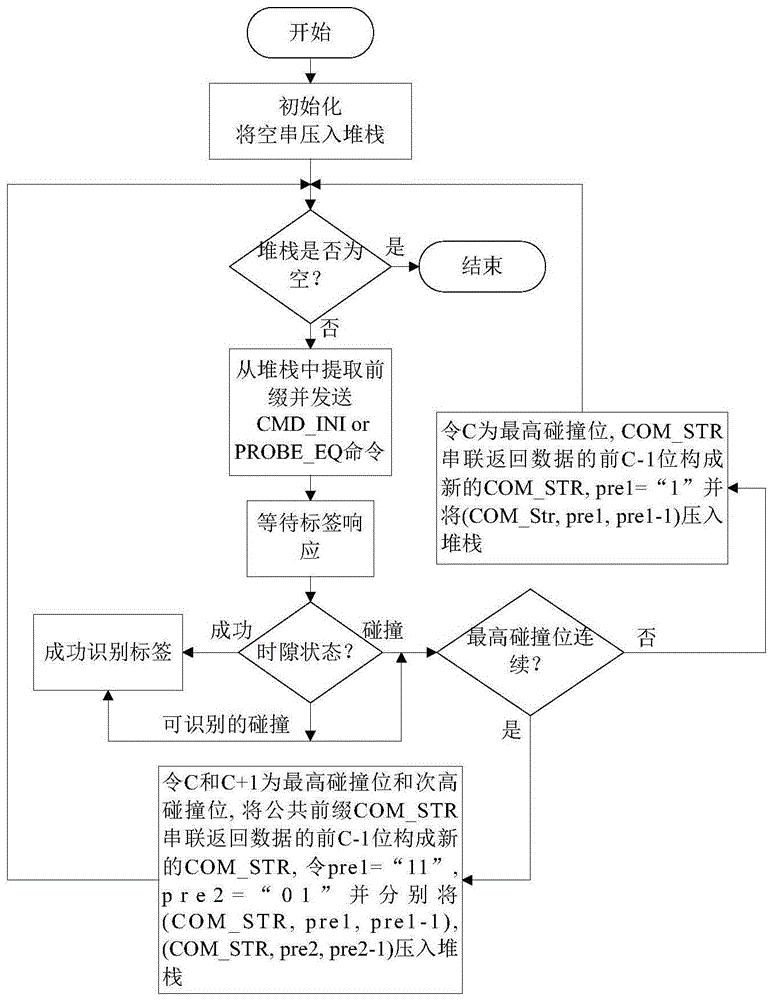
Figure 1 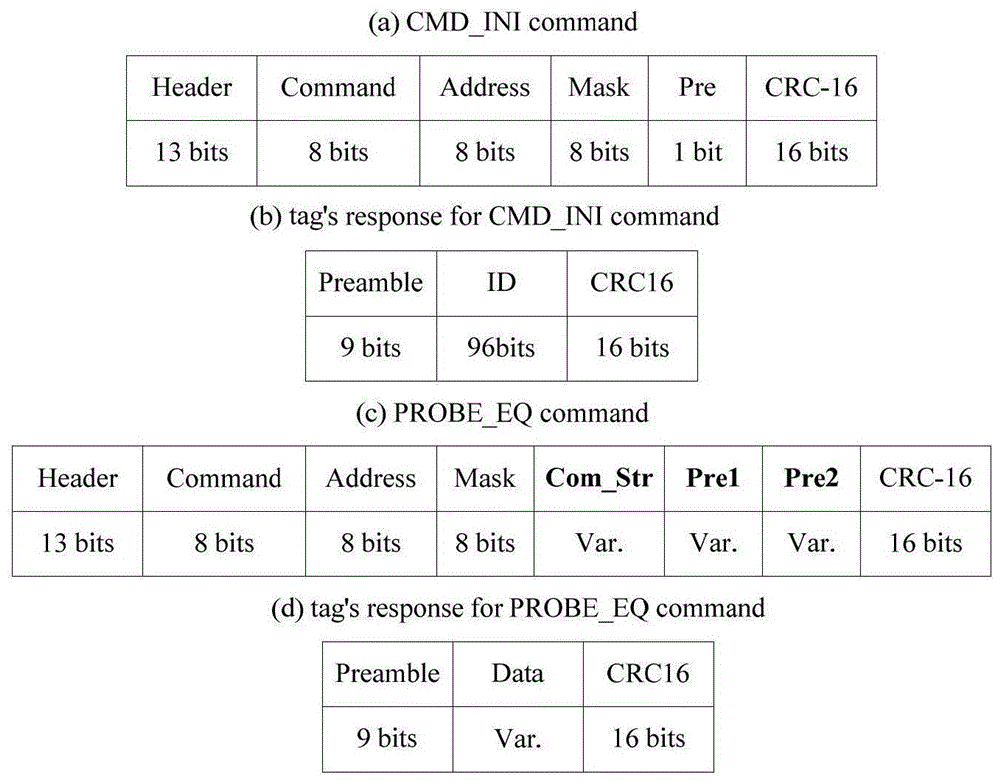
Figure 2 
Figure 3
Abstract
Description
technical field
[0001] The invention belongs to radio frequency identification (RFID) multi-label identification technology in the field of wireless communication, and in particular relates to a deterministic anti-collision algorithm based on multi-prefix matching of a query tree method. Background technique
[0002] Radio Frequency Identification is a promising wireless communication technology for automatic target identification. A typical RFID system usually consists of a reader and multiple low-cost, small-sized electronic tags, each of which has a unique identifier (UID) (for ease of description, hereinafter collectively referred to as ID). The reader / writer wirelessly reads the ID of the tag so that the system can obtain information about the object connected to the tag. However, when multiple tags communicate with the reader at the same time, collisions will occur, causing the reader to fail to identify the tags. In order to solve this collision problem, a time-effe...
Examples
Embodiment Construction
[0030] The present invention will be further elaborated below in conjunction with the accompanying drawings and specific embodiments.
[0031] Such as figure 1 Shown, a kind of deterministic anti-collision algorithm based on the multi-prefix matching of query tree method of the present invention, comprises the following steps:
[0032] Step 1, the reader / writer reads the query prefix prefix from the stack. In the initial state, the query prefix is an empty string, and the query command is sent; the query commands in the step 1 are respectively CMD_INI and PROBE_EQ, and the command bit sent in the initialization phase CMD_INI, followed by PROBE_EQ, returns the complete ID data when the tag receives the CMD_INI command, and returns the remaining matching data when it receives the PROBE_EQ command.
[0033] Step 2, the tag to be identified within the working range of the reader receives the query command sent by the reader, and gives a matching response according to the query ...