
Power stabilizing device and method for laser device
A power stabilization, laser technology, applied in lasers, laser parts, phonon exciters, etc., can solve the problems of unsuitable high-power laser output power, low optical damage threshold, high design cost, and meet the needs of optical power stabilization , low cost, simple design effect
Patent Information
- Authority / Receiving Office
- CN · China
- Patent Type
- Applications(China)
- Current Assignee / Owner
- Publication Date
- 2015-11-11
Smart Images
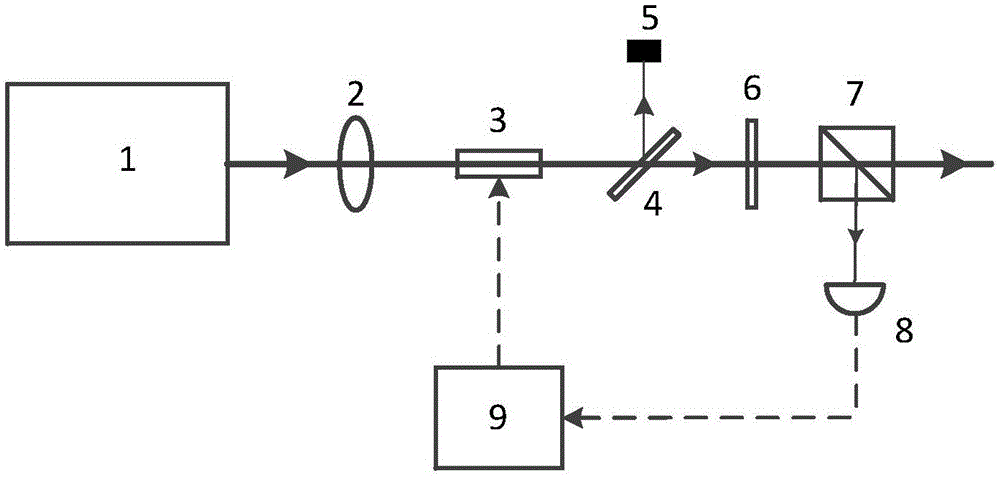
Figure 1 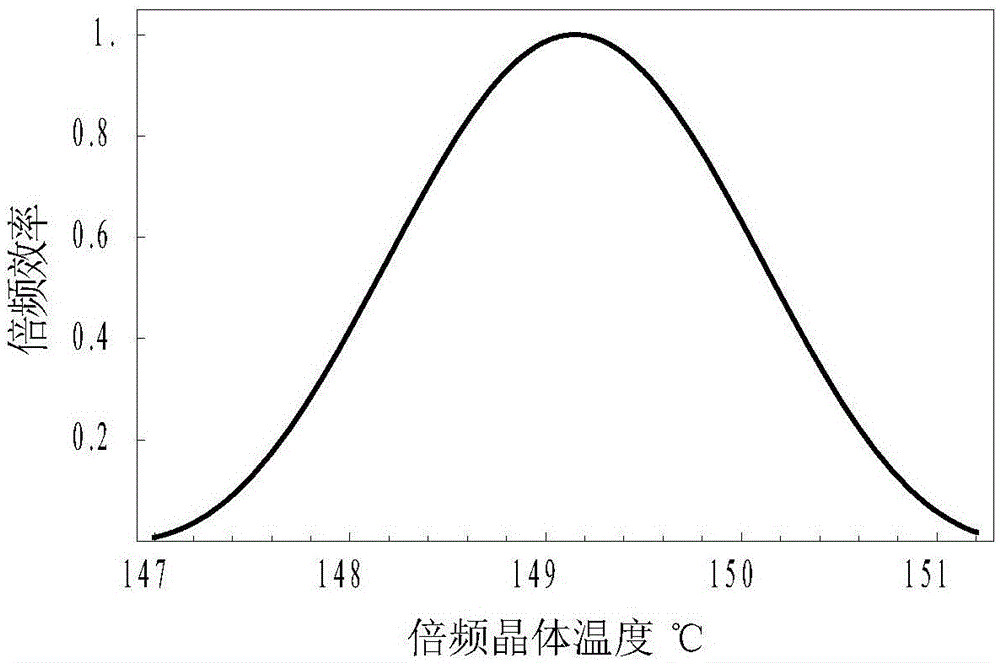
Figure 2 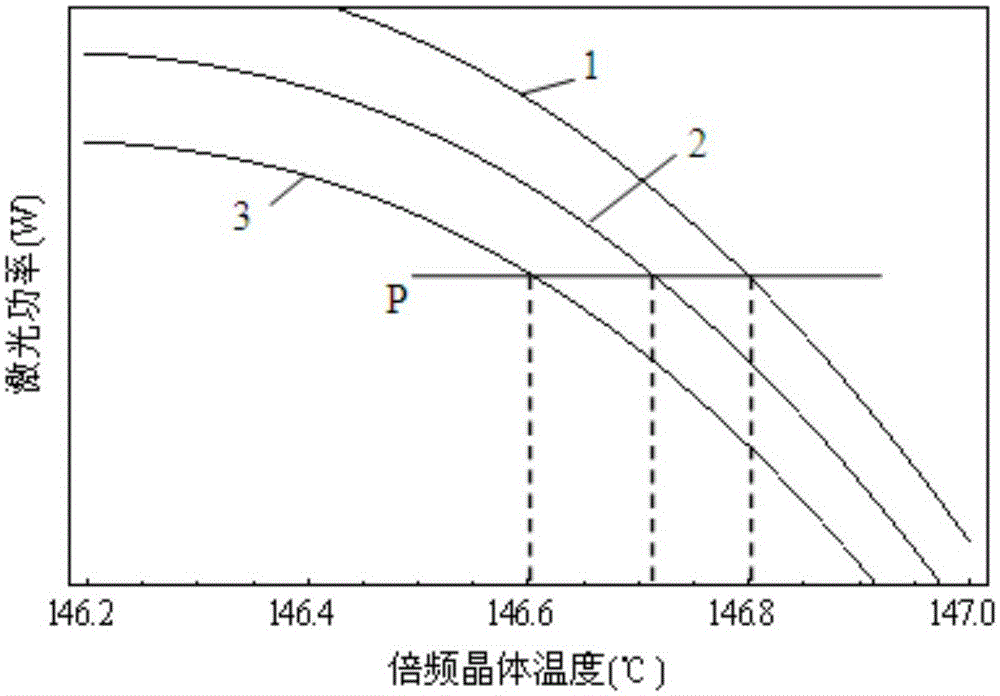
Figure 3
Abstract
Description
technical field
[0001] The invention relates to the technical field of laser stabilization, in particular to a laser power stabilization device and method. technical background
[0002] With its excellent characteristics, lasers are widely used in communication, industrial manufacturing, precision measurement, gravitational wave detection and scientific research. In recent years, with the further deepening of research, high-power lasers have become more and more important. The stability of laser power has always been a matter of great concern. In order to stabilize the laser power without affecting the frequency stability of the laser, the electro-optic modulator or acousto-optic modulator placed in the output optical path of the laser is generally controlled by photoelectric negative feedback. To stabilize the laser output power. However, due to the low optical damage threshold of electro-optic modulators or acousto-optic modulators, they are not suitable for stabilizing ...
Examples
Embodiment Construction
[0022] The present invention will be further described below in conjunction with accompanying drawing:
[0023] like figure 1 As shown, a laser power stabilization device includes a laser 1, a focusing lens 2, a nonlinear crystal 3, a beam splitter 4, a garbage pool 5, a λ / 2 wave plate 6, a polarizing beam splitter 7, a photodetector 8 and Controller 9; the nonlinear crystal 3 is characterized in that the nonlinear crystal 3 is a frequency doubling crystal, and placed in a red copper temperature-controlled furnace; the nonlinear crystal 3 is placed at the focal point of the focusing lens 2, and the entire The output beam of the solid-state laser 1 is focused in the nonlinear crystal 3 by the focusing lens 2, and part of the laser light is converted into frequency-doubled light; the transmitted beam of the nonlinear crystal 3 is separated from the fundamental frequency light and the frequency-doubled light by the beam splitter 4, and the frequency-doubled light is introduced i...