
A kind of pasty magnesium-zinc composite heat stabilizer for polyvinyl chloride
A technology of compounding heat stabilizer and polyvinyl chloride, applied in the chemical industry, can solve problems such as poor thermal stability, and achieve the effects of maintaining fluidity, easy operation cost, and excellent thermal stability
Patent Information
- Authority / Receiving Office
- CN · China
- Patent Type
- Patents(China)
- Current Assignee / Owner
- Publication Date
- 2018-09-28
Smart Images
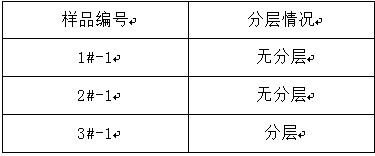
Figure 1 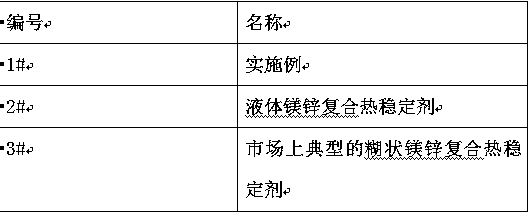
Figure 2 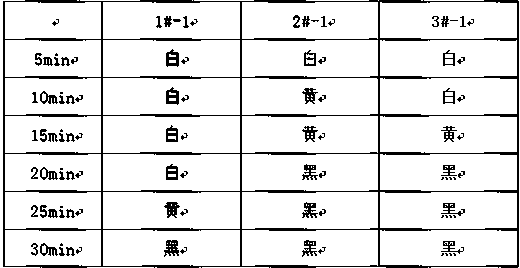
Figure 3
Abstract
Description
technical field
[0001] The invention belongs to the technical field of chemical industry, in particular to a paste magnesium-zinc composite heat stabilizer for polyvinyl chloride. Background technique
[0002] Magnesium-zinc composite heat stabilizer for polyvinyl chloride is a non-toxic and environmentally friendly heat stabilizer recognized in the world. It has developed rapidly in recent years, and it is inevitable to replace lead salt heat stabilizers. The current magnesium-zinc composite heat stabilizers are divided into liquid and solid composite heat stabilizers according to their form. PVC paste resin mainly uses liquid heat stabilizers, the main reason is that solid heat stabilizers are difficult to disperse in PVC paste, and paste calcium zinc heat stabilizers are prone to delamination after being placed for a period of time. As we all know, there are fewer raw materials for liquid calcium-zinc heat stabilizers than solid calcium-zinc heat stabilizers. At present,...
Examples
Embodiment
[0023] Weigh 200 kg of zinc p-tert-butylbenzoate, 100 kg of β-(3,5-di-tert-butyl-4-hydroxyphenyl) octadecyl propionate, 6-amino-1,3-dimethyl 200 kilograms of base uracil and 400 kilograms of magnesium hydroxide were pulverized to 2-5 microns through a jet mill, and they were called group A for use. In the conical mixer of 3 cubic meters, drop into 600 kilograms of epoxidized soybean oil, 400 kilograms of phosphorous acid 4,4-diisofurylidene bisphenol (12-14) carbon alkyl esters, drop into 20 kilograms of organic montmorillonites under stirring, 80 kg of triethanolamine monooleate was stirred at normal temperature and pressure for 30 minutes. Add the treated Group A, and stir for 60 minutes at normal temperature and pressure. Among them, there are low-speed agitator and high-speed agitator in the cone mixer. Low speed stirring speed: 50 rpm, high speed stirring speed: 500 rpm. Inspection, packing and warehousing.
[0024] test:
[0025] Heat stabilizer samples:
[0026] ...