
Gait tester
A tester and gait technology, applied in the field of sports medicine analysis, can solve the problems of large volume of marking points, limited number of marking points, long preparation time, etc., and achieve the effect of improving the quality of analysis
Patent Information
- Authority / Receiving Office
- CN · China
- Current Assignee / Owner
- Publication Date
- 2018-05-08
- Estimated Expiration
- Not applicable · inactive patent
Smart Images
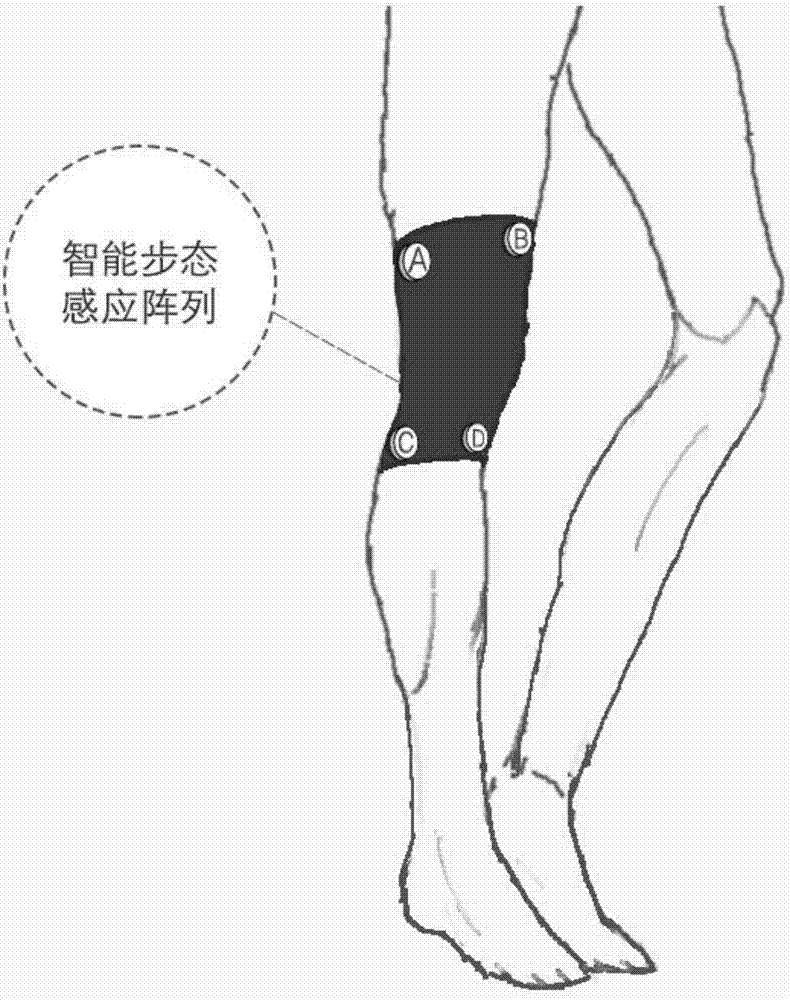
Figure 1 
Figure 2
Abstract
Description
technical field
[0001] The present invention relates to the analysis of sports medicine, in particular to a gait tester, which collects and analyzes the data of the knee joint movement during the user's walking or running to determine the pressure on the knee joint, and analyzes the possible impact of the user's walking style on the knee joint. long-term impact. Background technique
[0002] Walking (or running) is the most common form of exercise, and gait measurement is used to assess, plan, and treat an individual's ability to walk. In particular, gait analysis is the basis of treatment. Combining the collection of walking posture of patients with leg injuries or diseases with kinematics, biology, and neural reconstruction and remodeling, it is beneficial to give a reasonable treatment plan and the use of corresponding treatment equipment. . The main method of gait analysis is to use protective gear with colored punctuation on the human body, such as knee pads, to walk ...
Examples
Embodiment Construction
[0023] Gait tester of the present invention, as figure 1 As shown, it includes a protective gear, which is similar to knee pads, and is worn by the user at the knee joint to wrap the knee joint. The first to fourth four gait data sensors are fixed on the protective gear. Wherein the first and second gait data sensors are respectively located on the left and right sides above the knee joint (corresponding to A and B gait data sensors in the figure respectively), and the third and fourth gait data sensors are respectively located on the left and right sides below the knee joint (respectively corresponding to the C and D gait data sensors in the figure), and the four sensors are all located on the outer side of the legs; the distance between the four gait data sensors is relatively fixed. Wherein, the distance between the first and second gait data sensors positioned above the knee is 4 centimeters (i.e. the distance between A and B), and the distance between the third and fourth...