
Engaging-disengaging structure and fingerprint lock
A technology of fingerprint lock and connection structure, which is applied in the field of locks, can solve problems such as damage to transmission gears, and achieve the effect of avoiding broken teeth
Patent Information
- Authority / Receiving Office
- CN · China
- Current Assignee / Owner
- Publication Date
- 2018-12-11
Smart Images
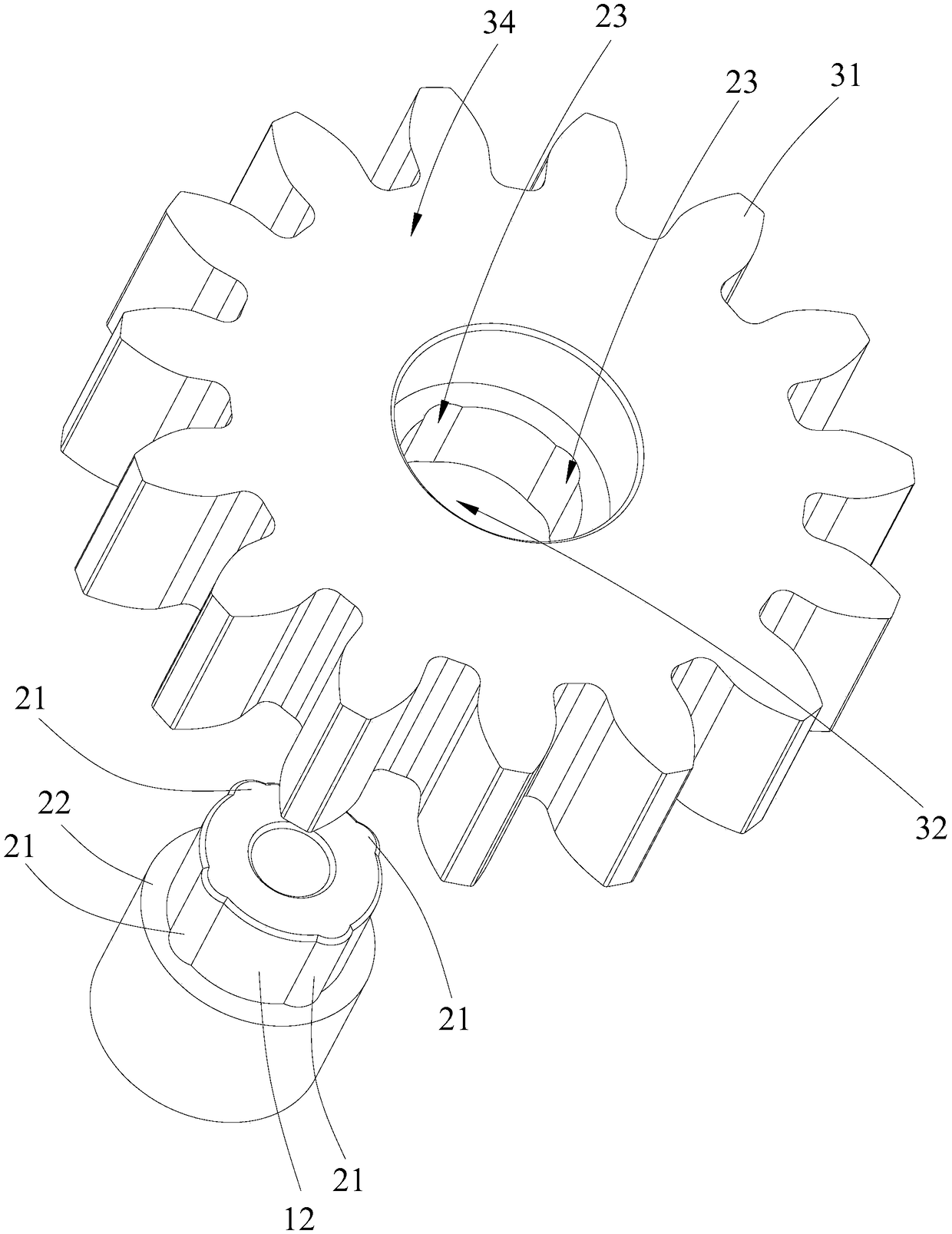
Figure 1 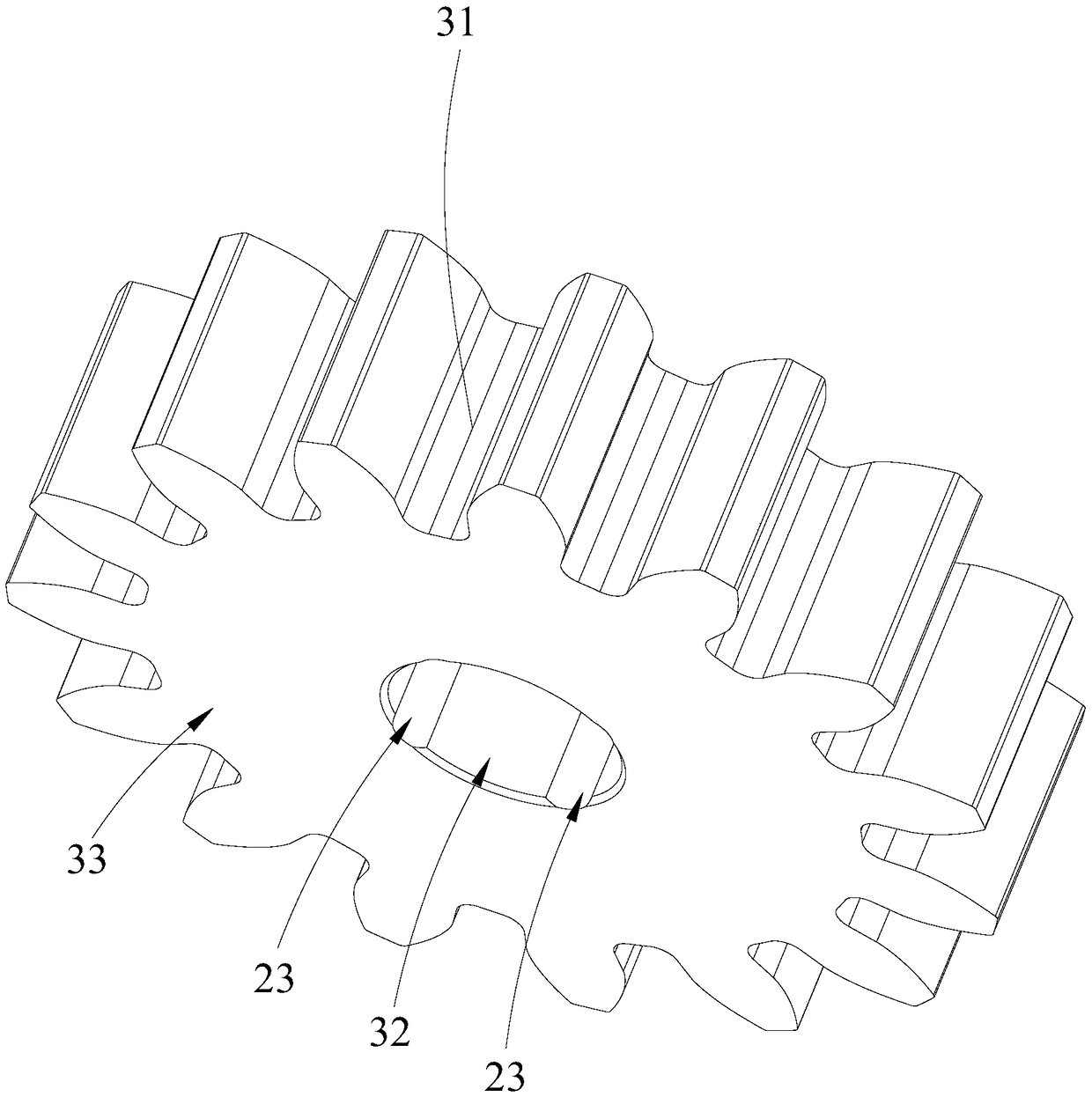
Figure 2 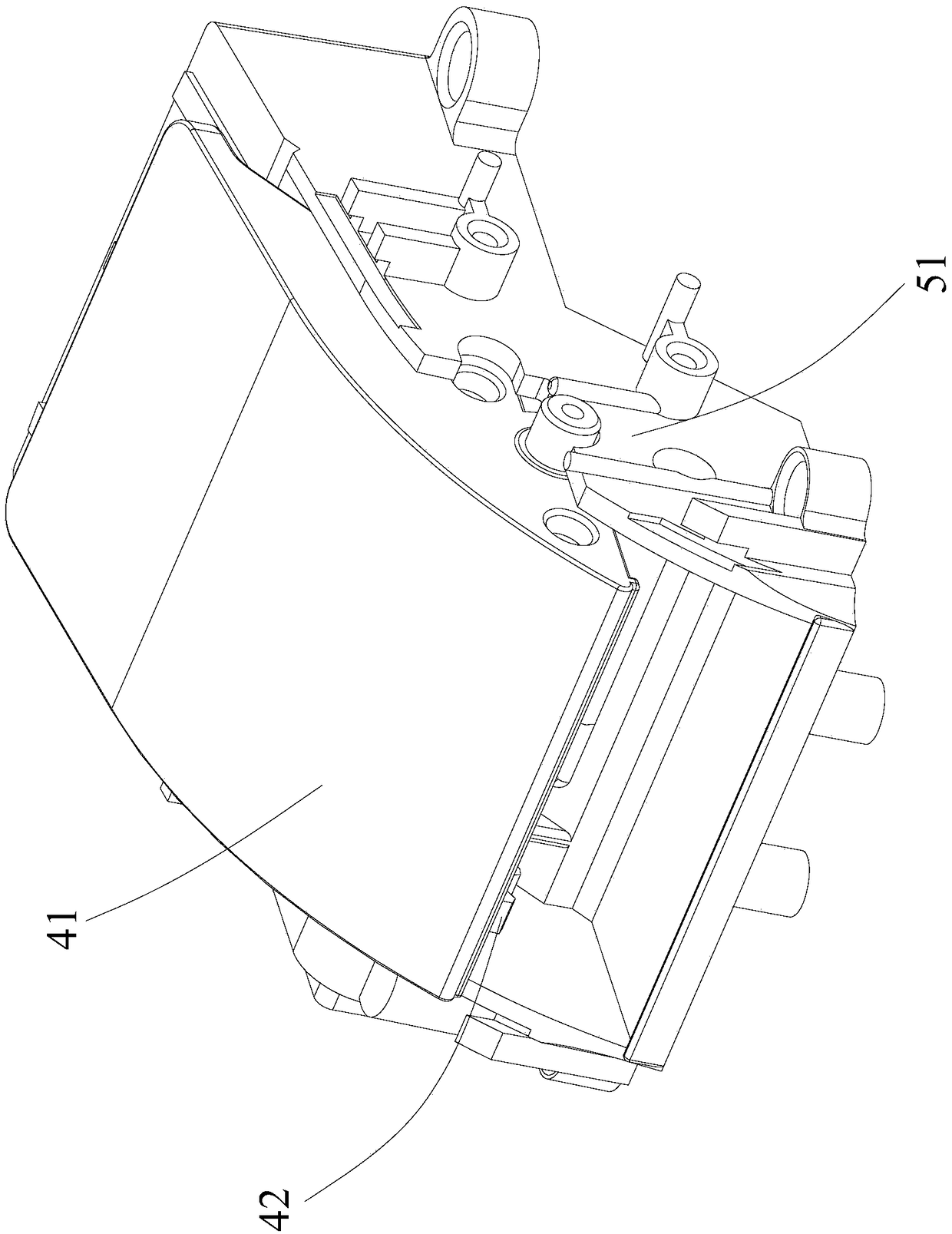
Figure 3
Abstract
Description
technical field
[0001] The invention belongs to the technical field of locks, in particular to a clutch structure and a fingerprint lock. Background technique
[0002] Existing fingerprint locks generally include a fingerprint verification unit, a motor that is driven and connected to the fingerprint verification unit, a cover that is driven and connected to the motor, a transmission that is connected between the cover and the motor, and a housing for rotating and installing the cover. , wherein the initial state of the cover is open (relative to the housing open), when the fingerprint verification is passed, the fingerprint verification unit drives the motor to start, the motor transmits the driving force through the gearbox and drives the cover to rotate to the closed state. Since the cover plate in the open state is easily rotated by the action of external force, and the external force acts on the transmission gear of the gearbox through the transmission of the cover plat...
Examples
Embodiment Construction
[0023] Embodiments of the present invention are described in detail below, examples of which are shown in the drawings, wherein the same or similar reference numerals designate the same or similar elements or elements having the same or similar functions throughout. The embodiments described below by referring to the figures are exemplary and are intended to explain the present invention and should not be construed as limiting the present invention.
[0024] In the description of the present invention, it should be noted that when an element is referred to as being “fixed” or “disposed on” another element, it may be directly on the other element or indirectly on the other element. When an element is referred to as being "connected to" another element, it can be directly connected to the other element or indirectly connected to the other element.
[0025] It is to be understood that the terms "length", "width", "top", "bottom", "front", "rear", "left", "right", "vertical", "hor...