
Hollow rod-wall waveguide slot array antenna based on 3D printing and metal coating
A metal coating and 3D printing technology, which is applied to slot antennas, antenna arrays that are energized separately, antennas, etc., can solve the problems of difficult surface plating of devices, affecting device performance, etc., to avoid dielectric loss, frequency bandwidth, and easy processing. Effect
Patent Information
- Authority / Receiving Office
- CN · China
- Patent Type
- Patents(China)
- Current Assignee / Owner
- Publication Date
- 2021-01-19
Smart Images
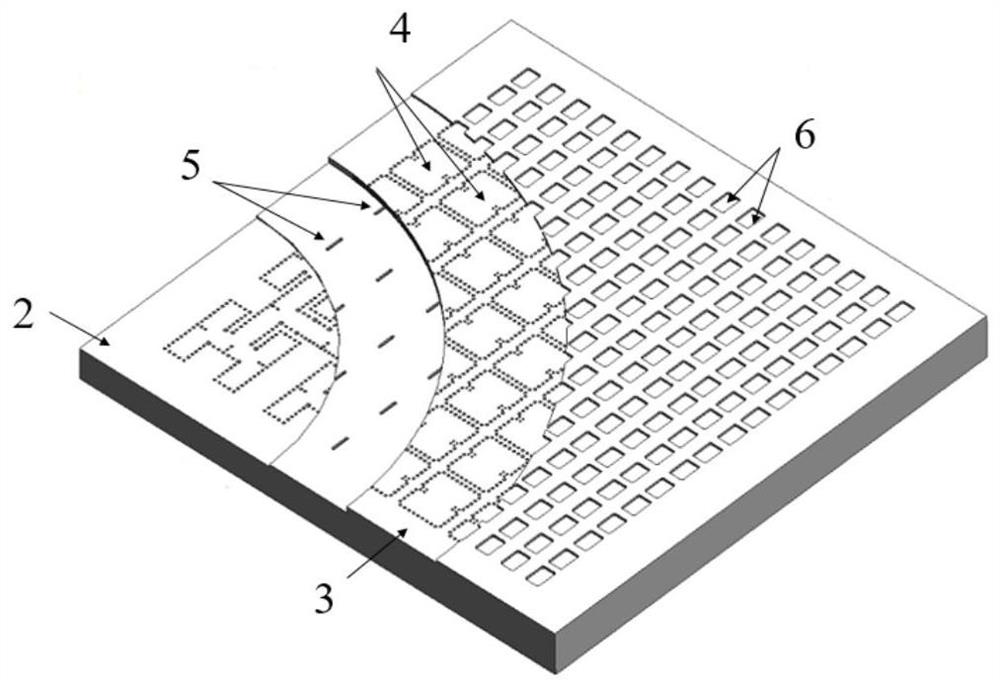
Figure 1 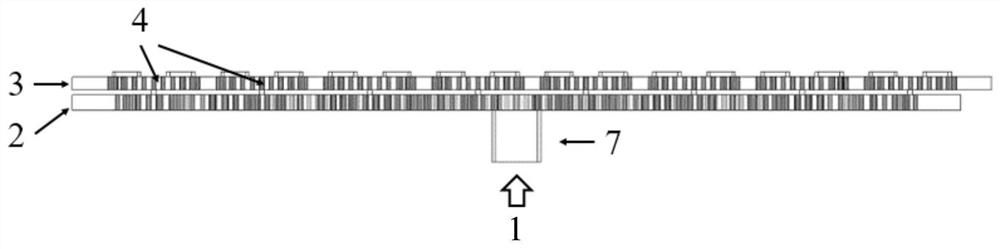
Figure 2 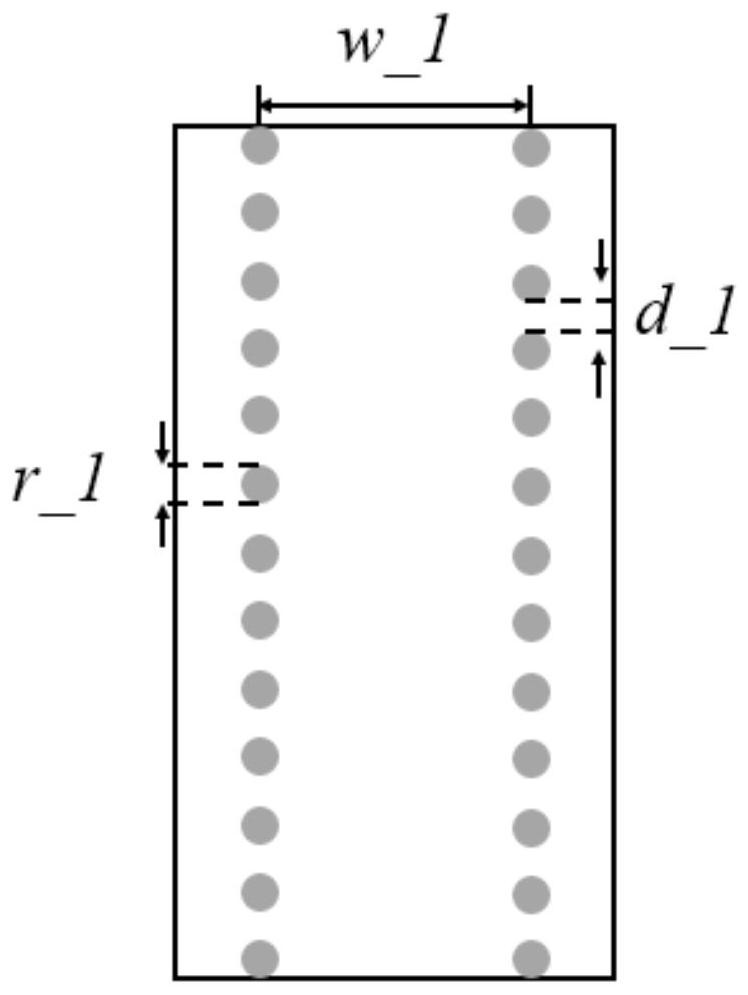
Figure 3
Abstract
Description
technical field
[0001] The invention relates to a waveguide slot array antenna, in particular to a hollow rod-wall waveguide slot array antenna based on 3D printing and metal coating. Background technique
[0002] The waveguide slot array antenna has the characteristics of low dielectric loss and radiation loss, so it has high efficiency, compact structure, high power capacity, etc. It is easy to achieve wide frequency band, high gain, and low sidelobe performance, and is widely used in aerospace and radar communication systems Wait. It is a kind of aperture antenna formed by opening slender cracks on the waveguide wall according to certain rules, cutting off the current path on the waveguide wall, exciting the gap, and radiating electromagnetic waves transmitted in the waveguide to free space through the gap.
[0003] Common slots include inclined slots on the narrow side of the waveguide, transverse slots and longitudinal slots on the wide side of the waveguide, and incli...
Examples
Embodiment Construction
[0028]The following embodiments will further illustrate the present invention in conjunction with the accompanying drawings.
[0029] This embodiment is a hollow rod-wall waveguide slot array antenna based on 3D printing and metal coating. A 16×16 array element structure is selected, and a 2×2 array element structure is selected for the radiation sub-array. The array adopts a central back-fed feed with a center frequency of 61.5 GHz, and uses a fully parallel feed network to feed.
[0030] see figure 1 and 2 , the 16×16 antenna is composed of a metal-coated hollow rod-wall waveguide feeding network layer 2 and a metal-coated hollow rod-wall layer 3 containing a resonant cavity 4; the metal-coated hollow rod-wall waveguide feeding network layer 2 is integrated by a cascaded The feeding network composed of T and H-type power dividers, the input end 1 of the hollow rod-wall waveguide slot array antenna based on 3D printing and metal coating and the feeding network pass through...