
Ultra-fine grain rolling method for large-size high-temperature alloy bar
A high-temperature alloy and ultra-fine-grained technology, applied in metal rolling, metal rolling, rolling, etc., can solve the problems of high forming load of HPT, lack of loading capacity, and difficulty in realizing industrialization requirements, etc., to improve surface quality and deformation The effect of uniformity, reducing the number of repeated rolling, and strengthening the effect of grain refinement
Patent Information
- Authority / Receiving Office
- CN · China
- Current Assignee / Owner
- Publication Date
- 2019-05-21
Smart Images
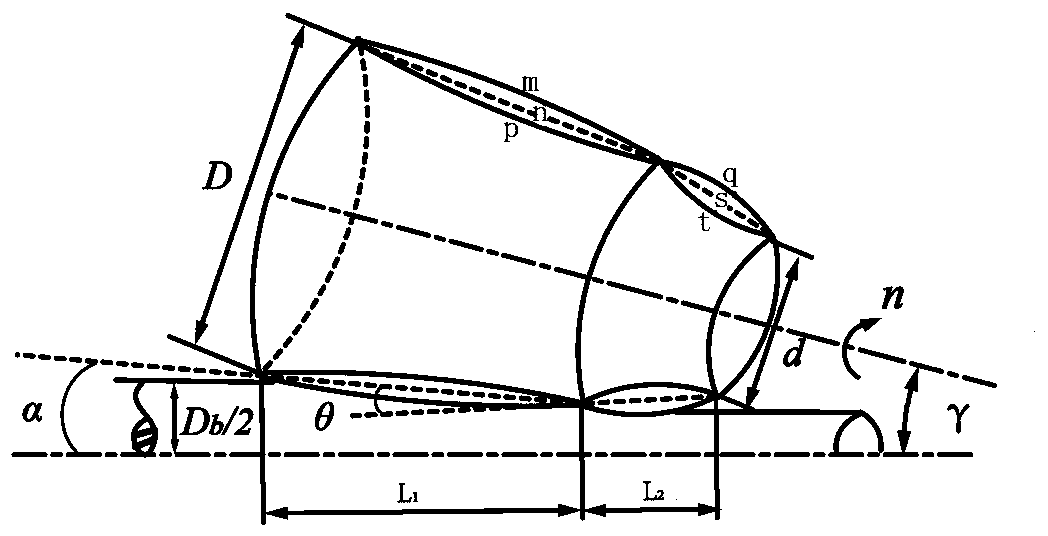
Figure 1 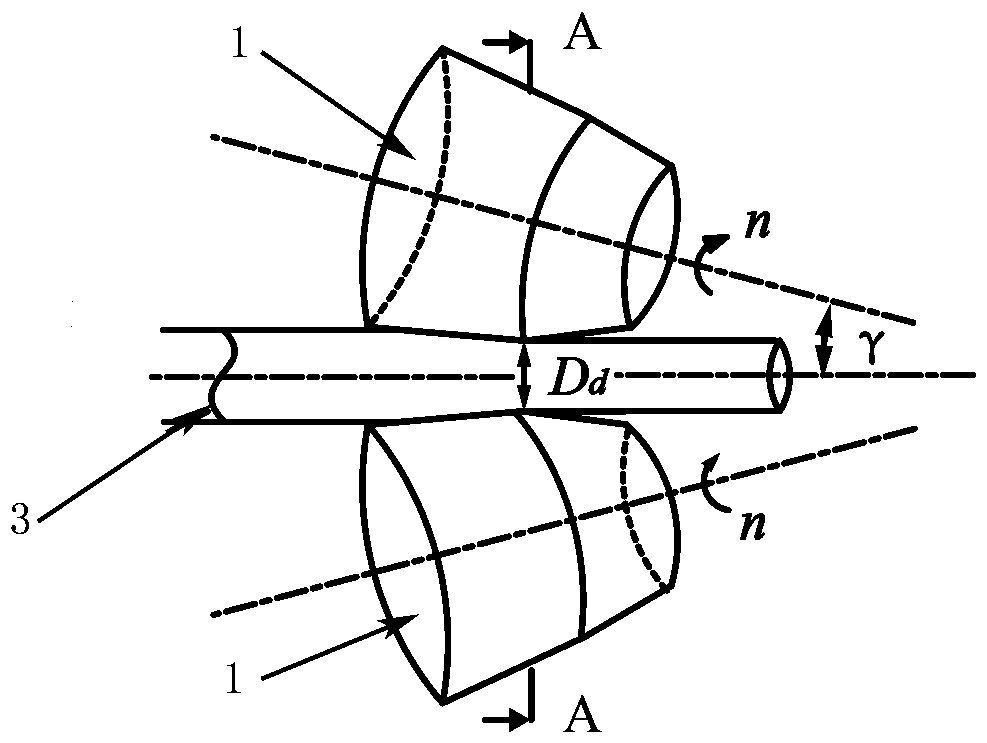
Figure 2 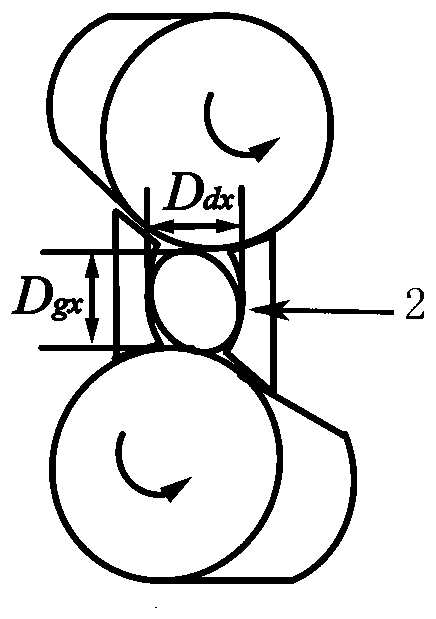
Figure 3
Abstract
Description
technical field
[0001] The invention relates to the field of mechanical processing, in particular to an ultra-fine-grain rolling method for large-size high-temperature alloy rods. Background technique
[0002] Ultrafine crystal / nanocrystalline materials and their preparation technology are one of the research hotspots in the field of material science. Research in this direction embodies people's efforts to continuously improve the strength and toughness of polycrystalline materials through continuous refinement of grains. Among them, the research results of severe plastic deformation (Severe Plastic Deformation, referred to as SPD) technology are eye-catching.
[0003] At present, the mainstream SPD process includes five methods: high pressure torsion (HPT), equal channel angular extrusion (ECAP), cumulative stack rolling (ARB), multidirectional forging (MF) and torsional extrusion (TE), among which:
[0004] (1) High-pressure torsional deformation: While loading a pressur...
Examples
Embodiment 1
[0070] Exemplary embodiments of the present invention will be described in detail below through specific examples. The following example takes the high-temperature alloy GH4169 rod with the specification of blank 3 as Φ84×400 as an example, however, the present invention is not limited thereto, and superalloy rods with other specifications can also be produced by the method of the present invention.
[0071] 1) Rolling tool design, specifically including roll 1 design and guide plate 2 design, roll 1 is set as hyperboloid truncated conical roll 1, specifically: the generatrix of roll 1 is formed by connecting two curves, such as figure 1 As shown, one of the curves is any curve between the curve m and the curve p, the connecting line between the two ends of the curve is the first middle line n, and the other curve is any curve between the curve q and the curve t, The connecting line between the two ends of the curve is the second center line s; one side of the guide plate 2 is...