
Atomizing core, and method and device for selecting tobacco tar
An atomizing core and e-liquid technology, applied in the field of electronic cigarettes, can solve the problems of limited scope of application, burning, difficulty in ensuring accuracy, etc., and achieve the effect of improving atomization effect, wide application scope and good atomization effect.
Patent Information
- Authority / Receiving Office
- CN · China
- Patent Type
- Applications(China)
- Current Assignee / Owner
- Publication Date
- 2019-11-01
- Estimated Expiration
- Not applicable · inactive patent
Smart Images
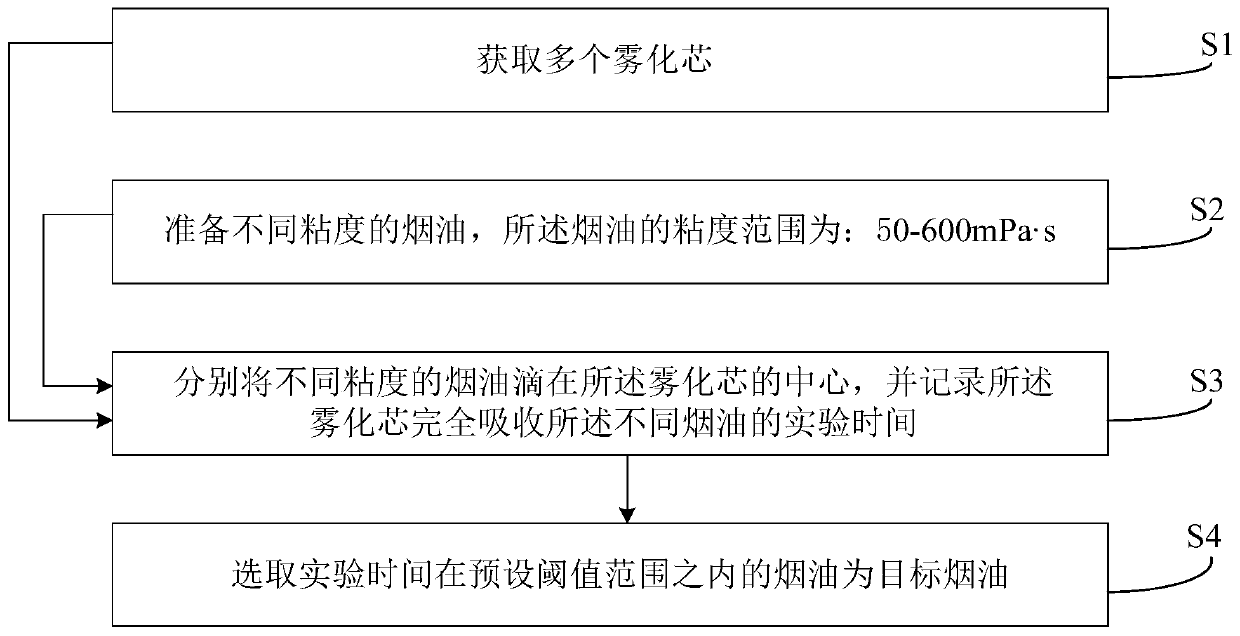
Figure 1 
Figure 2 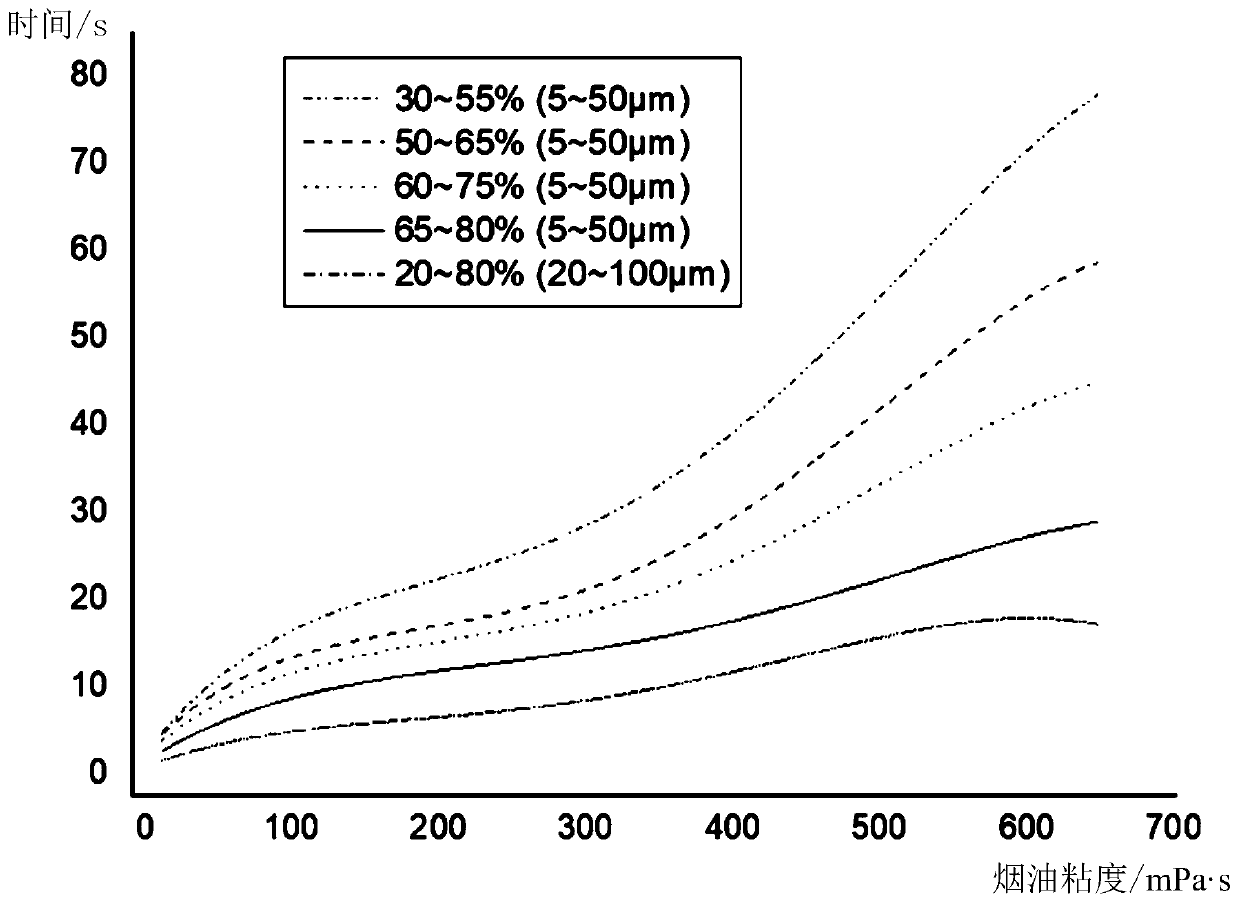
Figure 3
Abstract
Description
technical field
[0001] The invention relates to the technical field of electronic cigarettes, in particular to a method and device for selecting an atomizing core and e-liquid. Background technique
[0002] There are two kinds of materials for electronic smoke cores: cotton and ceramics. Cotton wicks have defects such as oil leakage and flammability; it is an inevitable trend to replace cotton as atomizing cores with ceramics. The ceramic pore size and porosity of the ceramic atomizing core do not match the viscosity of the e-liquid, which leads to a series of problems such as oil leakage, burning, and odor, which seriously affects the taste of the e-cigarette. In the existing scheme, sample test smoking is used to obtain user feedback on taste information, oil leakage information, and smoke volume information, and judge whether the ceramic atomizing core matches the e-liquid from the above information. The scope of application of this scheme is limited and the cost is high...
Examples
Embodiment 1
[0062] Obtain a plurality of atomizing cores, the atomizing cores are diatomite-based porous ceramics, the porosity range of the atomizing cores is 30-55%, and the pore diameter range of the atomizing cores is 5-50 μm;
[0063] Prepare e-liquids with different viscosities. The viscosities of the e-liquids are: 50mPa·s, 100mPa·s, 200mPa·s, 300mPa·s, 400mPa·s, 500mPa·s, 600mPa·s;
[0064] Drop e-liquids of different viscosities on the center of the atomizing core respectively, and record the experimental time for the atomizing core to completely absorb the different e-liquids;
[0065] As shown in Table 1:
[0066]
[0067] According to the results in Table 1, the test time for e-liquid with a viscosity of 50mPa·s is 11.33s, which is within the preset threshold range, which is the target e-liquid, and the test time for e-liquid with a viscosity of 100mPa·s is 16.60s. Within the preset threshold range, it is the target e-liquid, so the porosity range of the atomizing core is:...
Embodiment 2
[0069] Obtain a plurality of atomizing cores, the atomizing cores are diatomite-based porous ceramics, the porosity range of the atomizing cores is: 50-65%, and the pore diameter range of the atomizing cores is: 5-50 μm;
[0070] Prepare e-liquids with different viscosities. The viscosities of the e-liquids are: 50mPa·s, 100mPa·s, 200mPa·s, 300mPa·s, 400mPa·s, 500mPa·s, 600mPa·s;
[0071] Drop e-liquids of different viscosities on the center of the atomizing core respectively, and record the experimental time for the atomizing core to completely absorb the different e-liquids;
[0072] As shown in table 2:
[0073]
[0074] According to the results in Table 2, the test time for e-liquid with a viscosity of 100mPa·s is 13.48s, within the preset threshold range, it is the target e-liquid, and the test time for e-liquid with a viscosity of 200mPa·s is 17.10s. Within the preset threshold range, it is the target e-liquid, so the porosity range of the atomizing core is: 50-65%, ...
Embodiment 3
[0076] Obtain a plurality of atomizing cores, the atomizing cores are diatomite-based porous ceramics, the porosity range of the atomizing cores is 60-70%, and the pore diameter range of the atomizing cores is 5-50 μm;
[0077] Prepare e-liquids with different viscosities. The viscosities of the e-liquids are: 50mPa·s, 100mPa·s, 200mPa·s, 300mPa·s, 400mPa·s, 500mPa·s, 600mPa·s;
[0078] Drop e-liquids of different viscosities on the center of the atomizing core respectively, and record the experimental time for the atomizing core to completely absorb the different e-liquids;
[0079] as shown in Table 3:
[0080]
[0081] According to the results in Table 3, the test time for e-liquid with a viscosity of 100mPa·s is 11.69s, which is within the preset threshold range, which is the target e-liquid, and the test time for e-liquid with a viscosity of 200mPa·s is 15.24s. Within the preset threshold range, it is the target e-liquid. The experiment time of the e-liquid with a vis...