
Dual-module neural network structure video object segmentation method
A video object and network structure technology, applied in the field of computer vision, can solve problems such as complex background, occlusion, and inability to achieve efficient segmentation, and achieve the effects of enhancing discrimination, suppressing noise influence, and saving costs
Patent Information
- Authority / Receiving Office
- CN · China
- Current Assignee / Owner
- Publication Date
- 2020-03-24
Smart Images
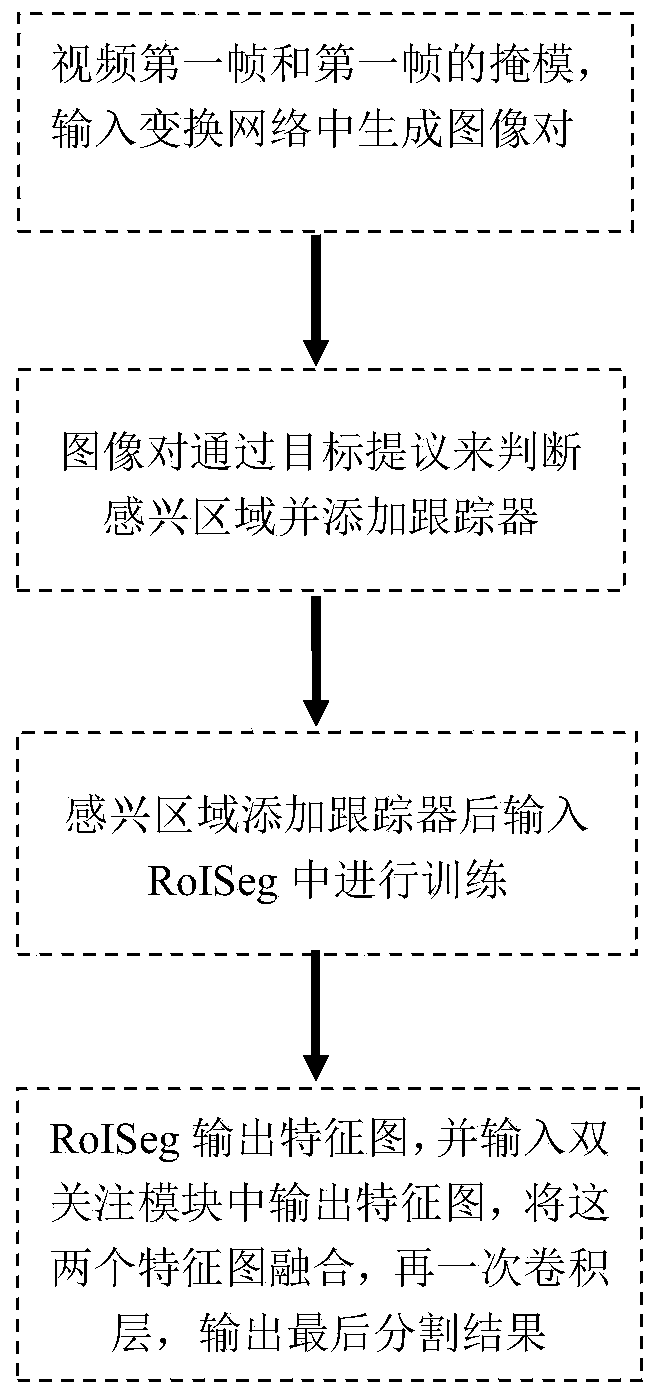
Figure 1 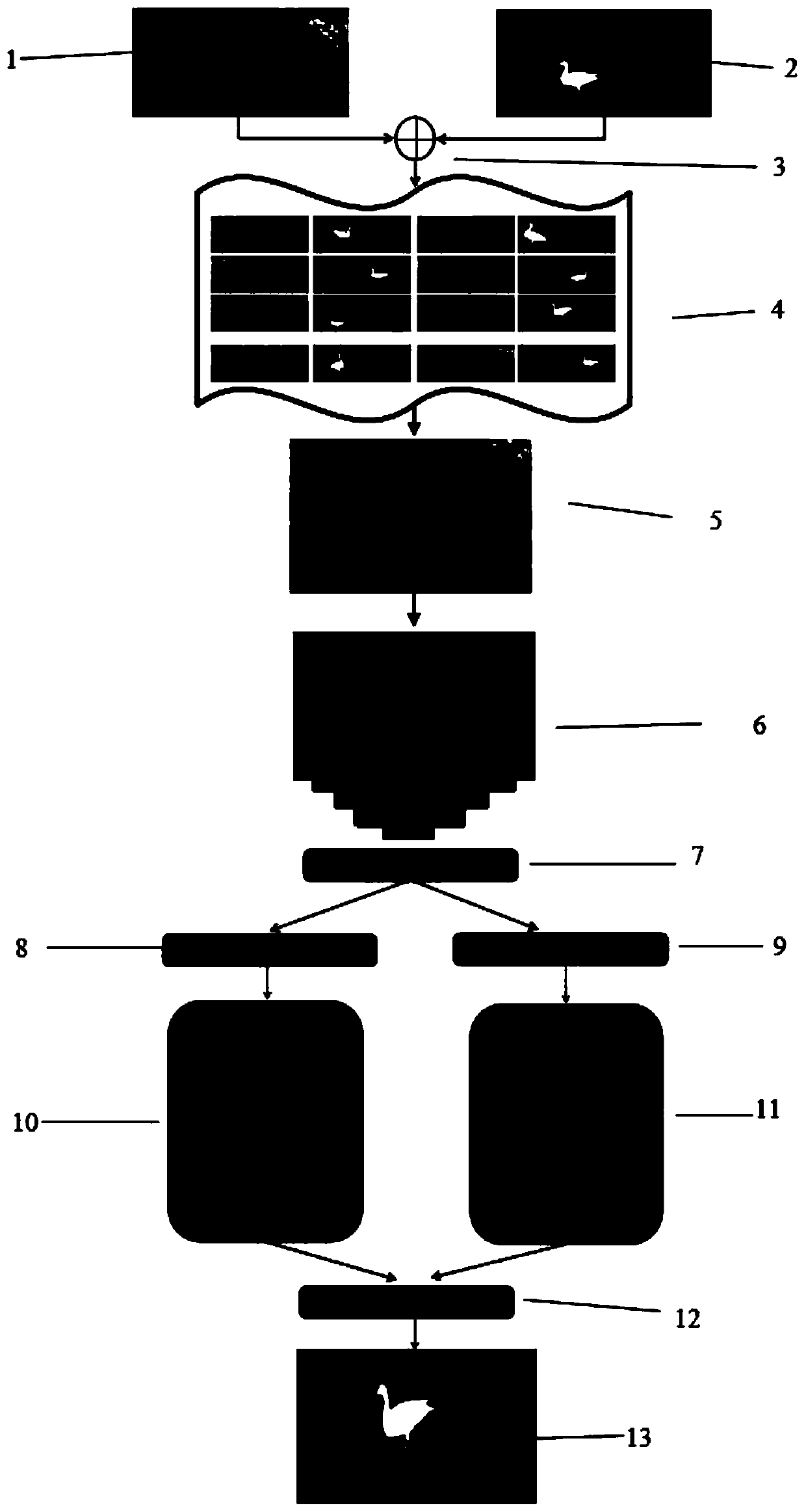
Figure 2 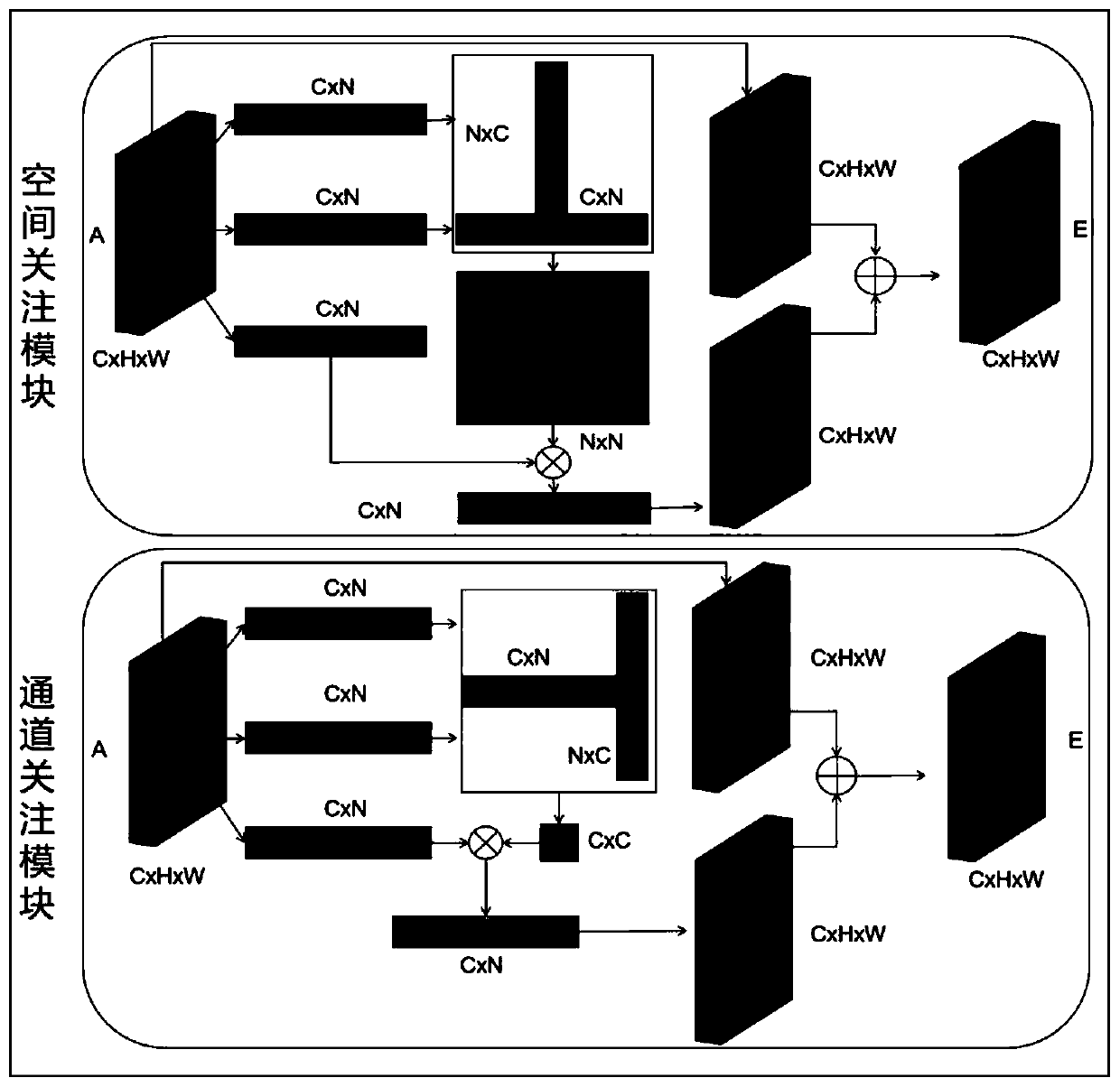
Figure 3
Abstract
Description
technical field
[0001] The invention is in the field of computer vision, especially relates to video object segmentation processing with large-scale changes in video and inaccurate dynamic appearance changes, and specifically a method for video object segmentation with a dual-module neural network structure. Background technique
[0002] In recent years, with the rapid development of computer vision technology, convolutional neural network in deep learning has received great attention in various research fields, and video object segmentation technology has become an important content that researchers have paid attention to in recent years. Video segmentation technology is increasingly showing its important position. Its applications in scene understanding, video labeling, driverless cars and object detection have all been rapidly developed in video segmentation technology. It can be said that the advancement of video segmentation technology drives the overall development of...
Examples
Embodiment
[0105] The experimental hardware environment of the present invention is: 3.4GHz Intel(R) Core(TM) i5-7500 CPU and GTX 1080TiGPU PC, 16 memory, Ubuntu18.04 operating system, based on the open source framework Pytorch depth framework. An image size of 854x480 is used for training and testing. test results (such as Figure 4 Figure 5 ) data set comes from DAVIS public video image segmentation data set.
[0106] First, for the given first frame and the mask of the first frame (such as figure 2 shown in 1 and 2). Image pairs from 1 to 100 are generated by transforming the network ( figure 2 shown in 4). Select candidate regions of interest through the target proposal box ( figure 2 shown in 5). After adding the tracker in the area of interest, input it into the RoISeg network for training ( figure 2 shown in 6). The output feature map from the last convolutional layer in the RoISeg network ( figure 2 Shown in 7) are respectively input into the spatial attention mo...