
Series of pure-phase ordered palladium-boron intermetallic compounds, preparation method and application thereof
An intermetallic compound, a series of technologies, applied in the field of preparation, palladium boron intermetallic compound, high-efficiency electrocatalytic water splitting for hydrogen production, which can solve the problems of difficult to accurately obtain the precise position of atoms, disordered arrangement, and harsh conditions. , to achieve the effect of good synthesis repeatability, simple synthesis steps and high sample purity
Patent Information
- Authority / Receiving Office
- CN · China
- Patent Type
- Applications(China)
- Current Assignee / Owner
- Publication Date
- 2020-12-18
- Estimated Expiration
- Not applicable · inactive patent
Smart Images
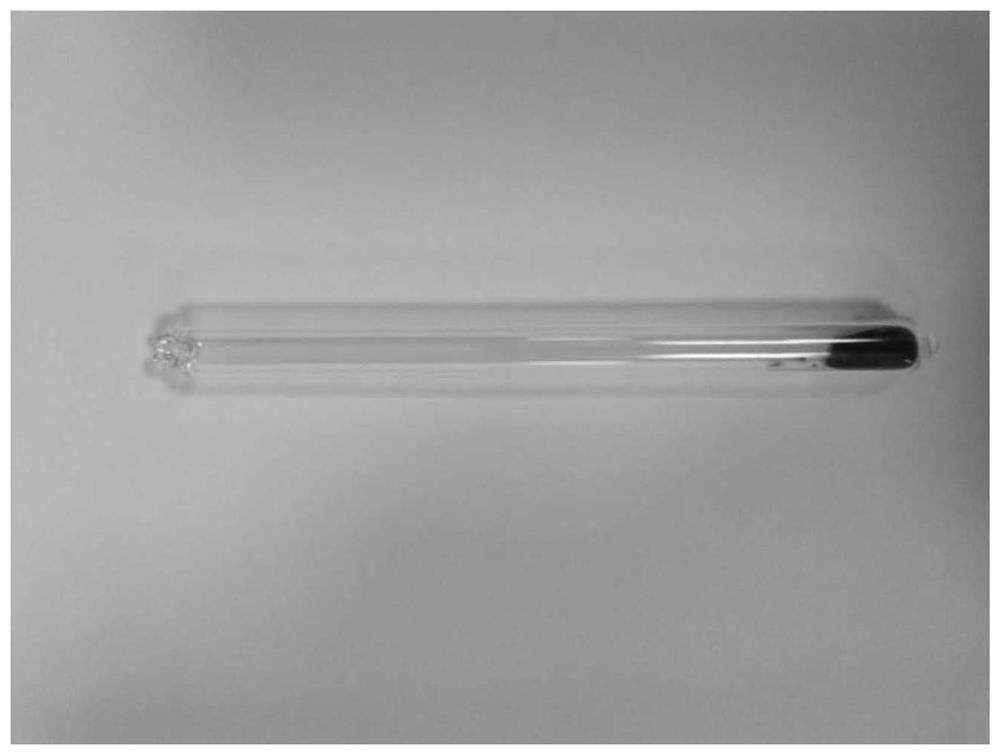
Figure 1 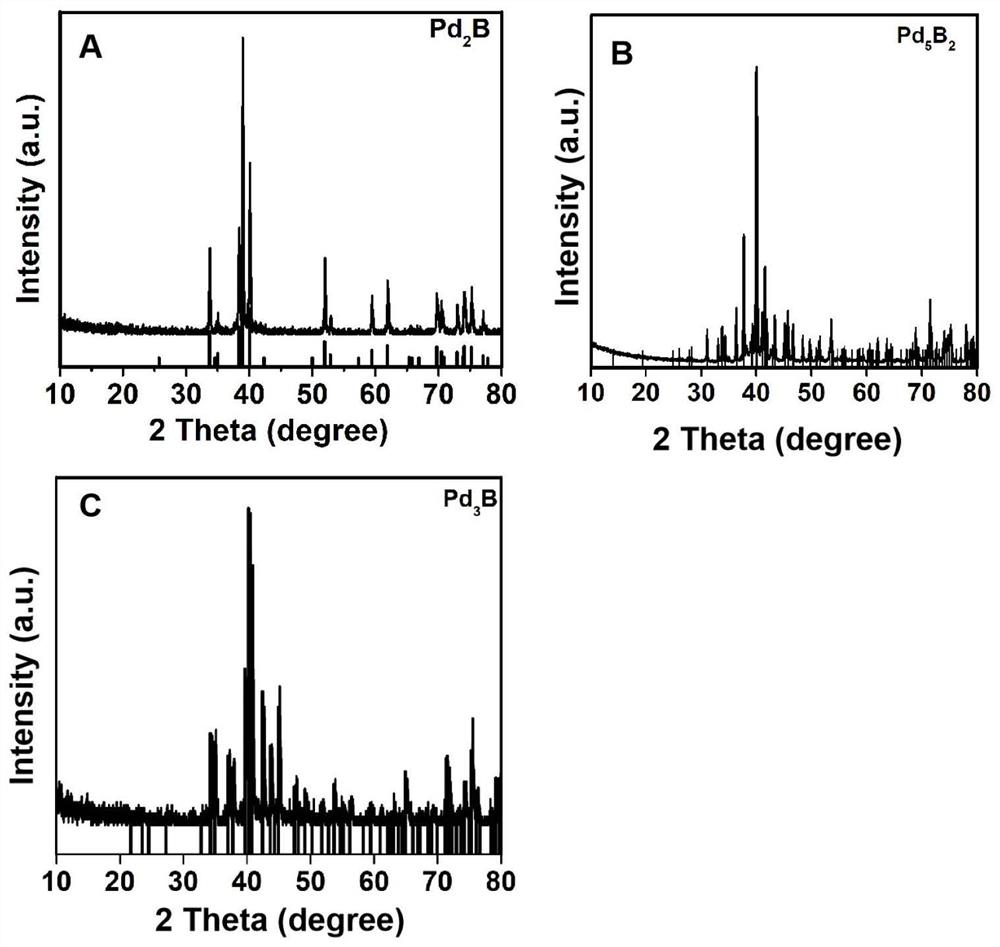
Figure 2 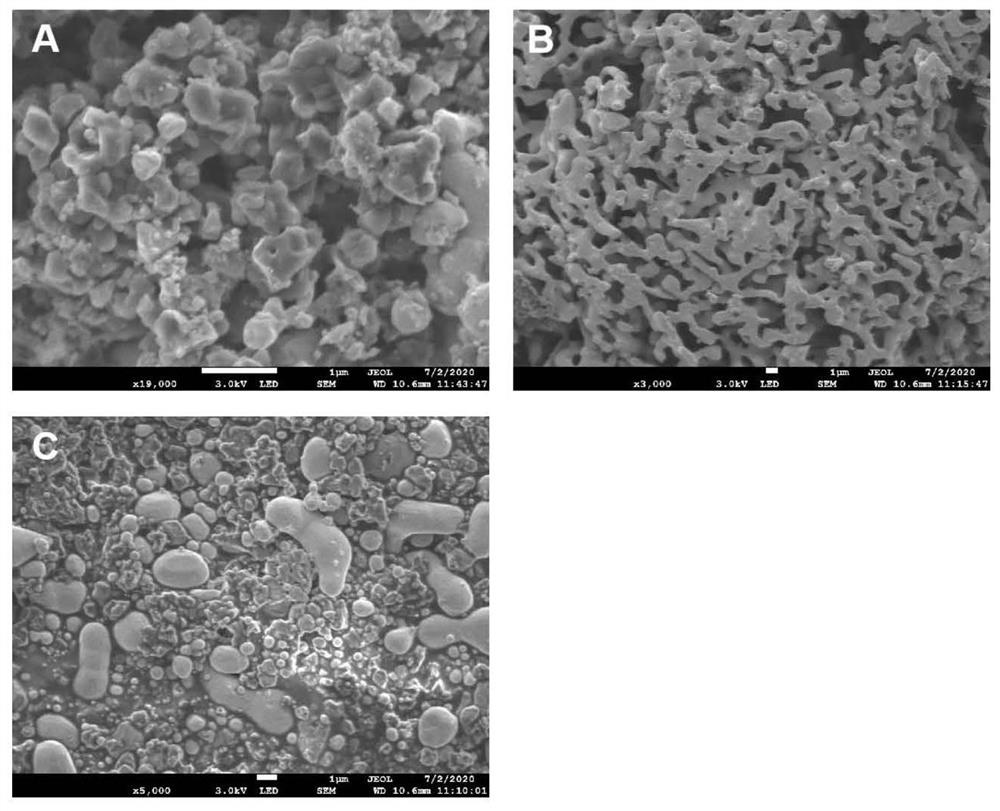
Figure 3
Abstract
Description
Technical field
[0001] The invention belongs to the technical field of electrocatalyst preparation, and specifically relates to a series of pure-phase ordered palladium-boron intermetallic compounds, a preparation method and its application in high-efficiency electrocatalytic water splitting hydrogen production.Background technique
[0002] Pd is widely used in catalytic reaction technologies involving hydrogenation and dehydrogenation, such as biomass conversion, electrocatalysis, selective hydrogenation of acetylene, and Suzuki reaction. Due to the surface stereo effect, low coordination, and a large number of voids that can accommodate hydrogen atoms, Pd has strong adsorption of reactive molecules and is not easy to desorb, which leads to a decrease in the selectivity and activity of Pd, making it useful as a catalyst The significance of existence is greatly reduced. According to reports, boron occupies the interstitial position of the metal lattice and can effectively regulate the cat...
Examples
Embodiment 1
[0022]Pd2B. Preparation of intermetallic compound: Firstly, 73.55 mg of sodium tetrachloropalladate and 11.48 mg of magnesium diboride (molar ratio 1:1) were ground at room temperature to a homogeneous mixture, which was a black solid powder. Transfer the above black powder to the quartz tube. Connect the quartz tube filled with black powder to the vacuum device, use the vacuum device to reduce the vacuum in the quartz tube to below 1 Pa, and then place the sealed quartz tube in the muffle furnace and heat it to a temperature of 3°C / min Pd prepared by calcining at 500℃ for 2 hours2B. Or put the sealed quartz tube in a muffle furnace and heat it to 500°C at a heating rate of 3°C / min for 1 hour to prepare Pd5B2. Or put the sealed quartz tube in a muffle furnace and heat it to 450°C at a heating rate of 3°C / min for 1 hour to prepare Pd3B (see the picture of the vacuum sealed in the quartz tube mentioned in the above methodfigure 1 ). After the muffle furnace is cooled to room temperatu...
Embodiment 2
[0029]The same as Example 1, except that the sodium tetrachloropalladate and magnesium diboride are simultaneously increased by 2 times the feeding amount, the obtained palladium-boron intermetallic compound is still pure phase. Electrocatalytic performance of the obtained sample: Pd2B: When the overpotential is 18mV, the current density of the material reaches 10mA / cm2; Pd5B2: When the overpotential is 36mV, the current density of the material reaches 10mA / cm2; Pd3B: When the overpotential is 57mV, the current density of the material reaches 10mA / cm2.
Embodiment 3
[0031]Same as Example 1, Pd2The calcination time of B was extended to 4h and 20h respectively, the Pd obtained2The B intermetallic compound is still pure phase. Electrocatalytic performance: Pd obtained by calcination time of 4h2B When the overpotential is 18mV, the current density of the material reaches 10mA / cm2. Pd obtained by calcination time 20h2B When the overpotential is 18mV, the current density of the material reaches 10mA / cm2.