
Negative sample extraction method based on path semantics and feature extraction
A technology of feature extraction and extraction method, applied in the field of negative sample extraction based on path semantics and feature extraction, can solve the problems of small amount of information, useless features cannot be properly suppressed, etc., and achieve the effect of improving the representation ability
Patent Information
- Authority / Receiving Office
- CN · China
- Current Assignee / Owner
- Publication Date
- 2021-09-03
Smart Images
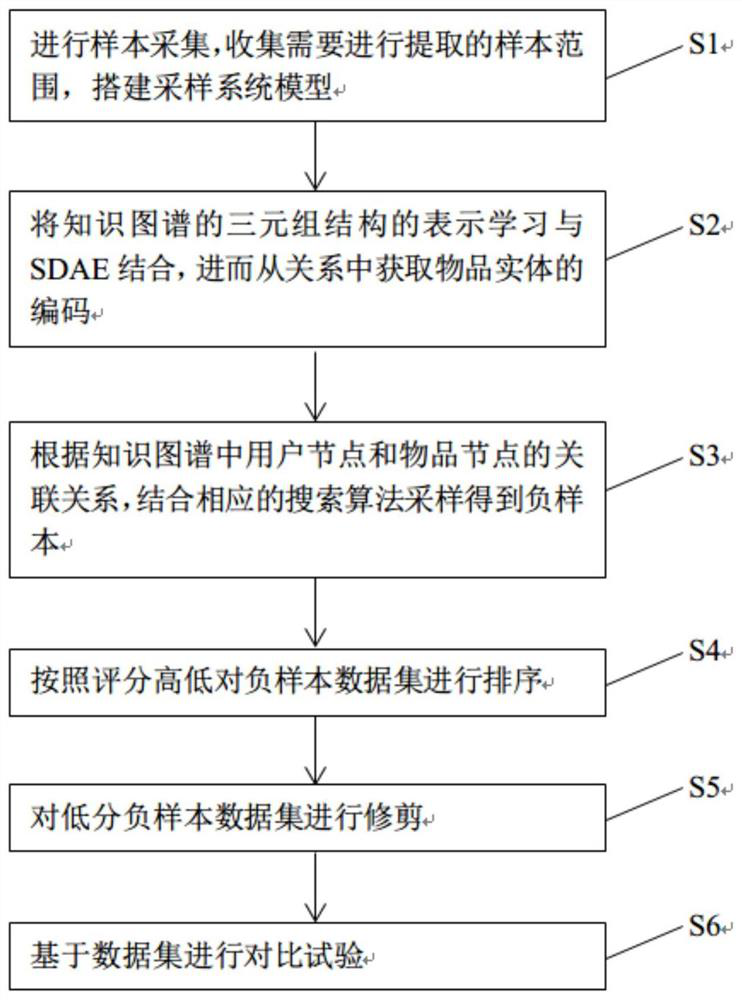
Figure 1 
Figure 2 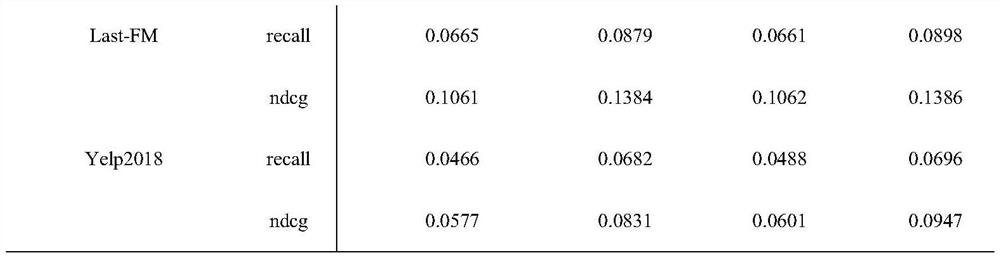
Figure 3
Abstract
Description
technical field
[0001] The invention relates to the technical field of recommendation systems, in particular to a negative sample extraction method based on path semantics and feature extraction. Background technique
[0002] With the rapid development of computer technology, the wide use of various industries and APPs has generated a large amount of data, but not all of the data are of interest to users. Therefore, the recommendation system has emerged as the times require and has become an important technology to solve this problem. How to improve user satisfaction and experience and ensure the accuracy of recommendations has become the main research content of recommender systems. According to the horizontal speculation of user hobbies and the longitudinal analysis of user historical choices, recommendation systems can be divided into two categories: collaborative filtering-based recommendation systems and content-based recommendation systems. The former mainly faces the...
Examples
Embodiment Construction
[0017] In order to make the purpose, technical solution and advantages of the present invention clearer, the present invention will be further elaborated below in conjunction with the accompanying drawings. In describing the present invention, it should be understood that the terms "upper", "lower", "front", "rear", "left", "right", "top", "bottom", "inner", " The orientation or positional relationship indicated by "outside", etc. is based on the orientation or positional relationship shown in the drawings, and is only for the convenience of describing the present invention and simplifying the description, rather than indicating or implying that the referred device or element must have a specific orientation, so as to Specific orientation configurations and operations, therefore, are not to be construed as limitations on the invention.
[0018] The present invention provides a negative sample extraction method system based on path semantics and feature extraction. The system i...