
Method for preparing low-aromatic transformer oil through medium-pressure hydrogenation of naphthenic base distillate oil
A technology for naphthenic distillate oil and transformer oil is applied in the field of medium-pressure hydrogenation of naphthenic distillate oil to produce low-aromatic transformer oil, and can solve the problem of heavy distillation range, poor coal tar quality, and no effective grading of catalysts in the hydrogenation stage. and other problems, to achieve the effect of low hydrogen consumption, safe operation, and good oxidation stability.
Patent Information
- Authority / Receiving Office
- CN · China
- Patent Type
- Applications(China)
- Current Assignee / Owner
- Publication Date
- 2022-04-29
Smart Images
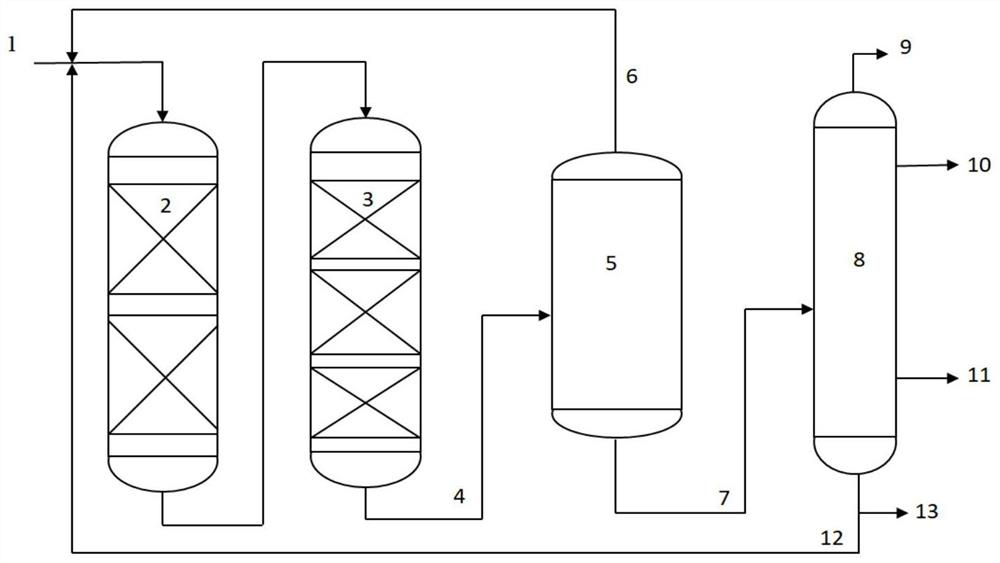
Figure 1 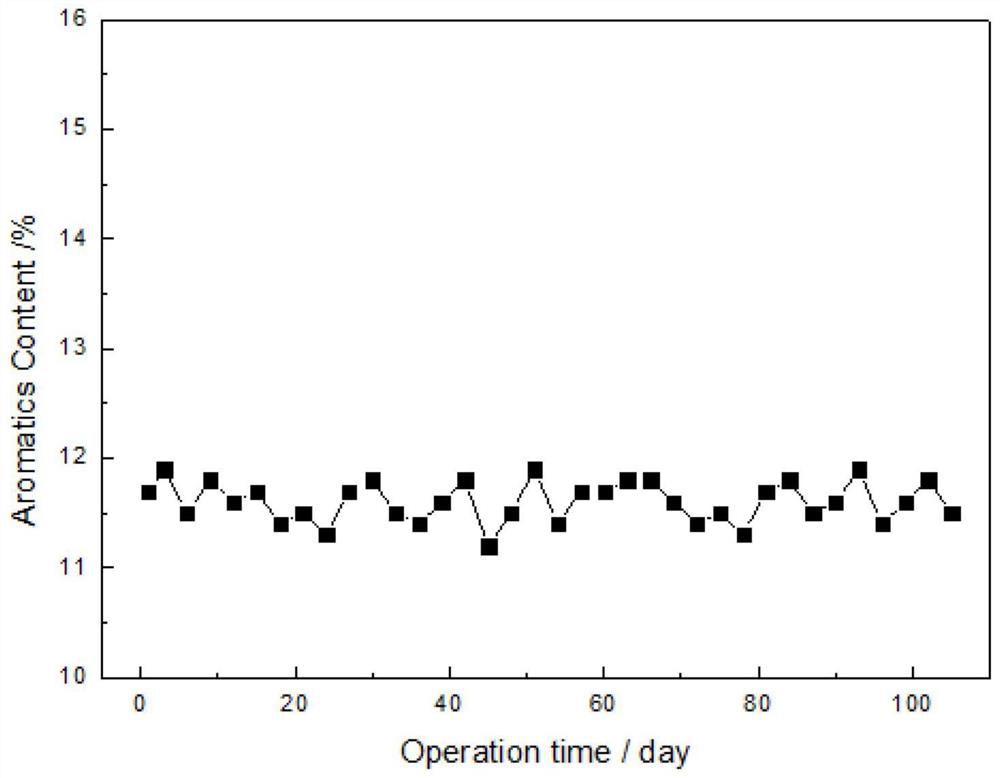
Figure 2 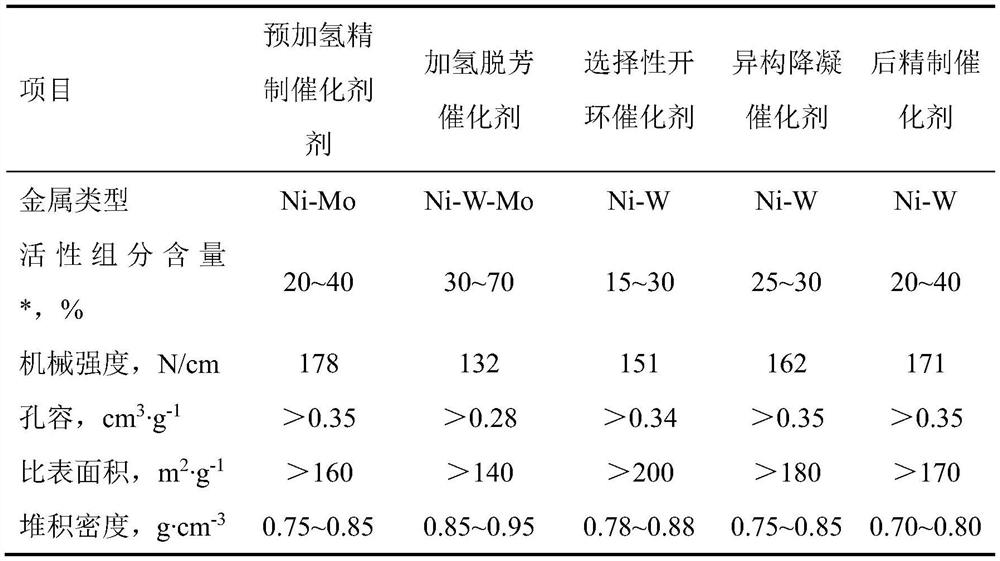
Figure 3
Abstract
Description
technical field
[0001] The invention belongs to the field of petrochemical industry, and in particular relates to a method for preparing low-aromatic transformer oil through medium-pressure hydrogenation of naphthenic distillate oil. Background technique
[0002] In recent years, with the development of the demand for the construction of the national power grid, projects such as the West-to-East Power Transmission, North-South Mutual Supply and National Networking have been rapidly promoted, and the quality requirements of transformer oil for power transmission and transformation equipment are getting higher and higher. Due to the comprehensive consideration of breakdown voltage, dielectric loss, viscosity, anti-gassing performance and low-temperature fluidity and other index factors, the State Grid stipulates that 110-550KV high-voltage transmission must use naphthenic transformer oil (C in carbon type composition) P value is less than 50%), but the naphthenic oil raw mater...
Examples
Embodiment 1
[0031] The normal second-line distillate produced by processing offshore naphthenic crude oil from a refinery's atmospheric and vacuum unit is used as the raw material. The properties of the raw material are shown in Table 2. After the raw material is mixed with hydrogen, it passes through the first hydrogenation reactor and the second hydrogenation reactor in sequence, and the volume space velocity of the feed is 1.0h -1 , the volume ratio of hydrogen to oil is 800:1, the hydrogen partial pressure of the system is 9.5MPa, wherein, the loading volume ratio of the pre-refining catalyst and the hydrodearomatization catalyst in the first reactor is 2:1, and the average reaction temperatures of the two catalysts are respectively 340°C and 350°C, the loading volume ratio of the selective ring-opening catalyst, isomerization decondensation catalyst and post-refining catalyst in the second reactor is 3:6:1, and the average reaction temperatures of the three catalysts are 350°C, 350°C,...
Embodiment 2
[0033] The first-line distillate oil obtained from the atmospheric and vacuum unit of a refinery processing offshore naphthenic crude oil is used as the raw material. The properties of the raw material are shown in Table 2. After the raw material is mixed with hydrogen, it passes through the first hydrogenation reactor and the second hydrogenation reactor in sequence, and the volume space velocity of the feed is 1.0h -1 , the volume ratio of hydrogen to oil is 800:1, the hydrogen partial pressure of the system is 9.5MPa, wherein, the loading volume ratio of the pre-refining catalyst and the hydrodearomatization catalyst in the first reactor is 1:1, and the average reaction temperatures of the two catalysts are respectively 350°C and 360°C, the loading volume ratio of selective ring-opening catalyst, isomerization decondensation catalyst and post-refining catalyst in the second reactor is 4:5:1, and the average reaction temperatures of the three catalysts are 350°C, 360°C and 3...
Embodiment 3
[0035] The raw material is the distillate of heavy diesel oil from coal liquefaction processed by the direct coal liquefaction unit of a certain enterprise. The properties of the raw material are shown in Table 2. After the raw material is mixed with hydrogen, it passes through the first hydrogenation reactor and the second hydrogenation reactor in sequence, and the volume space velocity of the feed is 0.5h -1 , the volume ratio of hydrogen to oil is 1200:1, the hydrogen partial pressure of the system is 9.5MPa, wherein, the loading volume ratio of the pre-refining catalyst and the hydrodearomatization catalyst in the first reactor is 1:2, and the average reaction temperatures of the two catalysts are respectively 360°C and 370°C, the loading volume ratio of the selective ring-opening catalyst, isomerization decondensation catalyst and post-refining catalyst in the second reactor is 5:4:1, and the average reaction temperatures of the three catalysts are 360°C, 365°C and 375°C,...