
Preparation method of conductive drug-loaded composite fiber
A composite fiber and drug-loading technology, which is applied in the manufacture of conductive/antistatic filaments, fiber treatment, and pharmaceutical formulations. It can solve problems such as physical damage and damage to drug molecular activity, achieve good compatibility, and improve drug loading. volume effect
Patent Information
- Authority / Receiving Office
- CN · China
- Patent Type
- Applications(China)
- Current Assignee / Owner
- Publication Date
- 2022-05-24
- Estimated Expiration
- Not applicable · inactive patent
Smart Images
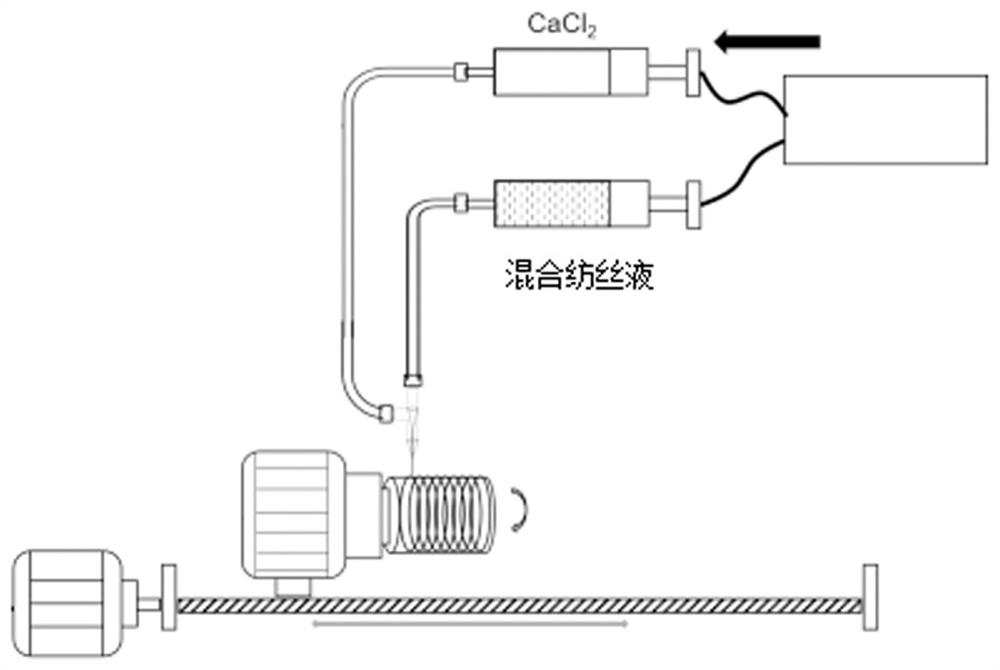
Figure 1 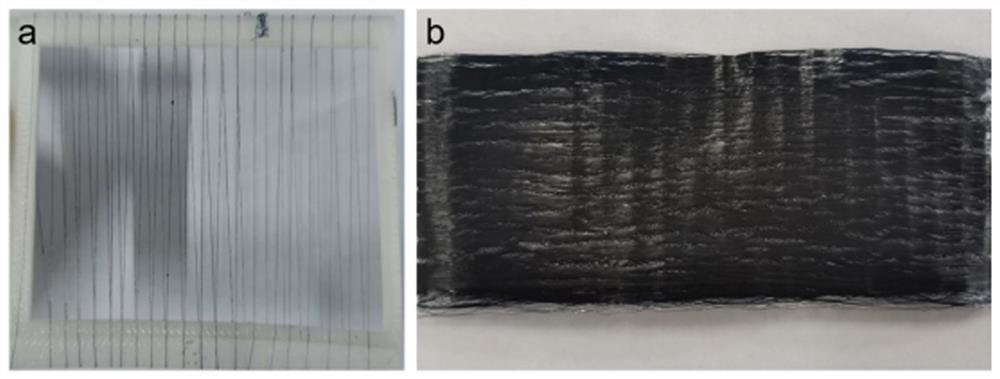
Figure 2 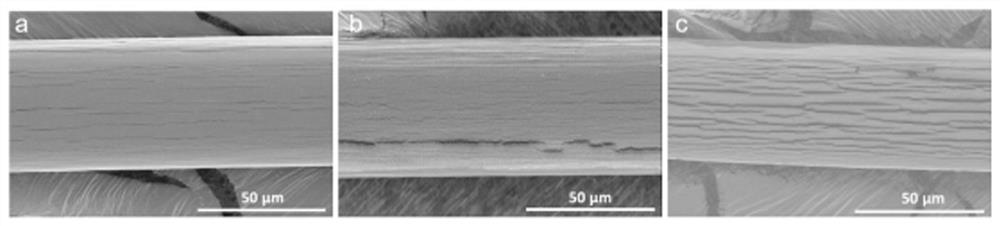
Figure 3
Abstract
Description
technical field
[0001] The invention relates to a conductive drug-loaded composite fiber, in particular to a preparation method of a conductive drug-loaded composite fiber. Background technique
[0002] Drug controlled release system refers to the use of some intelligent polymer materials as the carrier of drugs to form a drug loading system, which can achieve directional release and control the release rate of drugs, so that the efficacy of drugs can be fully exerted and the bioavailability of drugs can be further improved. , reduce the toxic and side effects of high-concentration drugs. The current research on intelligent drug controlled release systems that can respond to certain external stimuli include pH response, temperature response, electric field response, magnetic field response, etc. Among them, electro-responsive biomaterials are often characterized by rapid responses compared to other types of stimulus responsiveness. At the same time, the electric field resp...
Examples
preparation example Construction
[0043] like figure 1 As shown, a flow chart of the preparation of a microfluidic-based composite drug-loaded fiber provided by the present invention is shown. The preparation method of the microfluidic composite drug-loaded fiber comprises the following steps:
[0044]S1, get PVP and SA, stir and heat after adding water respectively, obtain PVP solution and SA solution;
[0045] S2. Mix the PVP solution and the SA solution, and then add APP to form a PVP / SA / AAP solution;
[0046] S3, adding PEDOT:PSS aqueous solution to the PVP / SA / AAP solution to form a PVP / SA / AAP / PEDOT:PSS mixed spinning solution;
[0047] S4. Preparation of continuous conductive drug-loaded composite fibers by microfluidic spinning, namely PSAP composite fibers
Embodiment 1
[0049] In this example, the PSA composite drug-loaded fiber is taken as an example to verify the influence of different spinning solution concentrations on the forming of PSA composite drug-loaded fiber, and then to verify the morphology characterization of PEDOT:PEDOT:PSS at different concentrations on the forming of PSAP composite fiber .
[0050] Among them, the difference between the preparation method of the PSA composite drug-loaded fiber and the above-mentioned PSAP composite fiber is whether PEDOT:PSS is added to the mixed spinning solution. First, through the verification of the solution concentration, ratio and microfluidic spinning process related parameters in the PSA composite drug-loaded fiber, the concentration of the PVP / SA / AAP mixed spinning solution that can continuously prepare the fiber is found. The PVP / SA / AAP / PEDOT:PSS mixed spinning solution with a mass fraction of 30wt%, 40wt% and 50wt% of the PVP / SA / AAP solution was used for morphology characterization...
Embodiment 2
[0064] In the above preparation method, the microfluidic spinning process parameters have a certain influence on the fiber forming. Therefore, this example aims to explore the influence of microfluidic spinning process parameters on fiber formation.
[0065] The microfluidic spinning machine is mainly composed of a microfluidic syringe pump and a fiber receiving platform. The first part of the microfluidic syringe pump is used to control the output speed and output of the spinning solution, mainly including: dual-channel syringe pump, syringe, Teflon tube and coaxial needle. The second part of the fiber receiving platform is used to receive fibers, and mainly includes a drum receiver, a rotating motor, a circular stepping translation platform, a heater and a control panel. The dual-channel syringe pump can independently control the two syringes and set different advancing speeds. The components of the microfluidic spinning device are connected by polytetrafluoroethylene tubes...