
Conductive polymer composition, conductive polymer sheet, electrical device, and their preparation methods
a technology of conductive polymer and composition, which is applied in the direction of resistors, non-conductive materials with dispersed conductive materials, and positive temperature coefficient thermistors, etc., can solve the problems of pptc component failure, metal-based pptc material is easily oxidized during production and processing, and the circuit is rapidly and accurately limited and protected. , to achieve the effect of poor pptc processability and high resistance of carbides
Patent Information
- Authority / Receiving Office
- US · United States
- Patent Type
- Patents(United States)
- Current Assignee / Owner
- Publication Date
- 2019-05-07
Smart Images
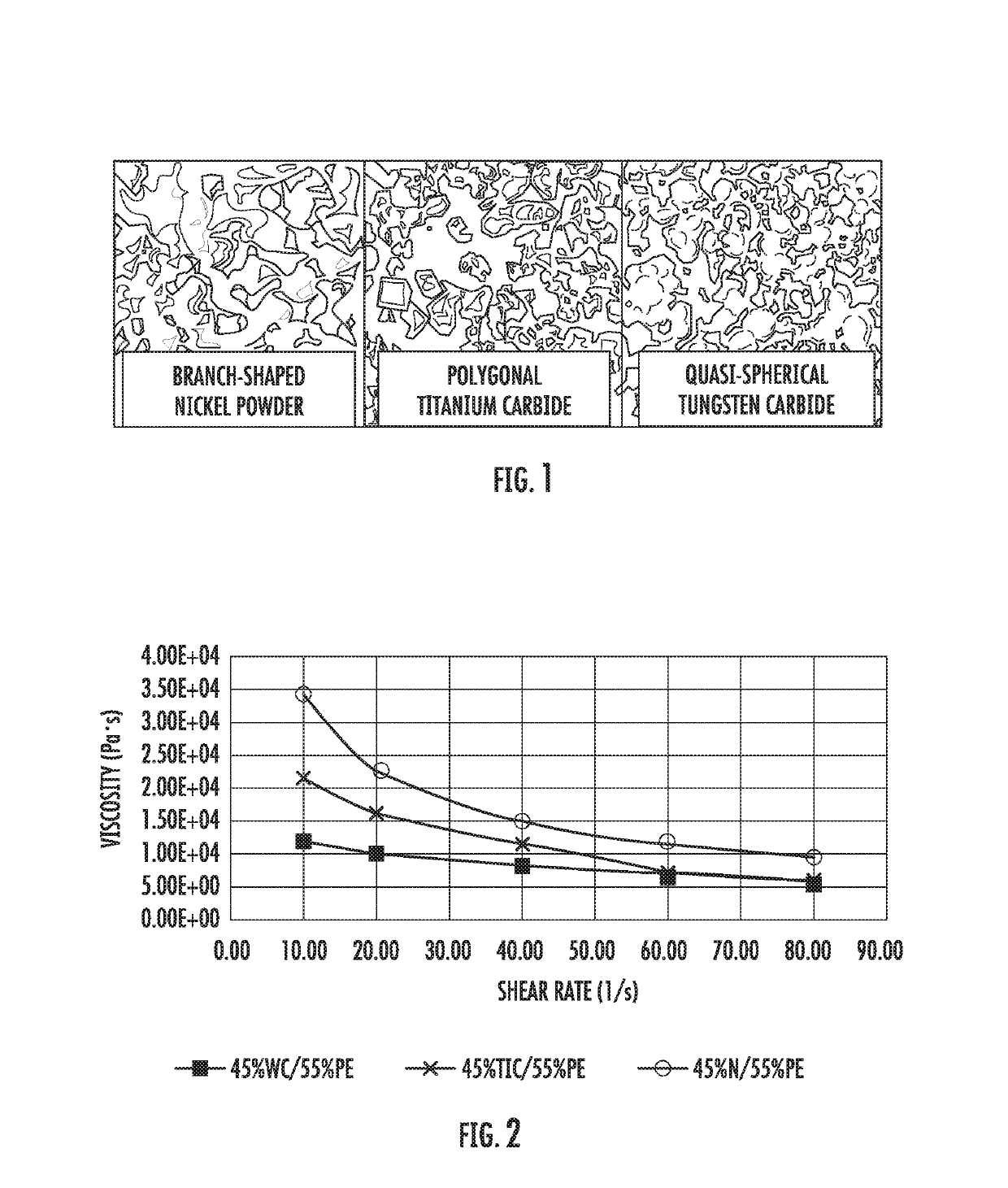
Figure 1 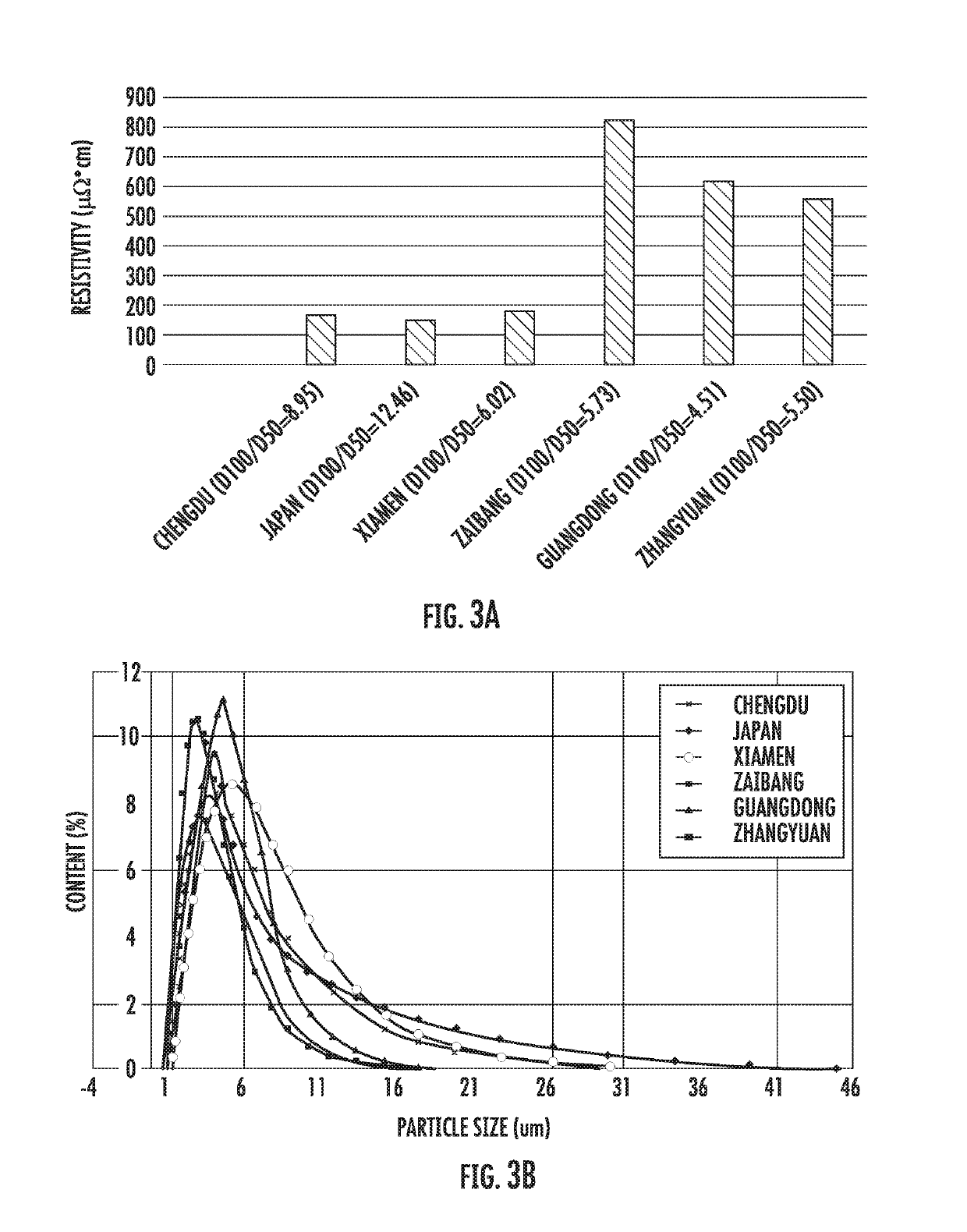
Figure 2 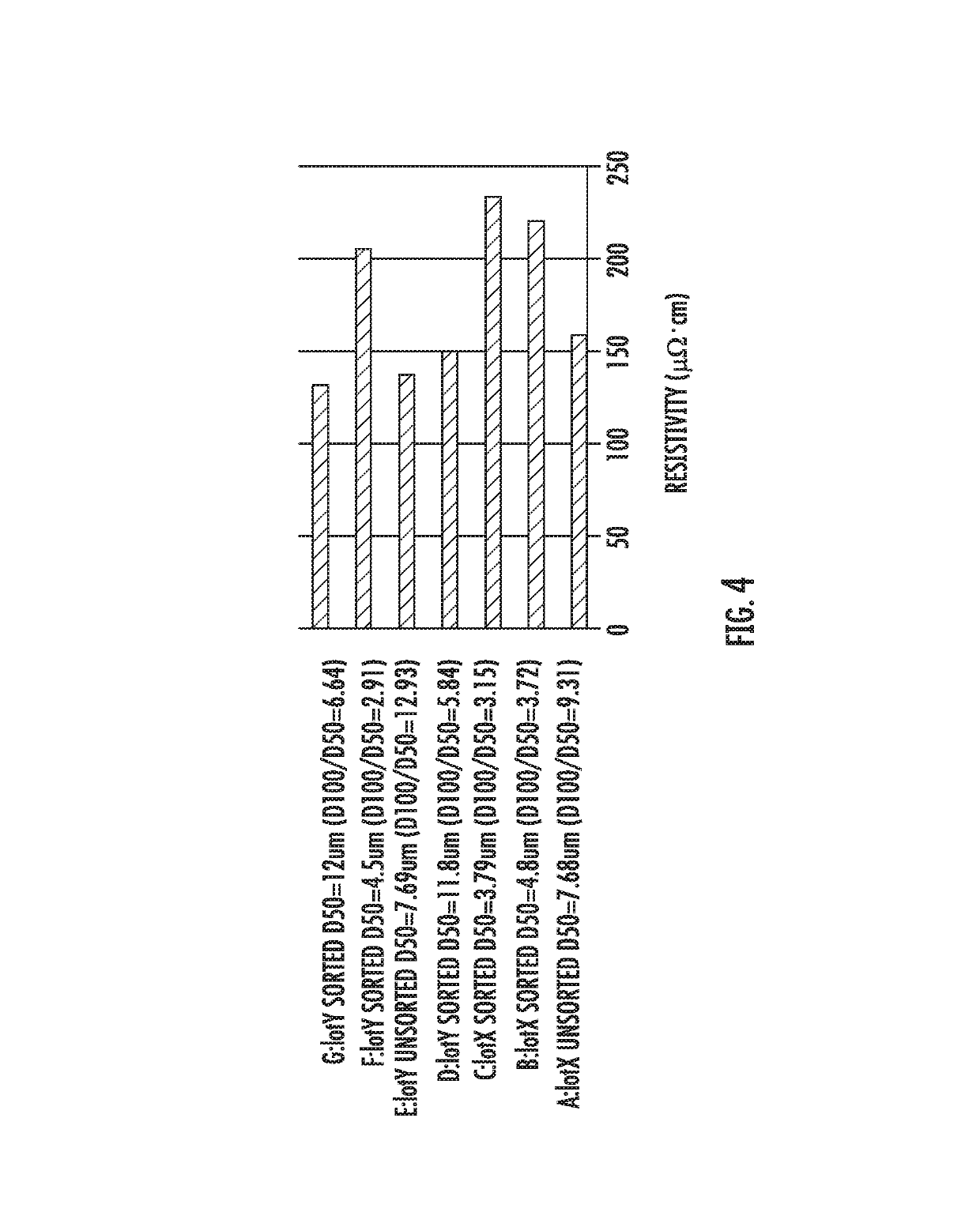
Figure 3
Abstract
Description
CROSS-REFERENCE TO RELATED APPLICATIONS
[0001] This application is a national phase claiming the benefit of and priority to International Patent Application No. PCT / CN2016 / 087896, entitled “CONDUCTIVE POLYMER COMPOSITION, CONDUCTIVE POLYMER SHEET, ELECTRICAL DEVICE, AND THEIR PREPARATION METHODS”, filed Jun. 30, 2016, which claims priority to Chinese Patent Application No. 201510371968.X filed on Jun. 30, 2015, both of which are hereby incorporated by reference in their entireties.TECHNICAL FIELD
[0002] The present invention relates to a conductive polymer composition, a conductive polymer sheet, an electrical device, and their preparation methods, and in particular, to a conductive polymer composition that can be used for preparing a device having air stability, ultralow resistance, polymer positive temperature coefficient (PPTC) characteristics and a conductive polymer sheet and an electrical device that are formed using same.BACKGROUND ART
[0003] A PPTC is an overcurrent protection dev...
Examples
specific embodiments
[0063]Several specific embodiments are shown in the following examples. It should be understood that other embodiments are considered and modifications can be made without departing from the scope or spirit of the present invention. Therefore, the following specific embodiments are not limitative.
[0064]Main raw materials used in the embodiments are summarized in Table. 1
[0065]
TABLE 1NameacronymSupplierCommodity numberConductiveNiIncoInco255nickelpowderTitaniumTiCZhuzhou SANLIFTiC-1carbideCompanyPolyethylenePEPetrotheneLB8320High-densityHDPEMarFlex9607polyethyleneDifferentChengduChengdu Nuclear 8571WCtypes ofNew Materials Co.,tungstenLtd.carbideJapanJapan New MetalsWC-15powdersCo., Ltd.WC-50XiamenXiamen Golden EgretGWC030Special Alloy Co.,Ltd.ZaibangShanghai ZaibangZBW15Chemical IndustryCo., Ltd.GuangdongGuangdong XiangLuXLWC30Tungsten Co., Ltd.ZhangyuanZhangyuan TungstenZWC30Co., Ltd.
embodiment 1
erformance of Spherical WC
[0066]A branch-shaped conductive nickel powder produced by Inco Company, polygonal TiC produced by Zhuzhou SANLI company, and a quasi-spherical WC powder produced by Chengdu Nuclear 857 New Materials Co., Ltd. are chosen. Scanning electron microscope (SEM) photos of the three are shown in FIG. 1. At an equal volume ratio (the volume proportion of the conductive powder is 45%) and under the same conditions, the branch-shaped conductive nickel powder, the polygonal TiC, and the quasi-spherical WC powder are blended, respectively with PE (polyethylene) produced by Petrothene Company, and melted and extruded, and the rheological curves of the obtained composite materials are measured. As shown in FIG. 2, under an equal volume proportion condition, the dynamic viscosity of a WC system (45% WC / 55% PE) is obviously lower than that of a TiC system (45% TiC / 55% PE) and that of a Ni system (45% Ni / 55% PE). It indicates that the composite of tungsten carbide and polye...
embodiment 2
and Particle-Size Distribution of Carbide
[0067]Six tungsten carbide powders having basically the same average size (D50<5 μm) (Chengdu, Japan, Xiamen, Zaibang, Guangdong, and Zhangyuan) are chosen, and their size distributions and resistivities are measured.
[0068]FIG. 3A shows a relationship between resistivity and size distribution of WC, and FIG. 3B is a diagram of size distribution of corresponding WC particles.
[0069]As shown in FIG. 3A, ultralow resistance is obtained for the three powders with D100 / D50>6.