
Hands-free contextually aware object interaction for wearable display
a technology of contextual awareness and object interaction, applied in the field of hand-free contextual awareness object interaction for wearable display, can solve the problems of limiting efficiency and effectiveness, ineffective use of time, and inability to find required content through manual navigation or touch-based systems, and achieve the effect of effective and efficient navigation through conten
Patent Information
- Authority / Receiving Office
- US · United States
- Patent Type
- Patents(United States)
- Current Assignee / Owner
- Publication Date
- 2021-03-02
Smart Images
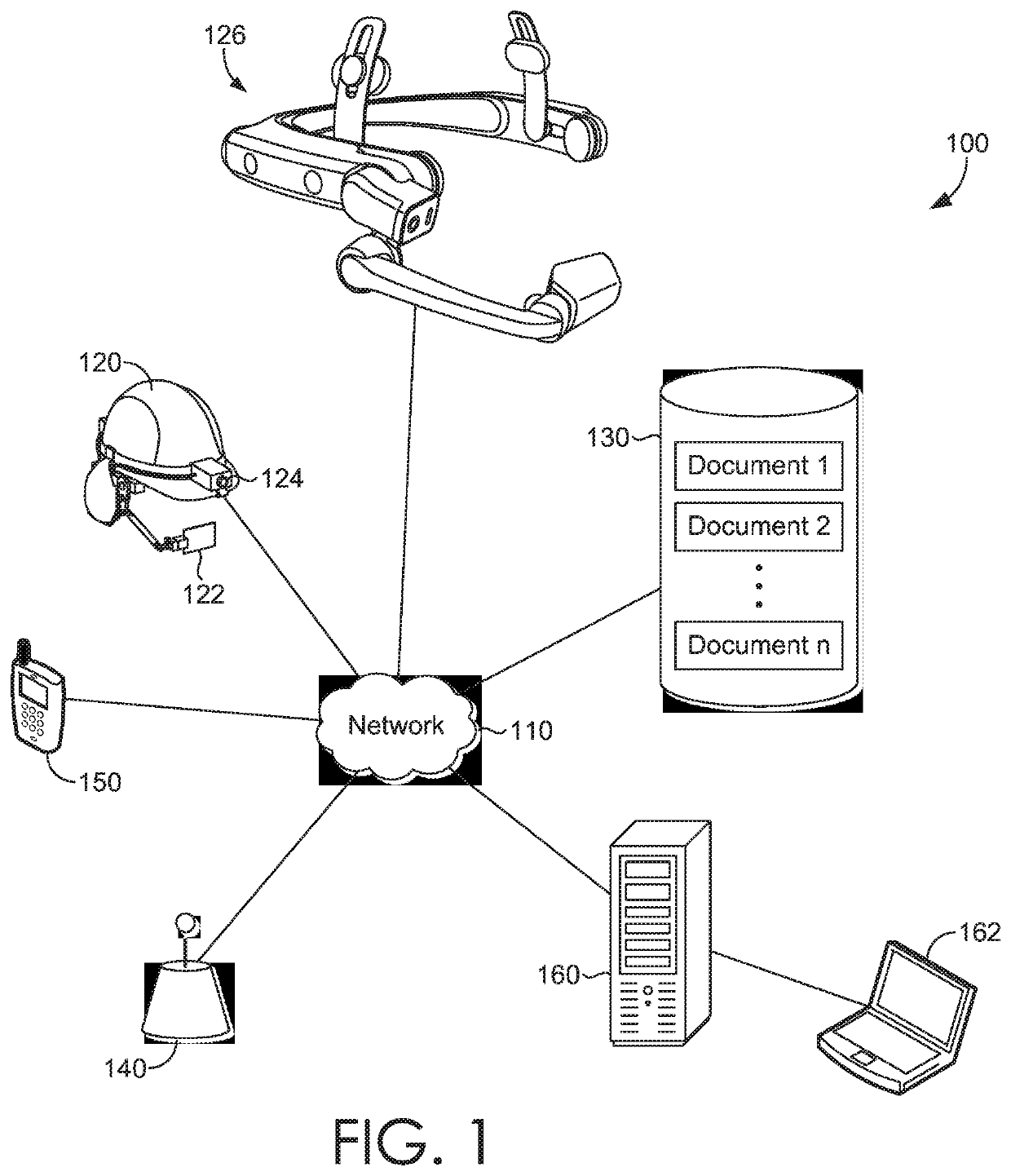
Figure 1 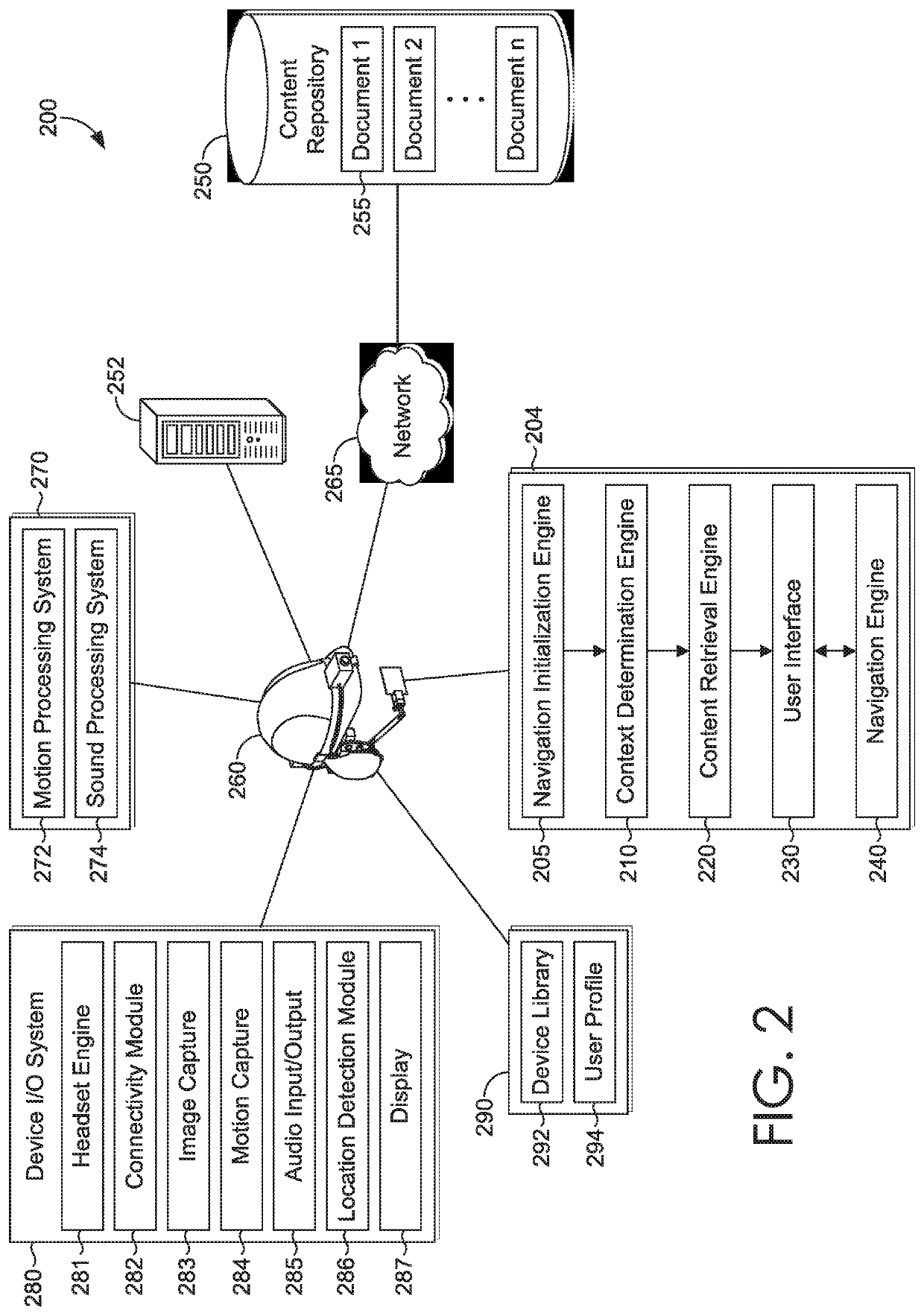
Figure 2 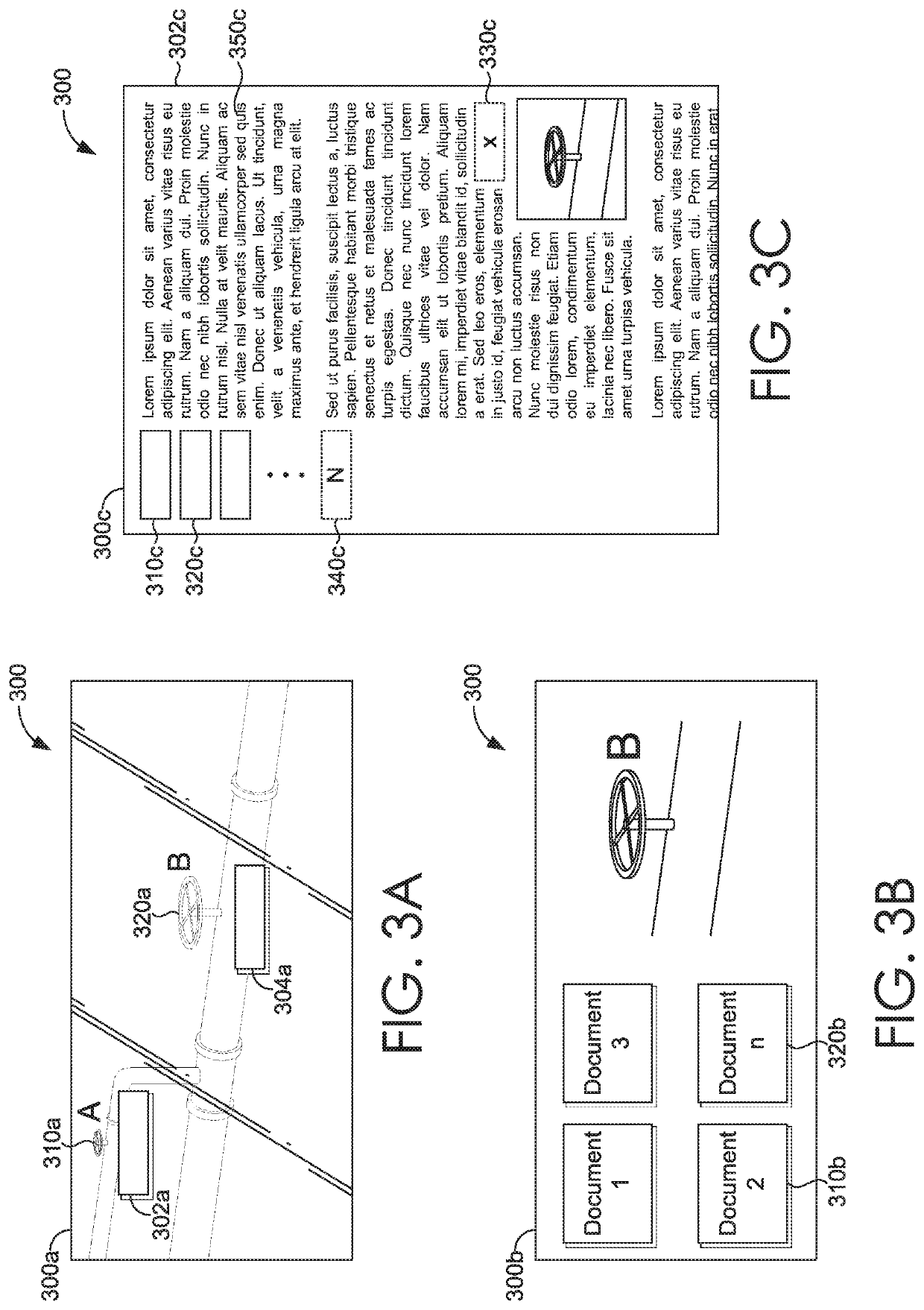
Figure 3
Abstract
Description
CROSS-REFERENCE TO RELATED APPLICATIONS
[0001] This application is a continuation-in-part to pending U.S. patent application Ser. No. 15 / 390,389, entitled “Context Based Content Navigation for Wearable Display.” The entirety of the aforementioned application is incorporated in its entirety by reference herein.BACKGROUND
[0002] In industrial settings a user may need to provide maintenance or perform other duties associated with complex equipment and be required to consult a large amount of technical documentation, which is generally provided to a user via binders, tablets, or laptops. There are, however, inherent inefficiencies associated with methodologies involving having to navigate and find the desired information this way. Finding required content through manual navigation or through touch-based systems can be an ineffective use of time and require a user to stop and restart tasks in order to do so.
[0003] Further, when a user runs one or more complex workflows or processes, many inte...
Examples
Embodiment Construction
[0024]The ability to easily and efficiently access and navigate relevant content through the use of a wearable device is an important aspect for user workflow and operation in particular scenarios, for example, in industrial applications where a user needs to navigate a potentially large volume of content quickly and while maintaining interaction with the technology while concurrently engaged in other tasks. Further, the ability to utilize a wearable device in a hands-free context enables a user to effectively implement workflow processes and procedures as well as to interact with any number of devices, including both non-interactive devices (e.g. non-human-machine-interface (HMI devices) and devices that include a human-machine interface (e.g. a device having a touch-screen display) detected by a wearable device which can be required to complete user tasks. Augmented reality dashboards that can implement what can be understood as personal control rooms for a user enable robust func...