
Therapeutic for the prevention and/or treatment of weight gain and/or diabetes
a technology for weight gain and/or diabetes, applied in the field of cell biology, endocrinology, molecular biology, biochemistry, medicine, can solve the problems of individual risk of becoming overweight and obese, and achieve the effects of reducing glucose production, reducing the risk of becoming overweight, and improving the production of glp-1
Patent Information
- Authority / Receiving Office
- US · United States
- Patent Type
- Patents(United States)
- Current Assignee / Owner
- Publication Date
- 2021-06-08
Smart Images
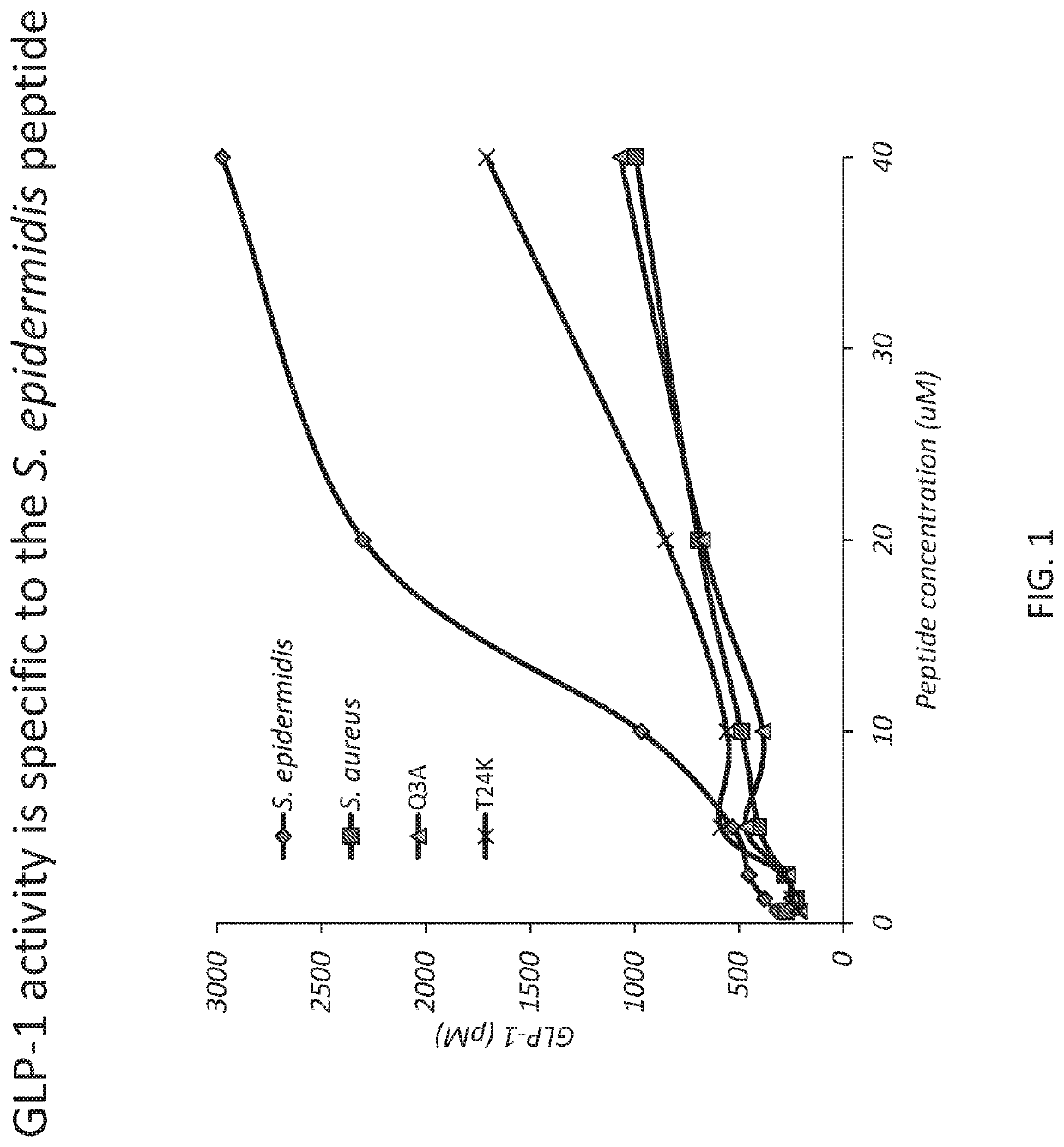
Figure 1 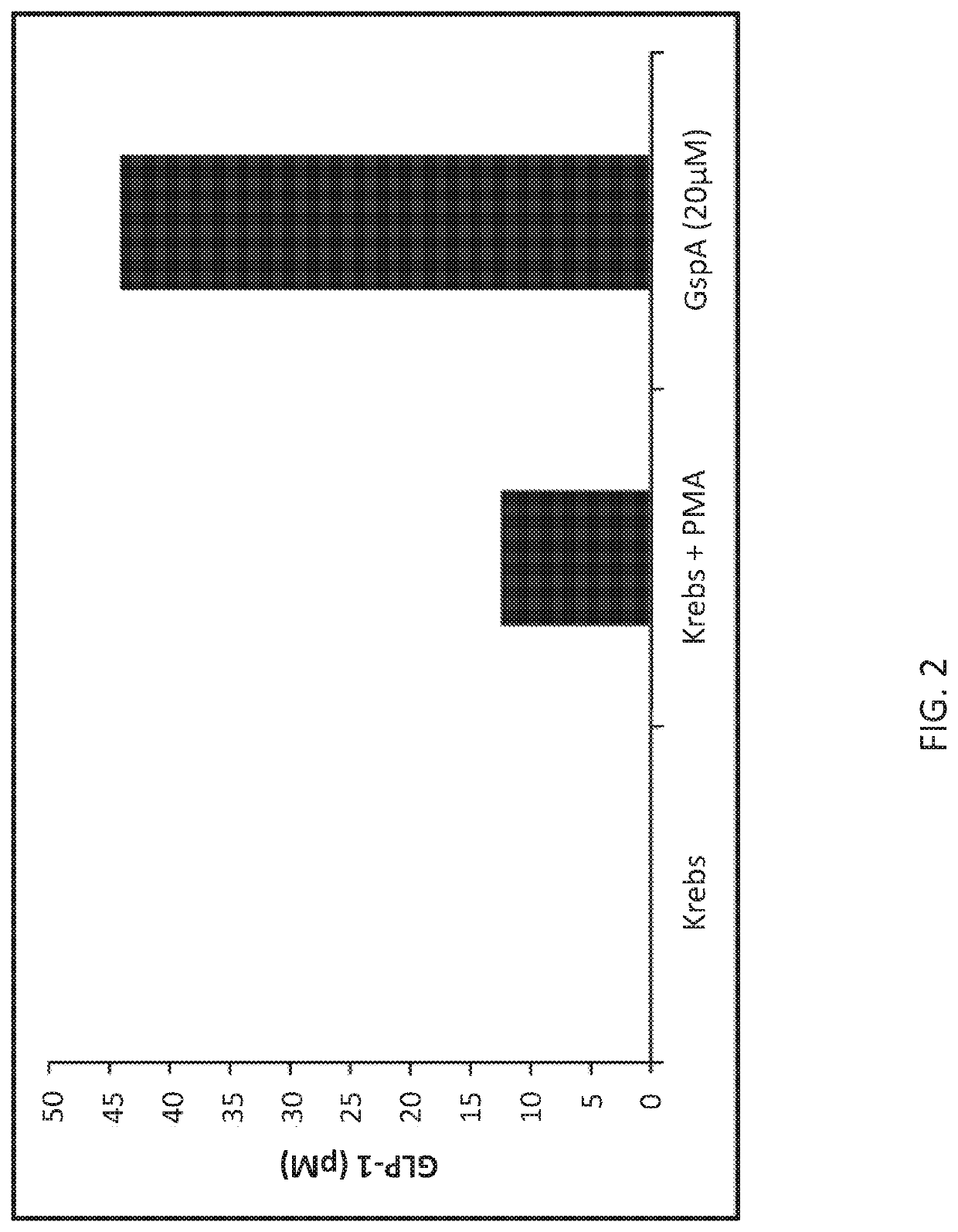
Figure 2 
Figure 3
Abstract
Description
[0001] The present application is a national phase application under 35 U.S.C. § 371 that claims priority to International Application No. PCT / US2017 / 060809, filed Nov. 9, 2017 which claims priority to U.S. Provisional Patent Application Ser. No. 62 / 419,581, filed Nov. 9, 2016, all of which are incorporated herein by reference in their entirety.TECHNICAL FIELD
[0002] Embodiments of the disclosure include at least the fields of cell biology, endocrinology, molecular biology, biochemistry, and medicine.BACKGROUND
[0003] Glucagon-like peptide-1 (GLP-1) is an incretin hormone produced by a subset of enteroendocrine cells in the gut epithelium. GLP-1 therapeutics have demonstrated therapeutic efficacy in managing metabolic diseases. The present work demonstrates that a peptide, termed GspA, can enhance GLP-1 secretion and provide beneficial therapeutic effects in the context of obesity and diabetes.BRIEF SUMMARY
[0004] Embodiments of the disclosure regard methods and compositions that concern t...
Examples
example 1
GSPA Peptide Studies
[0088]Studies in NCI H716 cells demonstrated that GspA alone is sufficient to enhance GLP-1 production. One can characterize the peptide and the mechanism(s) of GLP-1 modulation.
[0089]Studies identified strains of S. epidermidis with GLP-1 stimulatory activity on GLP-1 producing cells, the NCI H716 cells. S. epidermidis JA1 was demonstrated to have the highest GLP-1 stimulatory activity. Mass spectrometry analysis of the S. epidermidis supernatants identified GspA as a potential candidate for the observed GLP-1 stimulatory activity. GspA has sequence homology with a S. aureus peptide, termed delta toxin, with two amino acid changes. To test GLP-1 stimulatory activity, the GspA, S. aureus and mutant peptides (Q3A and T24K) were synthesized and incubated on NCI H716 cells at varying concentrations. Incubation of GspA on the NCI H716 cells led to a dose dependent release of GLP-1, with a release of 2980 pM of GLP-1 when incubated with 40 μm of GspA for 2 hours. Incu...
example 2
Therapeutic for the Prevention and / or Treatment of Weight Gain and / or Diabetes
[0092]S. epidermidis has GLP-1 stimulatory activity in vitro in NCI H716 and GLUTag cells—In order to identify bacterial strains capable of eliciting GLP-1 secretion, 1500 microbial supernatants were screened using human NCI H716 cells. While the vast majority of strains had no impact on GLP-1 secretion, 45 isolates were identified that showed increased GLP-1 secretion above the positive PMA control. Following 16S rRNA sequencing, all 45 stimulatory strains came back as strains of S. epidermidis. Incubation of cell-free supernatants from two of the stimulatory strains with the highest activity, S. epidermidis JA1 and JA8 on NCI H716 cells stimulated a release of 3155±276 pM and 2518±141 pM GLP-1, respectively (FIG. 6A). GM17 media control and the PMA positive control had GLP-1 levels of 565±188 pM and 1767±120 pM GLP-1, respectively, indicating an approximate 2-fold increase in activity by JA1 over the pos...