
Roofing materials made with nylon fiber composites
a technology of nylon fiber and composites, applied in the field of building materials, can solve the problems of inability to achieve the level of consistency, uniformity, uniformity, and uniformity, and achieve the effects of enhancing drainage or other useful traits, and reducing the number of shredded carpet segments
Patent Information
- Authority / Receiving Office
- US · United States
- Patent Type
- Applications(United States)
- Current Assignee / Owner
- Publication Date
- 2005-08-04
- Estimated Expiration
- Not applicable · inactive patent
Smart Images
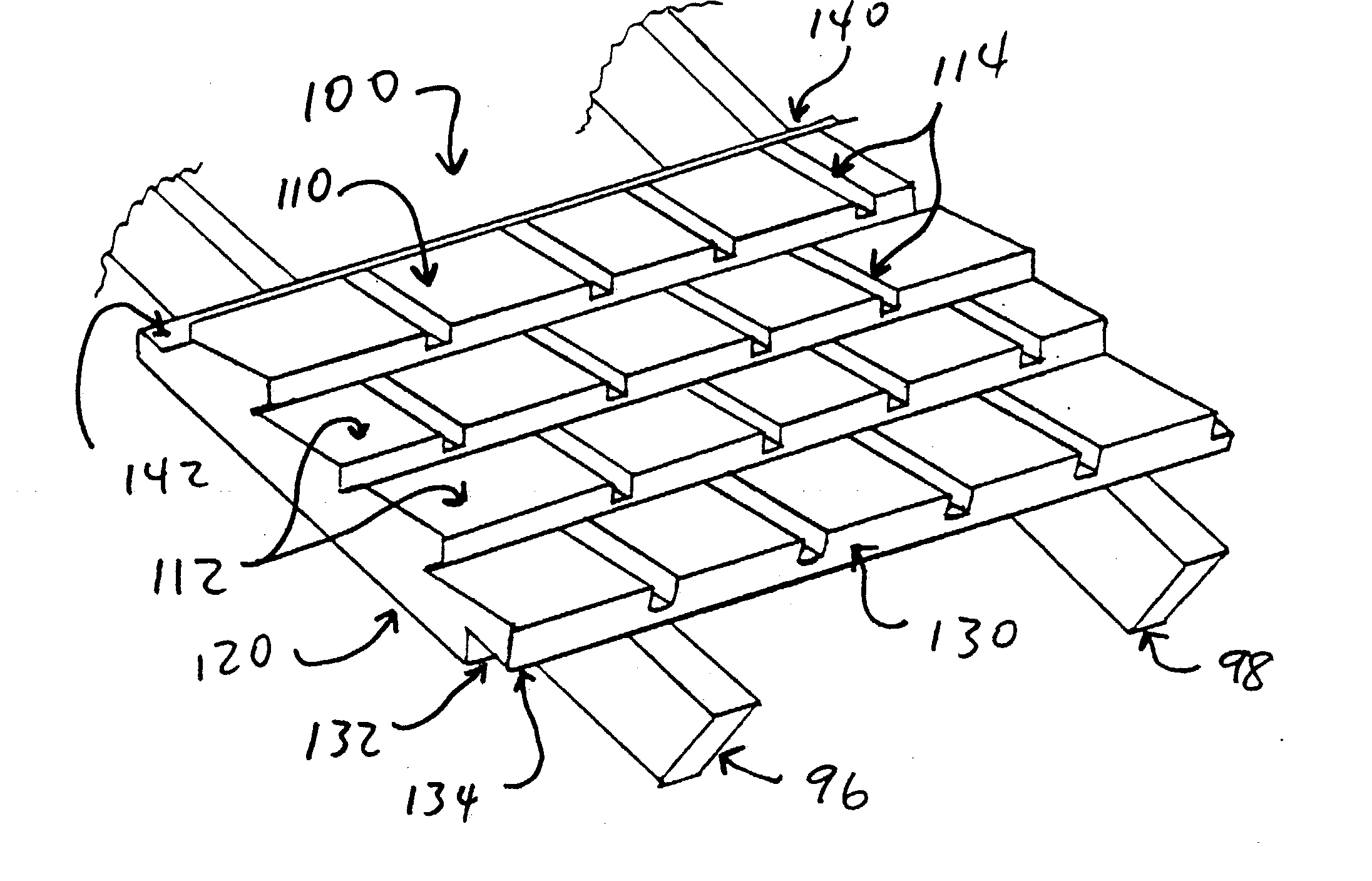
Figure 1 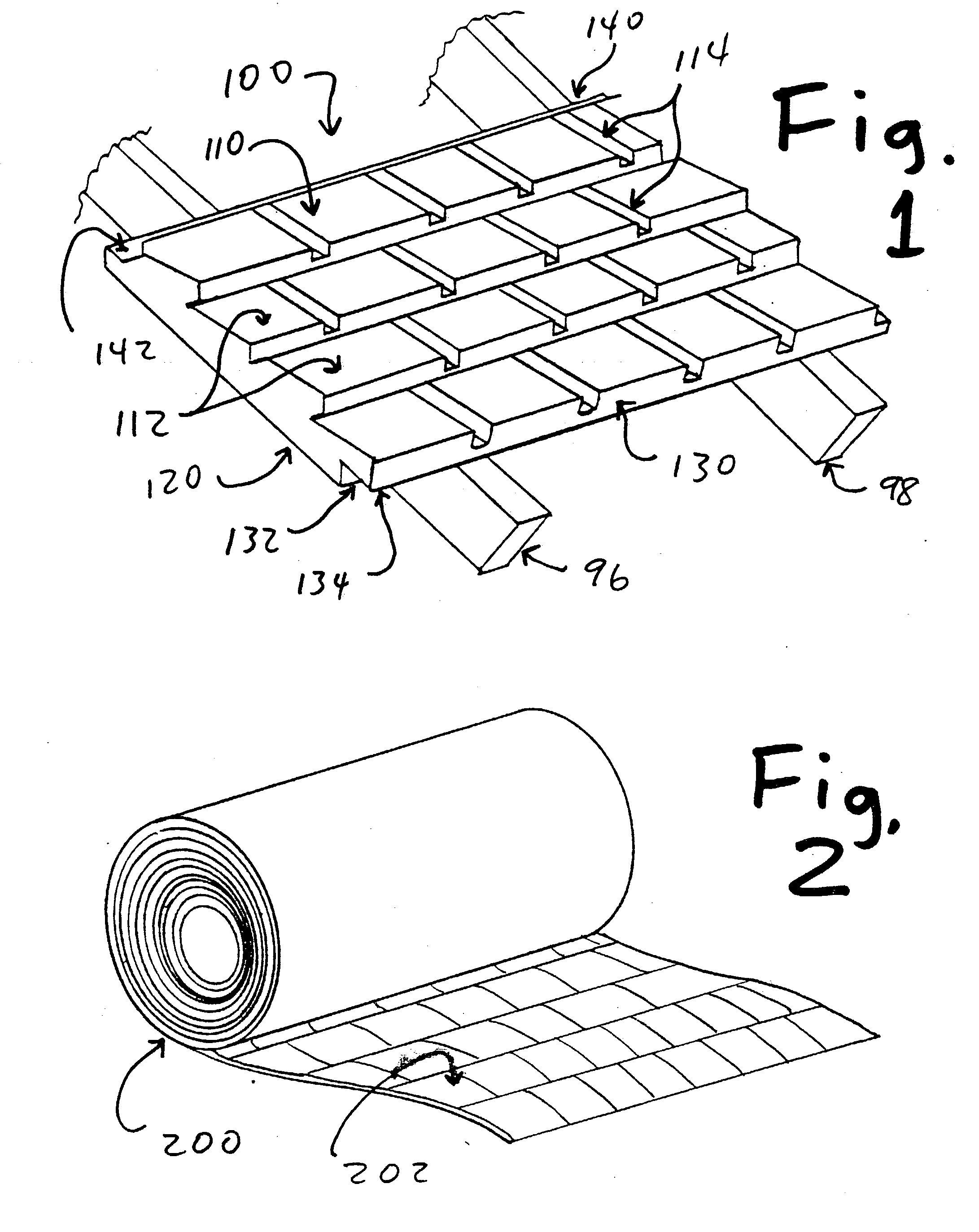
Figure 2 
Figure 3
Abstract
Description
RELATED APPLICATIONS
[0001] This application is a continuation-in-part of U.S. utility application Ser. No. 10 / 284,598, filed on Oct. 31, 2002, which in turn claimed priority based on Patent Cooperation Treaty application PCT / US01 / 11895, published as WO 01 / 76869, which had an international filing date of Apr. 11, 2001.
[0002] This application also claims the benefit, under 35 USC 120(e), of provisional patent application No. 60 / 379,996, filed on May 13, 2002.FIELD OF THE INVENTION
[0003] This invention is in the field of building materials, and relates to waterproof sheets or segments of materials that can be affixed to the roof of a house or other building, to replace shingles, roofing tiles, and similar materials. BACKGROUND OF THE INVENTION
[0004] PCT application WO 01 / 76869 (Bacon et al) describes a process for making, from shredded carpet segments, synthetic materials that can substitute for “sheetwood” products (such as plywood, particle board, “chipboard”, oriented strand boa...
Examples
Embodiment Construction
[0076] As briefly summarized above, this invention relates to roofing materials made of composite materials that contain synthetic fibers, such as nylon fibers. If desired, such fibers can be obtained economically from sources such as discarded carpet segments (either as “post-industrial” waste that was never installed or walked on, or as “post-consumer” waste that was installed on a floor and subsequently removed). Alternately, because of the high levels of utility, durability, and value that can be provided by the roofing products disclosed herein, virgin fibers can be purchased and used if desired, either alone, or mixed with recycled fibers.
[0077]FIG. 1 illustrates a segment of roofing material 100 that can substitute for both (i) an outer layer of shingles, and (ii) an underlying structural supporting sheet, normally made of plywood or OSB. Roofing segment 100 is shown resting on two rafters 96 and 98, with conventional 15 to 18 inch spacing. For clarity of illustration, segme...