
Vertebral osteosynthetis equipment
a technology of vertebral osteosynthetis and equipment, which is applied in the direction of osteosynthesis devices, prostheses, surgical staples, etc., can solve the problems of significant drawbacks of being strongly invasive and complicated surgical operations
Patent Information
- Authority / Receiving Office
- US · United States
- Patent Type
- Patents(United States)
- Current Assignee / Owner
- Publication Date
- 2015-02-17
Smart Images
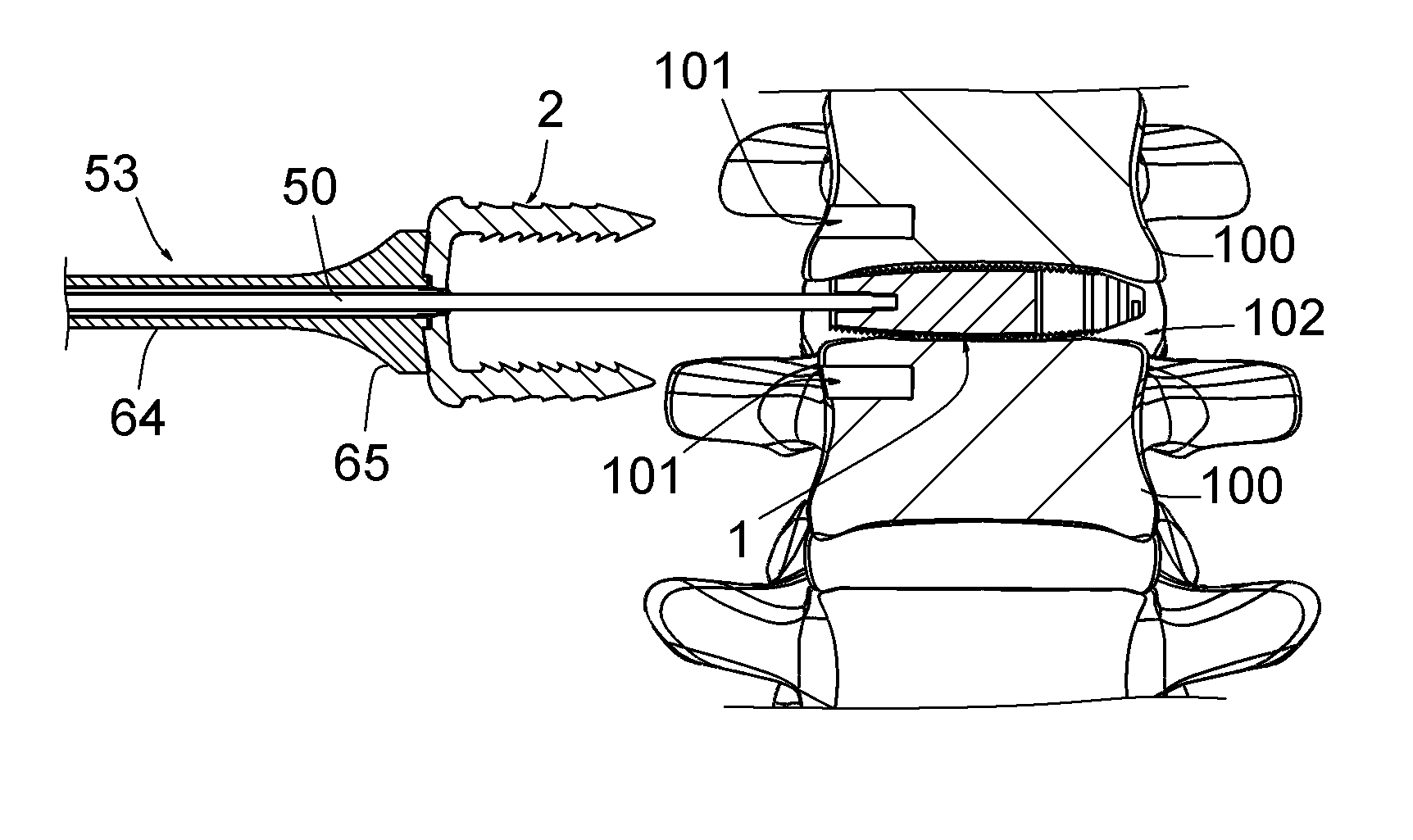
Figure 1 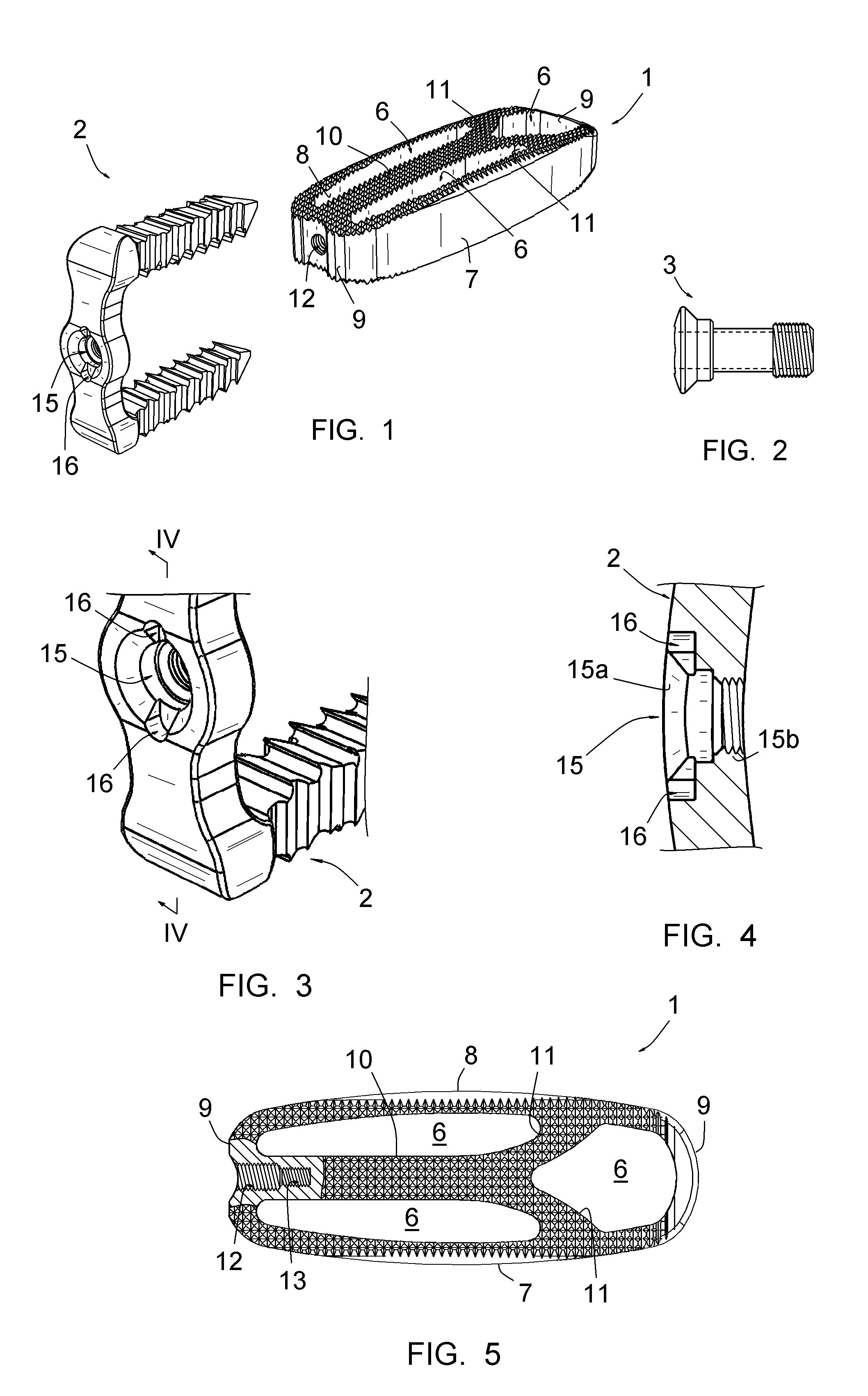
Figure 2 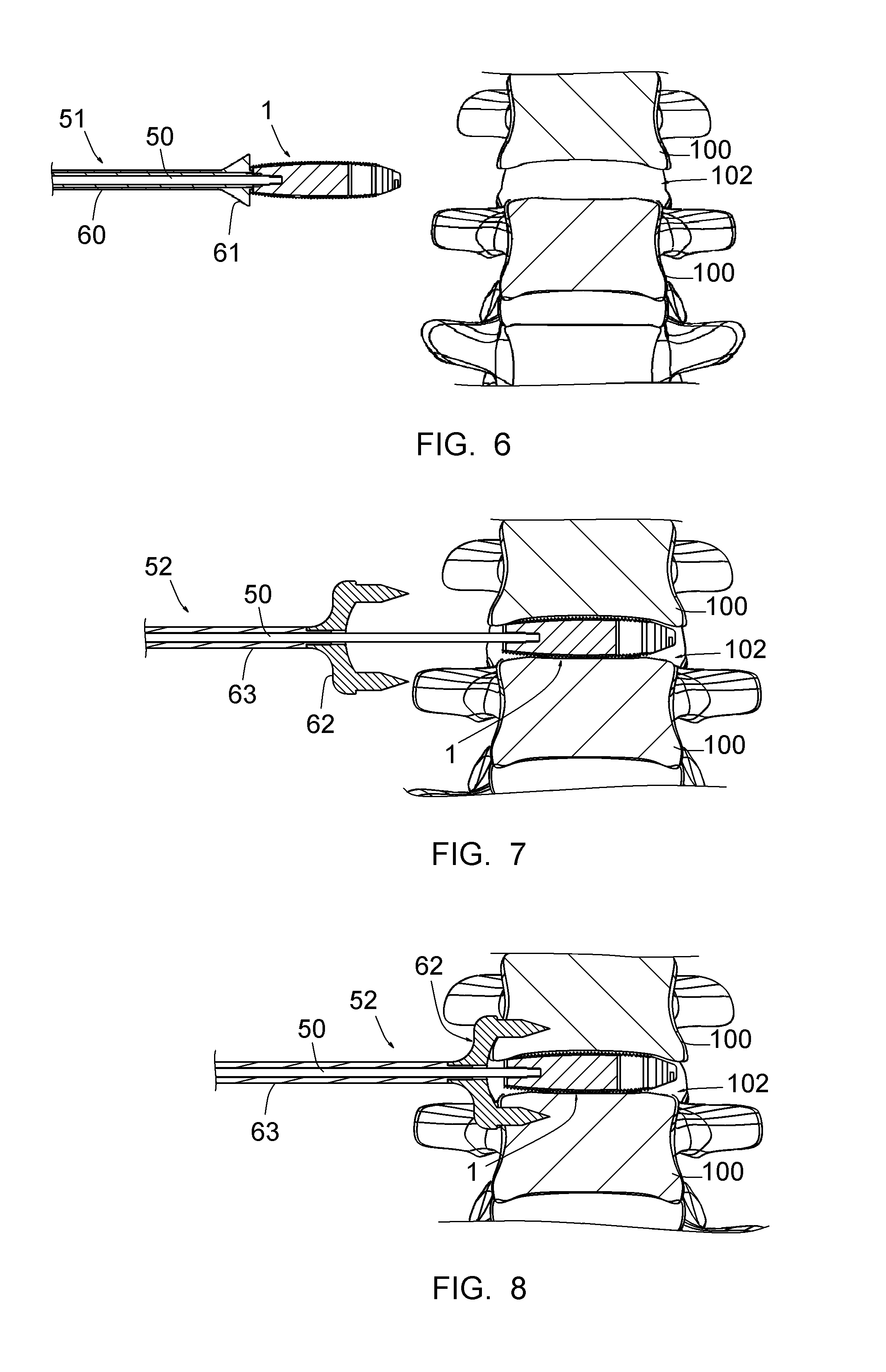
Figure 3
Abstract
Description
CROSS REFERENCE TO RELATED APPLICATION
[0001] This application is a national stage entry of PCT / IB2010 / 051821 filed Apr. 26, 2010, under the International Convention, claiming priority over FR 0902030 filed Apr. 27, 2009.FIELD OF THE INVENTION
[0002] The present invention relates to a piece of vertebral osteosynthesis equipment.BACKGROUND TO THE INVENTION
[0003] The immobilization of two consecutive vertebrae by placing between these vertebrae, an implant intended to be colonized by growing bone cells so as to achieve what should be called “bone fusion” of the vertebrae, is well known. This intervertebral implant may notably be in the form of a cage in stiff material, against which the vertebrae bear, the cavity(ies) of which receive(s) a porous, bone or synthetic graft.
[0004] Associating with the intervertebral implant, a member for connecting two vertebrae externally to the intervertebral space, notably as a clamp, is also known, the respective branches of which are inserted into the bod...
Examples
Embodiment Construction
[0062]The FIGS. 1-5 represent a piece of vertebral osteosynthesis equipment including an intervertebral implant 1, a member 2 for connecting the vertebral bodies 100 of two treated vertebrae, an assembling member 3 for assembling the connecting member 2 to the intervertebral implant, and FIGS. 12-16 represent instruments 50-54 for placing this implant 1, this connecting member 2 and this assembling member 3.
[0063]By more particularly referring to FIGS. 1 and 5, it appears that the intervertebral implant 1 is in the form of a cage delimiting cavities 6 for receiving porous, bone or synthetic grafts. These grafts are intended to be colonized by growing bone cells, so as to achieve what should be called “bone fusion” of the vertebrae.
[0064]The implant 1 is intended to be introduced into the intervertebral space to be treated via a side approach. It comprises peripheral walls, including an anterior wall 7, a posterior wall 8 and side walls 9. It also comprises internal walls, including ...