
Predictive fault determination for a non-stationary device
a non-stationary device and fault determination technology, applied in the direction of electric controllers, instruments, ignition automatic control, etc., can solve the problems of inability to achieve sophisticated levels of computation, inability to include any significant amount of internal computing power, and inability to detect faults in real tim
Patent Information
- Authority / Receiving Office
- US · United States
- Current Assignee / Owner
- Publication Date
- 2007-04-05
- Estimated Expiration
- Not applicable · inactive patent
Smart Images
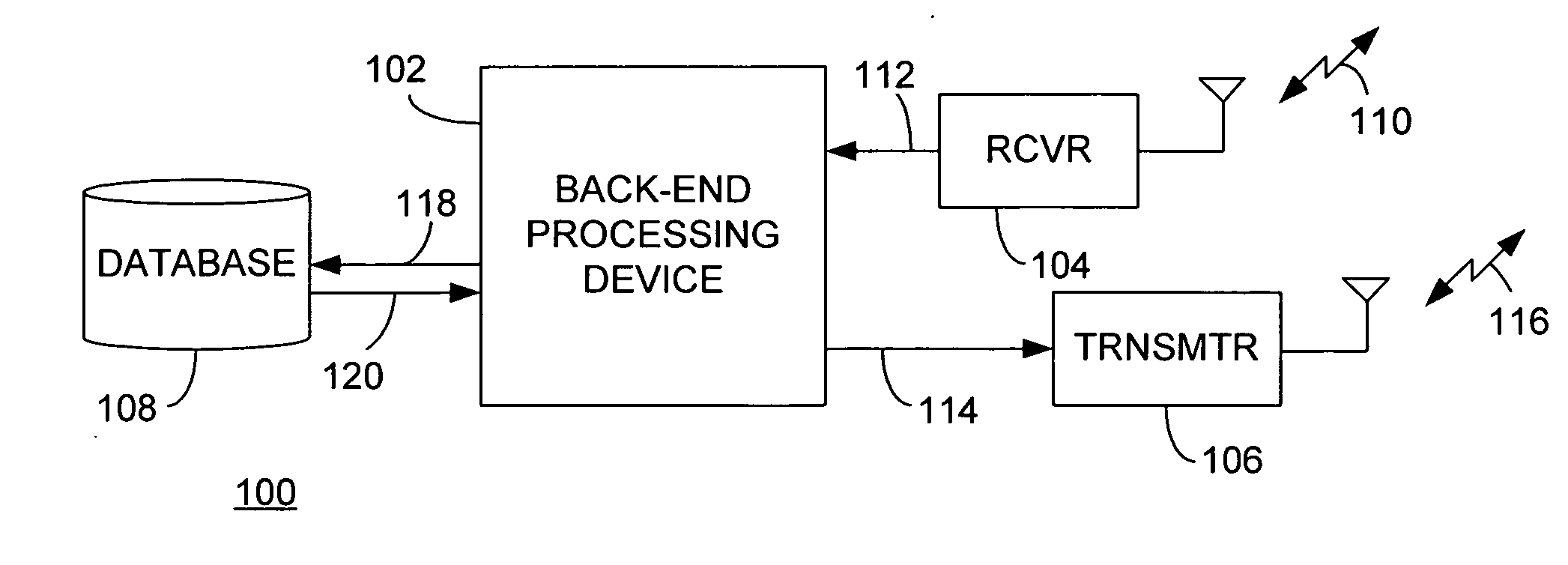
Figure 1 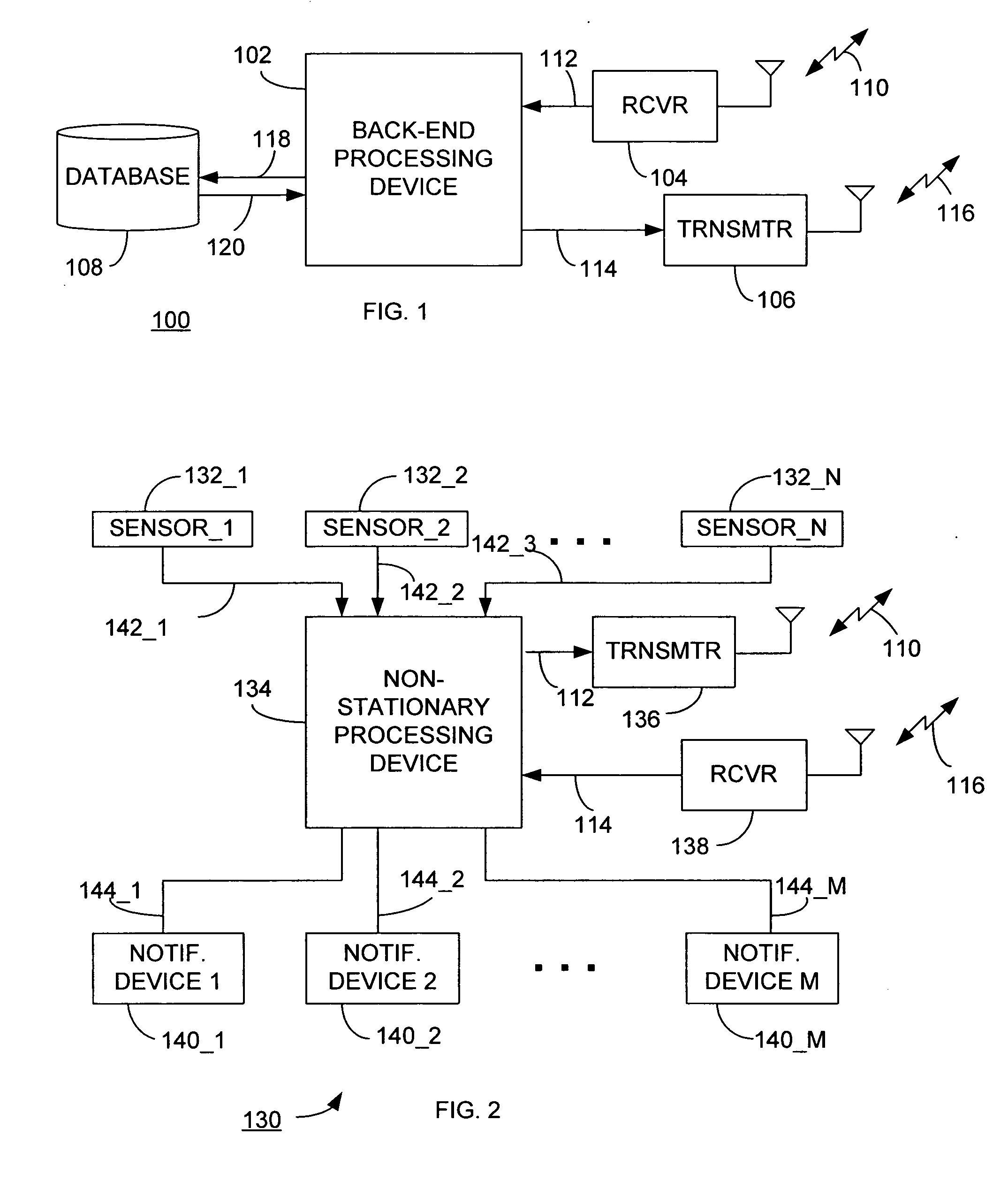
Figure 2 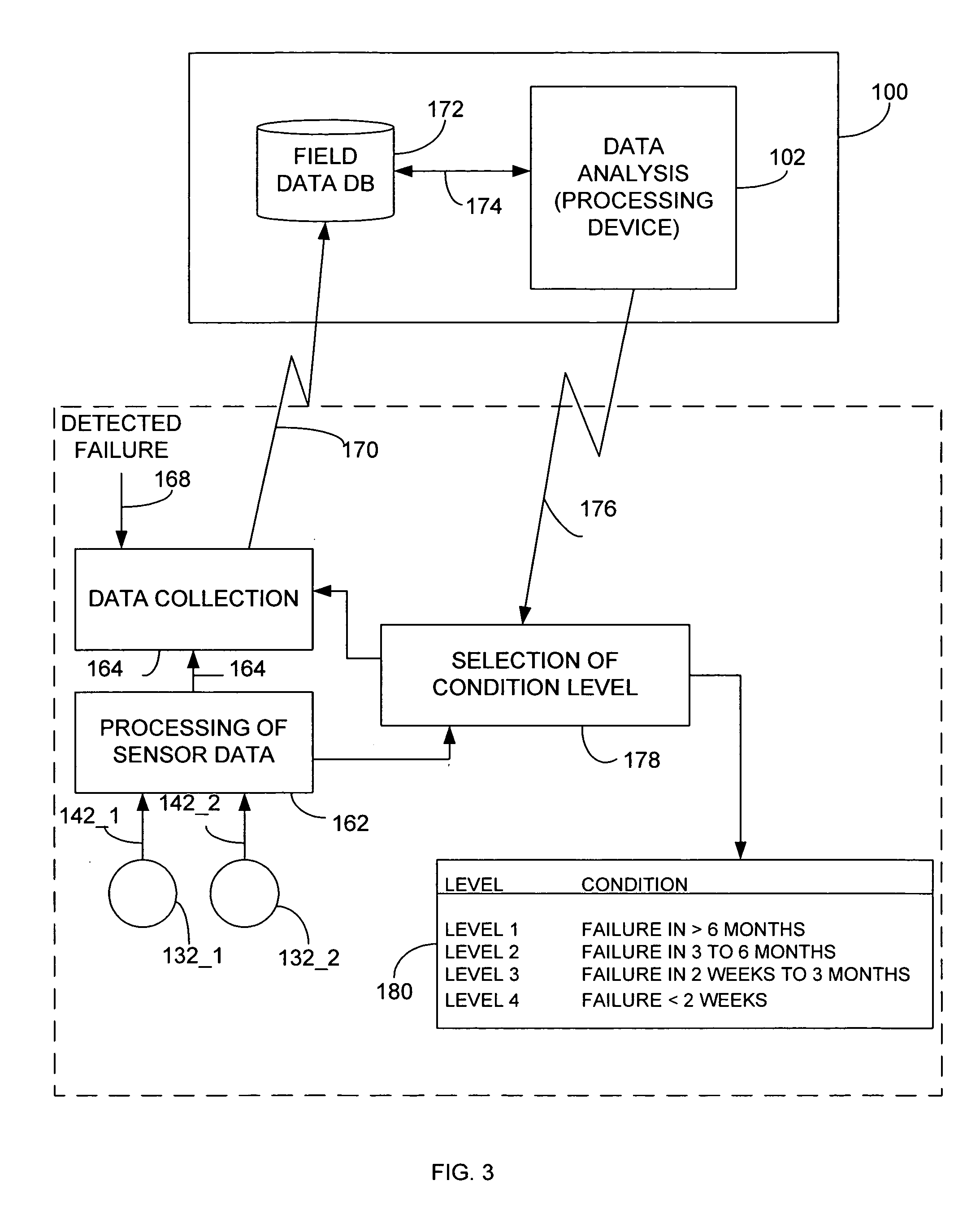
Figure 3
Abstract
Description
COPYRIGHT NOTICE
[0001] A portion of the disclosure of this patent document contains material that is subject to copyright protection. The copyright owner has no objection to the facsimile reproduction by anyone of the patent document or patent disclosure as it appears in the Patent and Trademark Office patent file or records, but otherwise reserves all copyright rights whatsoever. BACKGROUND OF THE INVENTION
[0002] The present invention relates generally to predictive maintenance identification in an operating device and more specifically to the distribution of decision support using product embedded information devices. Specifically, the present invention is intended to predict a time of failure for one or more components of the operating device (e.g. a motor vehicle) based on the active measured conditions for the device's components.
[0003] Existing predictive maintenance systems allow for early determinations of anticipated problems with operational devices. In these systems, p...
Examples
Embodiment Construction
[0018] Generally, a predictive fault determining system includes a non-stationary operating device and a fault determining device. The term non-stationary operating device may refer to an operating device that is in motion and this terminology may also refer to an operating device that is temporarily stationary, but has the capacity, as part of its normal operating and in order to fulfill its intended purpose, to move (i.e., enter into a non-stationary state). The fault determining device is stationary and communicates with the non-stationary operating device using a wireless transmission. The non-stationary operating device includes sensors to determine status data of one or more components of the operating device. Normally, the operating device uses sensors data to select a condition level from one of a plurality of levels, expressing varying degrees of device degradation, an example of which is table 180 of FIG. 3. The non-stationary operating device further includes a processing...