
Method for multi-lingual search and data mining
a multi-lingual search and data mining technology, applied in the field of multi-lingual search and data mining, can solve the problems of not being truly available to all users, limited, and segmented in modern day search engines, so as to expand the breadth and scope of online searches, and expand search abilities.
Patent Information
- Authority / Receiving Office
- US · United States
- Patent Type
- Applications(United States)
- Current Assignee / Owner
- Publication Date
- 2009-01-22
- Estimated Expiration
- Not applicable · inactive patent
Smart Images
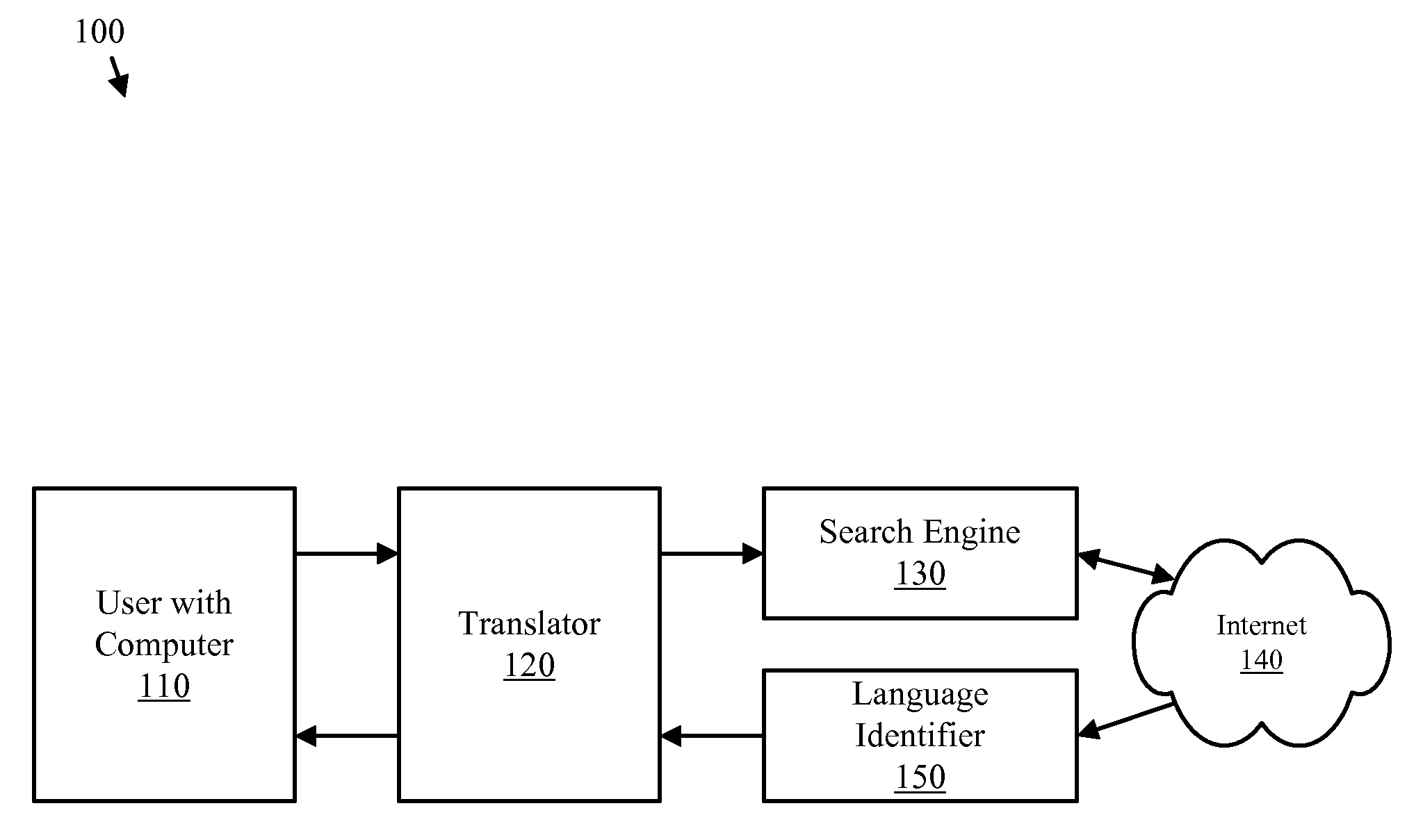
Figure 1 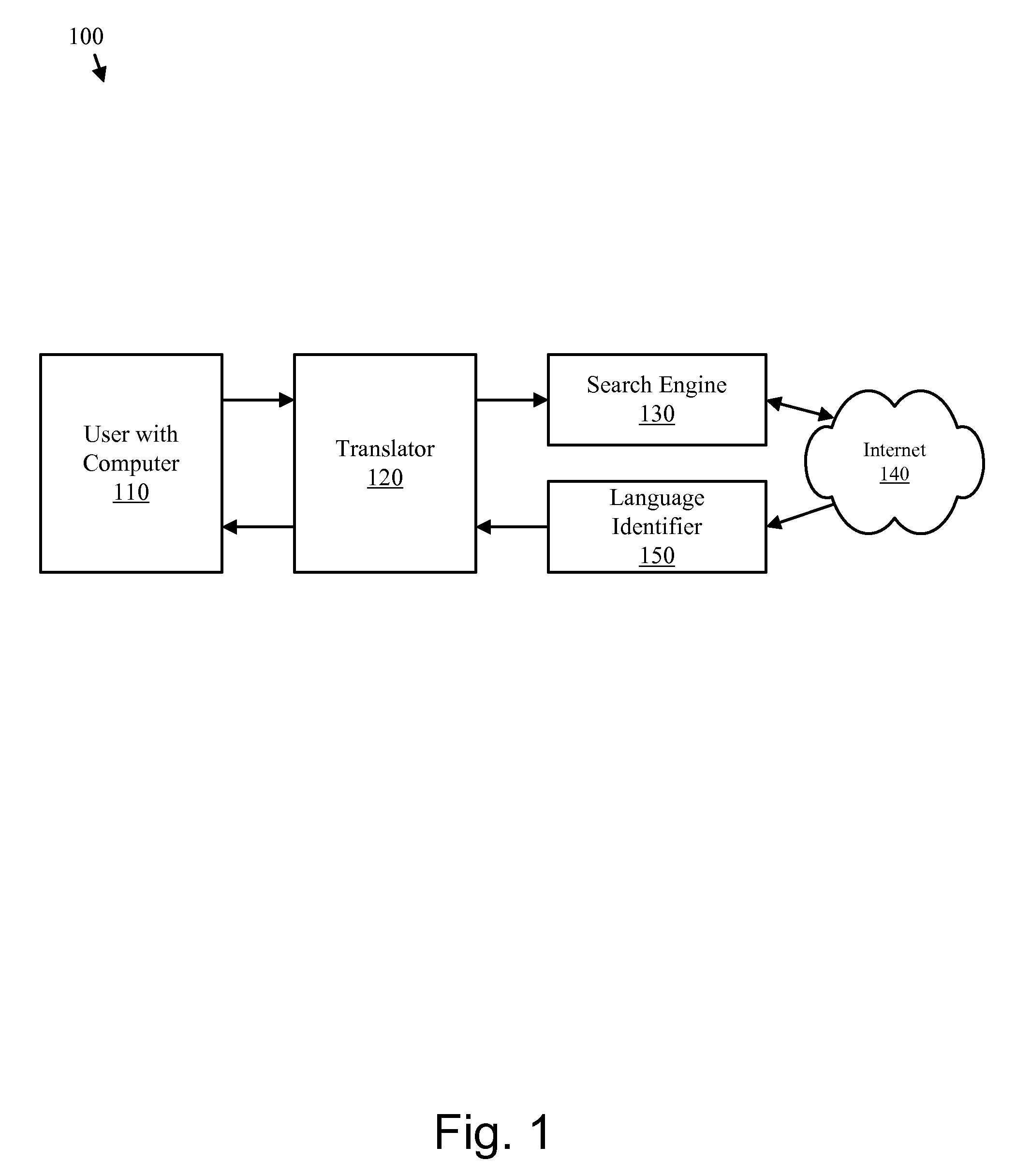
Figure 2 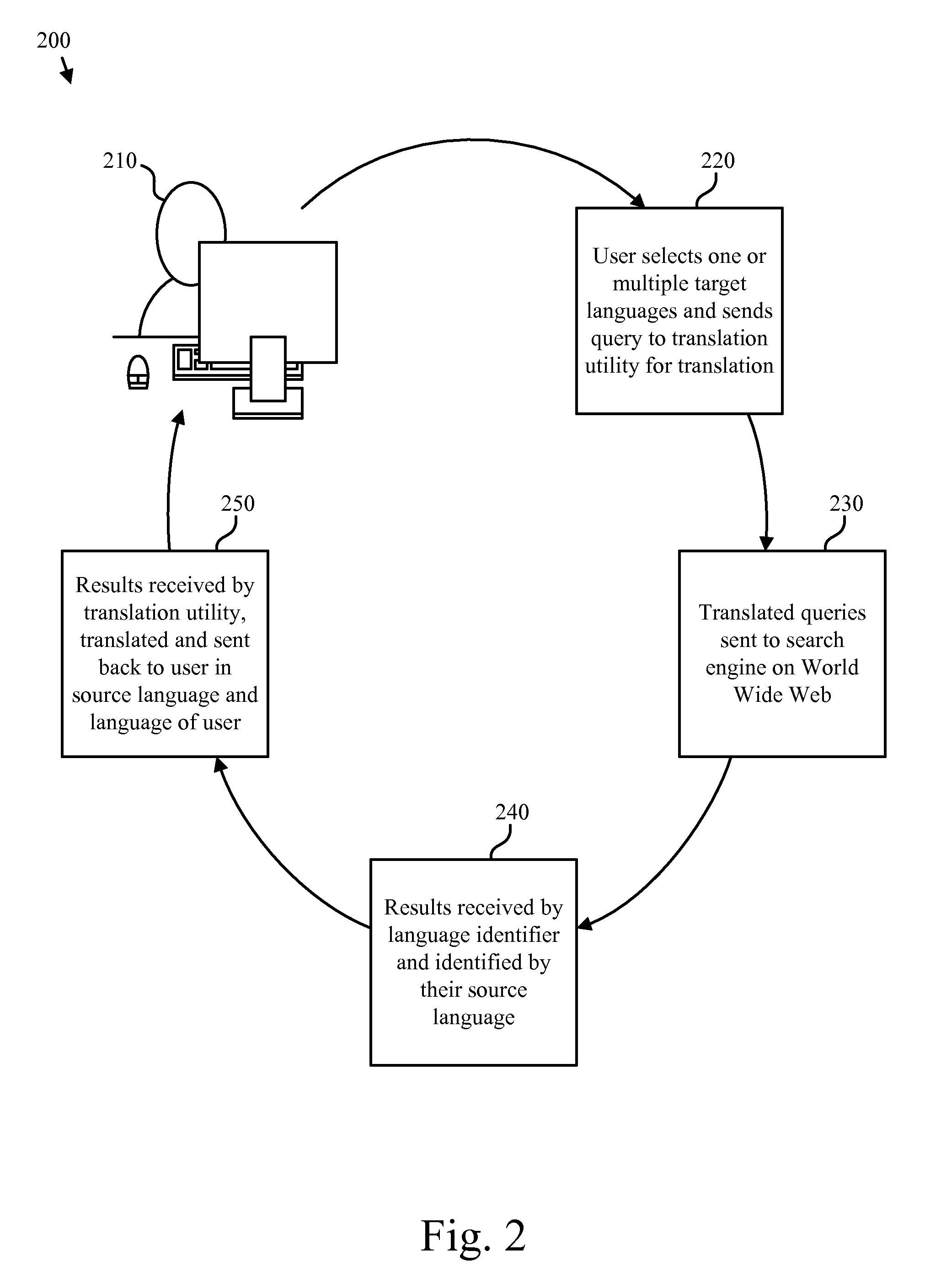
Figure 3
Abstract
Description
RELATED APPLICATIONS
[0001] This application claims priority to U.S. Provisional Application 60 / 961,136 entitled “METHOD FOR MULTI-LINGUAL SEARCH AND DATA MINING” which was filed on 19 Jul. 2007 for Giovanni Tata. The aforementioned application is incorporated herein by reference.FIELD OF INVENTION
[0002] The present disclosure relates generally to a method and system for searching and viewing multilingual information.BACKGROUND AND RELATED ART
[0003] The World Wide Web (“Web”) has fast become a main source of knowledge and information for many people throughout the world. The content available online is quickly expanding and evolving. As a result of the incredible amount of information available, there is a growing need for quick and efficient searching tools. Today, many search tools are available to Web users. While many of them operate differently, the end goal is the same—to provide the user with the most relevant information based on the content provided for the search.
[0004] The sea...
Examples
Embodiment Construction
[0017]Because there is a definite need to conduct efficient multi-lingual searches, pairing a translation system with a searching tool is a necessary step. Generally, when companies or users register their websites with search engines, they indicate the language of the content. However, a sizeable portion of the content on the Internet is not registered with search engines. A search engine combined with just a translator may be able to adequately search and retrieve information if all pages were registered correctly and contained only one language. However, this is not the case, and many pages are not registered and / or contain multiple languages. Therefore, when the results of a search are brought back for translation, they cannot be translated because the translation tool does not recognize the source language.
[0018]There is a need, therefore, to include another step in the process: a language identification step. The combination search engine—translation tool—language identifier s...