
Artificial Spinal Disc
a technology of artificial discs and discs, applied in the field of disc disease and spinal deformities with artificial disc replacement, can solve the problems of not being able to correct the underlying deformity of the spine, not being able to routinely provide wedge-shaped end plates, and simply changing the angle of insertion is not enough to compensate for a device that does. , to achieve the effect of preventing posterior migration (expulsion) and preventing a hard stop
Patent Information
- Authority / Receiving Office
- US · United States
- Patent Type
- Applications(United States)
- Current Assignee / Owner
- Publication Date
- 2009-03-12
Smart Images
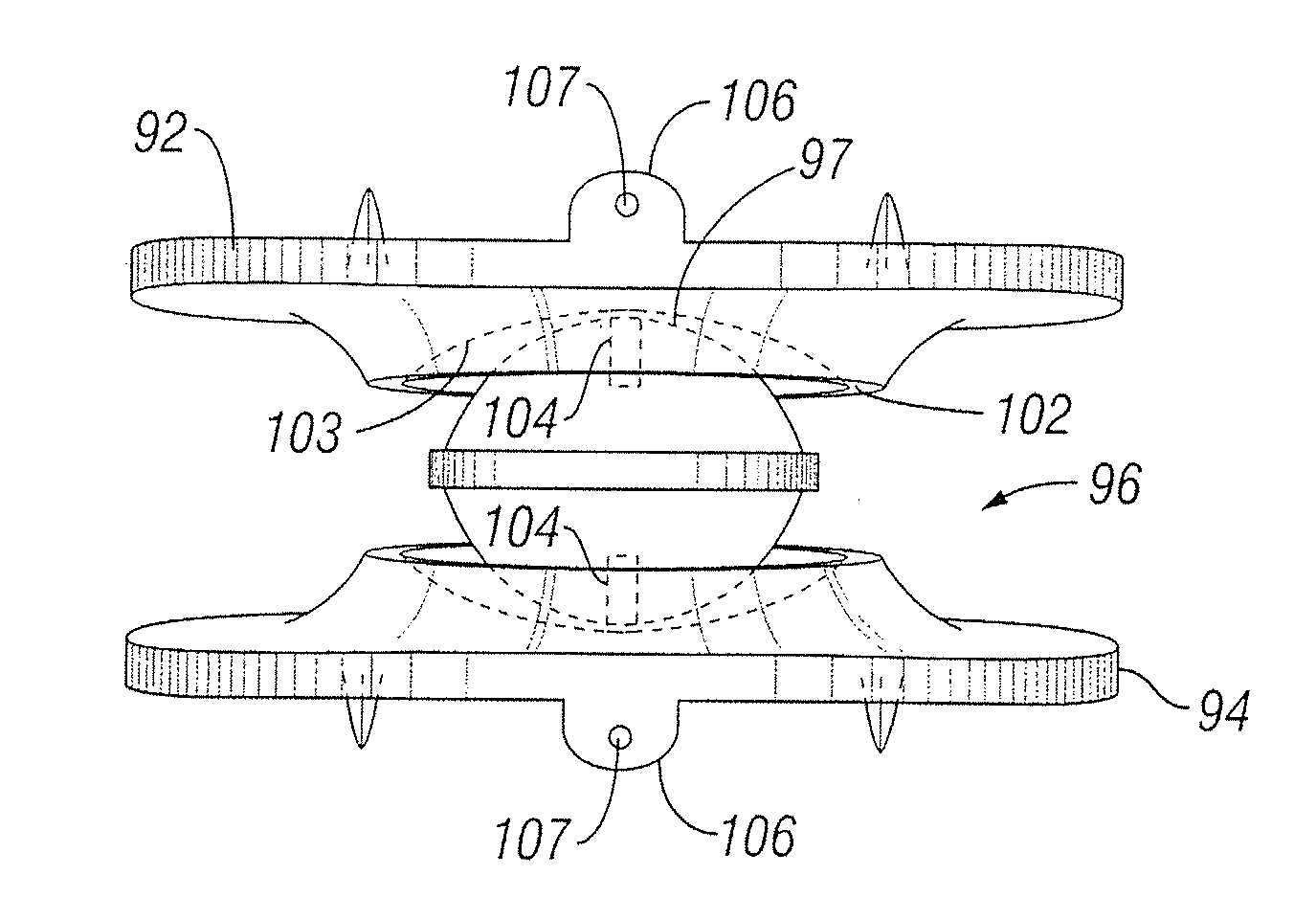
Figure 1 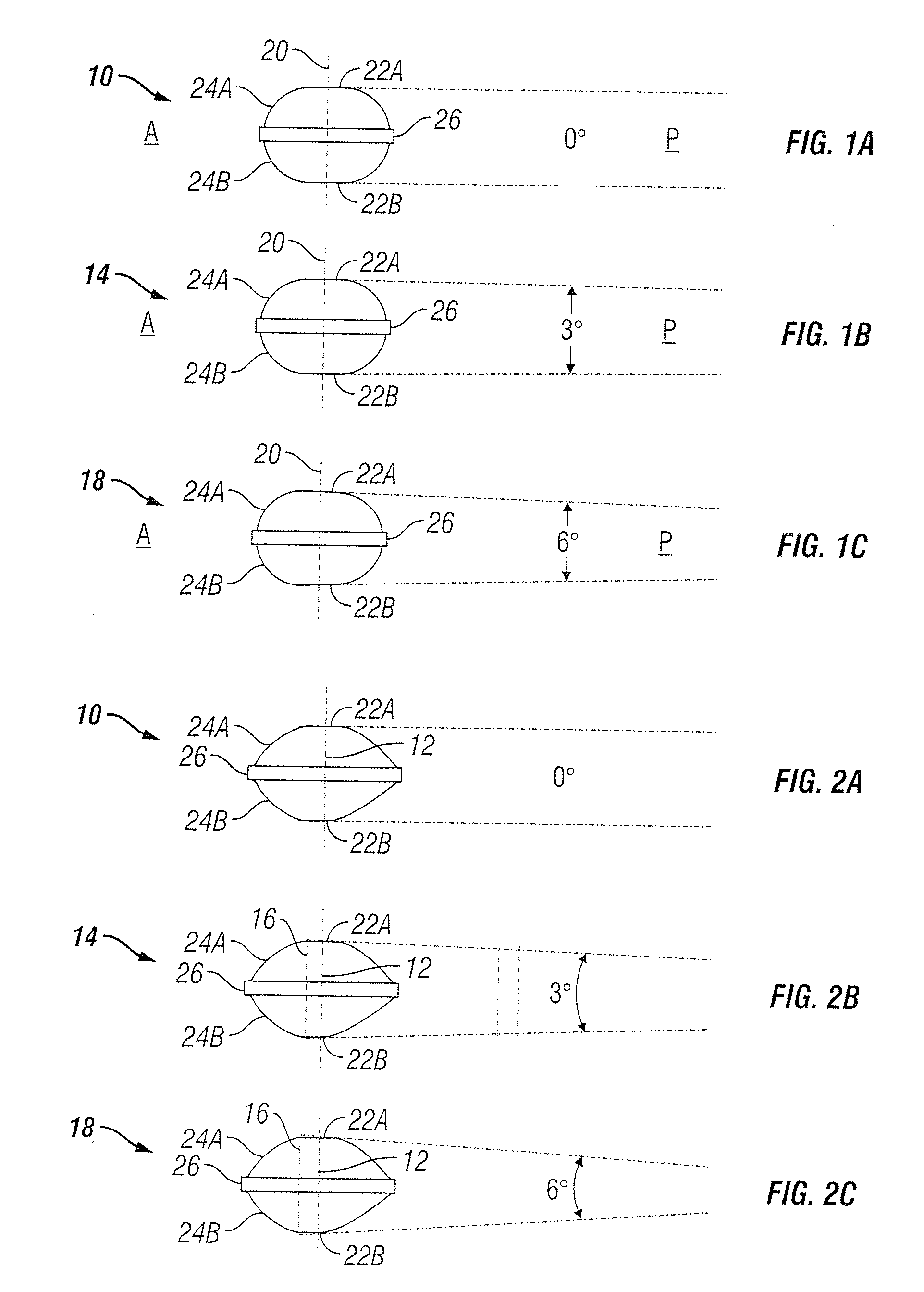
Figure 2 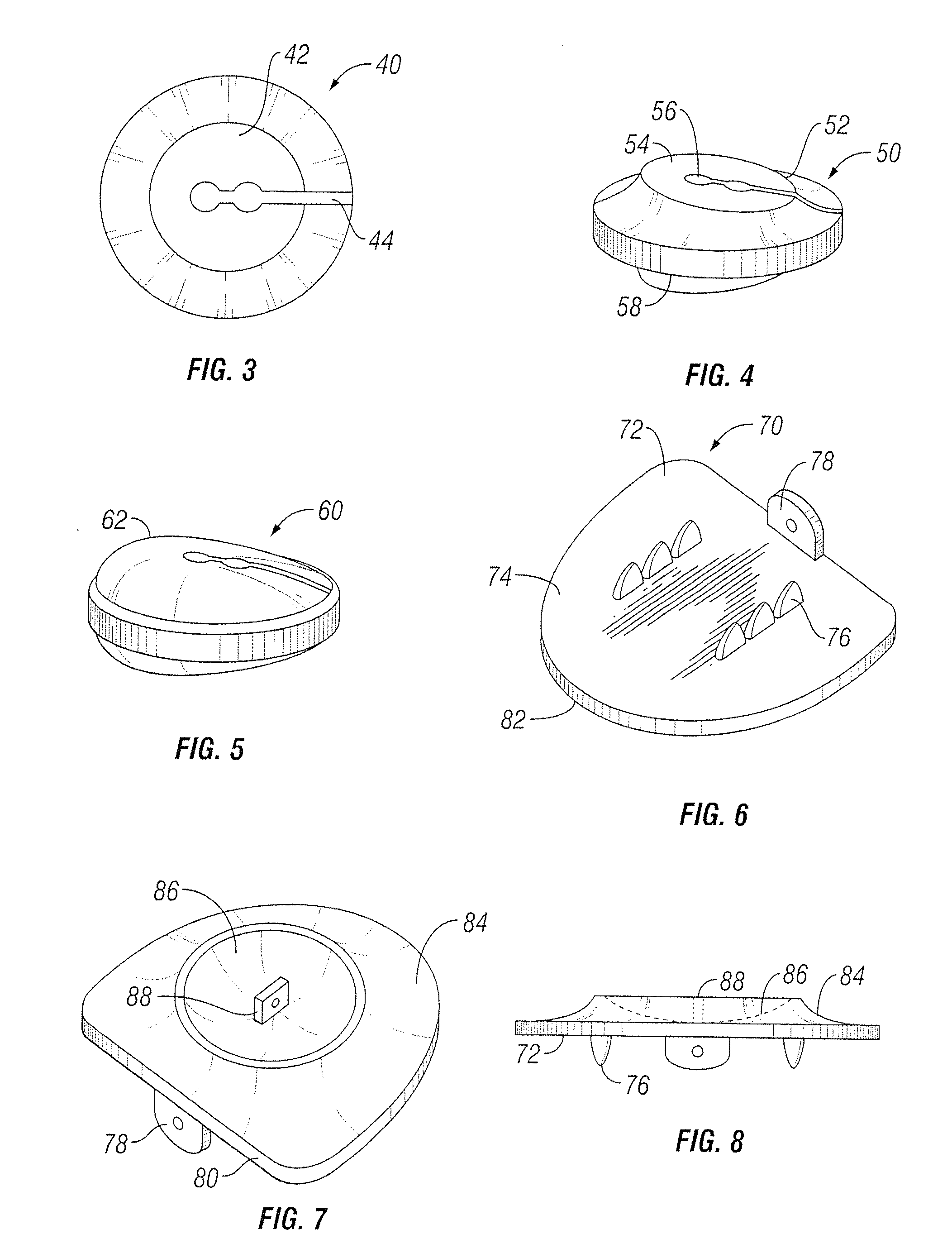
Figure 3
Abstract
Description
CROSS-REFERENCE TO RELATED APPLICATIONS
[0001] This application is a continuation-in-part of U.S. application Ser. No. 11 / 534,014 filed Sep. 21, 2006 which is continuation-in-part of U.S. application Ser. No. 10 / 590,139 entitled “ARTIFICIAL SPINAL DISC”, a national stage filing of PCT / US2005 / 023134 filed Jun. 30, 2005, which claims the benefit of U.S. provisional applications 60 / 584,240 and 60 / 658,161. The contents of all listed applications are incorporated into this application by reference.TECHNICAL FIELD
[0002] The present invention relates to methods and devices for the treatment of disc disease and spinal deformities with an artificial disc replacement.BACKGROUND OF THE INVENTION
[0003] Spinal arthroplasty is an emerging field that offers the promise of restoring and / or maintaining normal spinal motion. The goal of spinal arthroplasty is to reduce or eliminate adjacent segment disease (ASD) by maintaining the normal spinal biomechanics at the operative level. To accomplish this, an ...
Examples
Embodiment Construction
[0092]In its proper, healthy alignment, the spine follows natural curves, which promote proper sagittal and coronal balance (flexibility) and allow for balanced load sharing between the vertebrae. These curves include the cervical, thoracic, lumbar and sacral regions of the spine. Naturally, in order to accommodate a curve, there must be some variation in the angle of articulation between the functional spinal units and the height of an intradiscal space. The cervical and lumbar regions are naturally lordotic, or curved convexly in the anterior direction. At different segments along the spine, there are typically different heights for the vertebral bodies and the intradiscal space. In addition, the intradiscal space and vertebral body height may be different for different people.
[0093]Each intradiscal space has anterior and posterior regions. An artificial disc in the cervical, thoracic and lumbar regions that maintain the same height from the anterior to the posterior may promote a...