
Super-enhanced, adjustably buoyant floating island
a floating island and buoyant technology, applied in the direction of biological water/sewage treatment, water cleaning, water quality control, etc., can solve the problems of increasing land mass and corresponding decrease in water volume, reducing aesthetic appearance, killing fish and other organisms, etc., to enhance plant and animal life and improve water quality.
Patent Information
- Authority / Receiving Office
- US · United States
- Patent Type
- Applications(United States)
- Current Assignee / Owner
- Publication Date
- 2009-06-04
- Estimated Expiration
- Not applicable · inactive patent
Smart Images
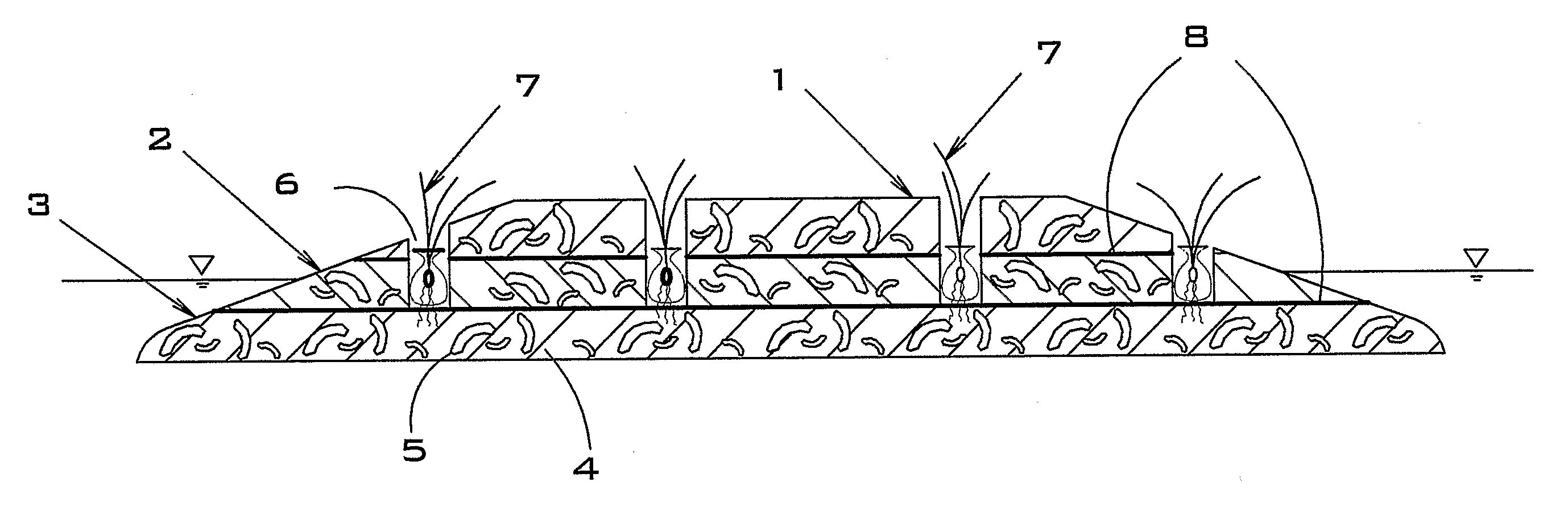
Figure 1 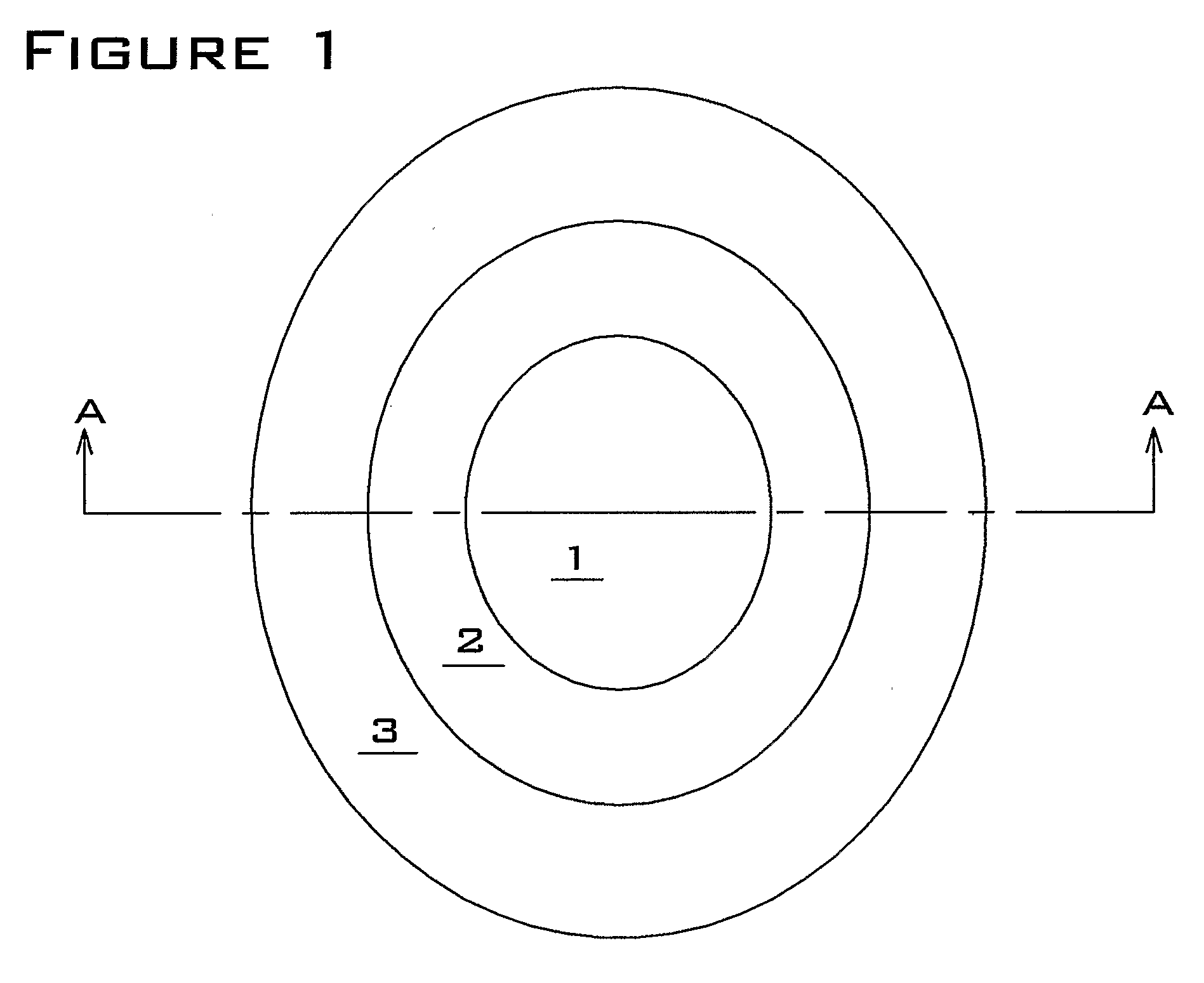
Figure 2 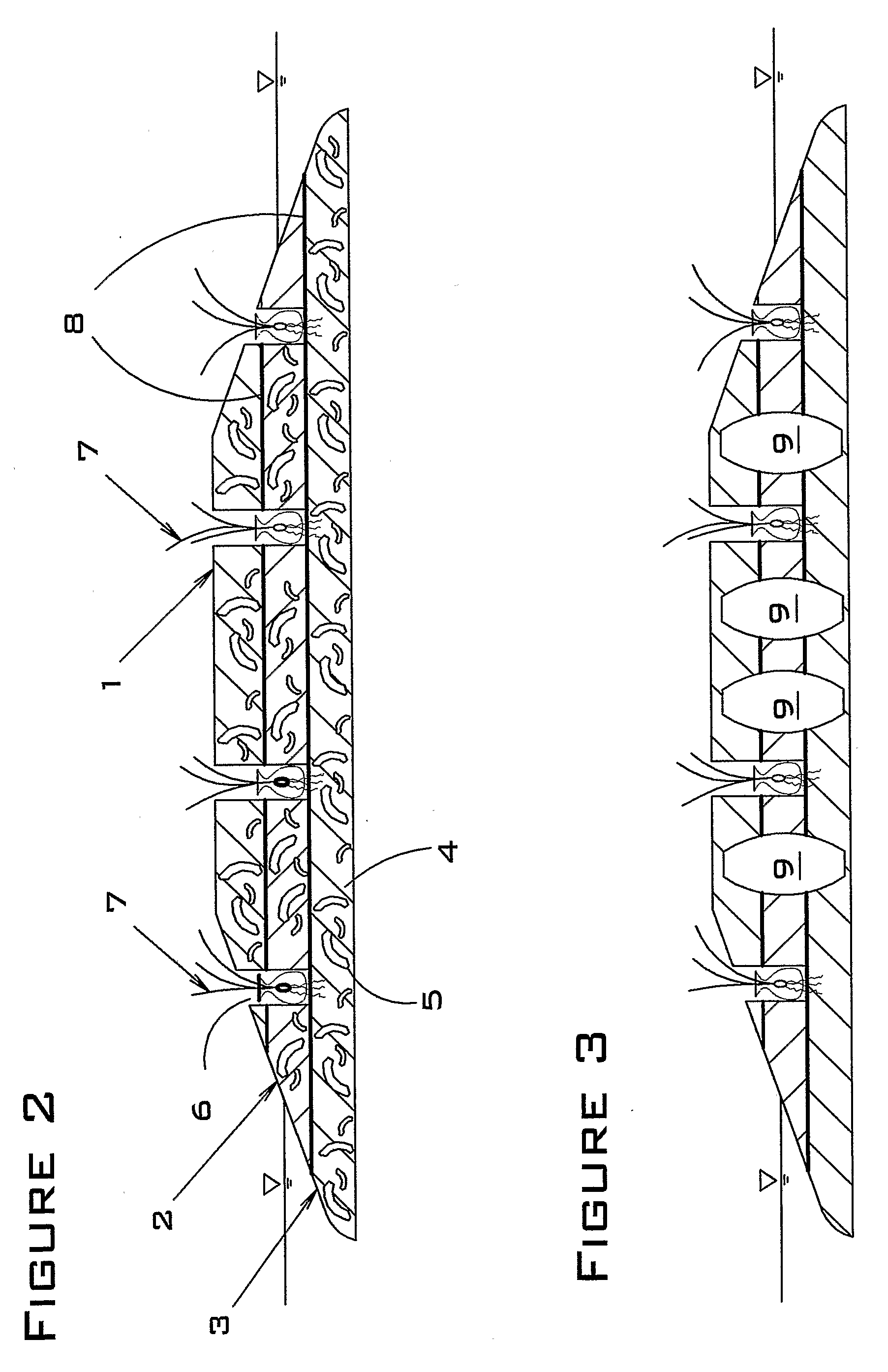
Figure 3
Abstract
Description
CROSS-REFERENCE TO RELATED APPLICATION
[0001] This application claims the priority of U.S. Provisional Application No. 60 / 574,121 filed on 24 May 2004.BACKGROUND OF THE INVENTION
[0002] 1. Field of the Invention
[0003] The present invention relates to a super-enhanced, adjustably buoyant floating island that can be deployed in ponds, lakes, rivers or any other body of water to monitor, regulate and improve water quality, enhance plant and animal life, and complement the natural surroundings.
[0004] 2. Description of the Related Art
[0005] In bodies of water such as ponds and lakes, algae growth and the natural process of eutrophication can lead to an increase in land mass and corresponding decrease in water volume, the killing of fish and other organisms, and the diminishment of aesthetic appearance. Various floating mechanisms have been devised with the aim of purifying water, cultivating plants, dispensing fertilizer, or counteracting the effects of eutrophication. None of these inventions ...
Examples
first embodiment
[0226]FIG. 1 is a top view of the nonwoven mesh embodiment of the present invention, which comprises a top layer 1, a middle layer 2, and a bottom layer 3. FIG. 2 is a section view of FIG. 1 taken at A-A showing the nonwoven mesh island. Each of the layers 1, 2, 3 is comprised of water-permeable, nonwoven mesh material 4 (such as POLY-FLO filter material) that has buoyant nodules 5 manufactured into the mesh. The buoyant nodules 5 may be comprised of any suitable low-density material, such as closed cell polymer foam, polystyrene, cork, or hollow plastic balls. Holes 6 are cut into the top layer 1 and middle layer 2, and a potted plant unit 7 is installed in each hole. The layers are joined together with adhesive 8. The adhesive 8 may be any suitable material, such as hot-melt glue or polyurethane foam sealant (such as Dow Chemical's GREAT STUFF or FROTH-PAC foam sealant). The foam may alternately be comprised of organic material, for example, soy-based foam, as described in the Jou...
second embodiment
[0317]FIG. 40 is a section view of a floating island with a pumped water distribution system. The system is comprised of a water pump 138, nonwoven mesh island body 140, nutrient-uptake aquatic plants 141, and water-impermeable enclosure tray 142. For purposes of this description, the term “nutrient-uptake aquatic plants” refers to aquatic plants that absorb and incorporate nutrients found in the water. One example of a highly effective nutrient-uptake aquatic plant is the cattail (genus Typha).
[0318]The system shown in FIG. 40 works by pumping nutrient-rich pond water from beneath the island and circulating it radially outward through the island body 140. The path of the circulated water is indicated by the arrows in the figure. Optional air bubbles 143 may be provided from an external air source (not shown). In this figure, the water pump 138 is shown as extending vertically through the center of the island, but the water pump 138 could be positioned in any manner that allows it t...