

Performance enhanced snowboard
a performance enhancement and snowboard technology, applied in the field of snowboards and snowboards, can solve the problems of removing the control needed to perform and the tail is a burden, and achieve the effects of enhancing the performance of the snowboard, and reducing the cost of operation
Patent Information
- Authority / Receiving Office
- US · United States
- Patent Type
- Applications(United States)
- Current Assignee / Owner
- Publication Date
- 2010-01-21
- Estimated Expiration
- Not applicable · inactive patent
Smart Images
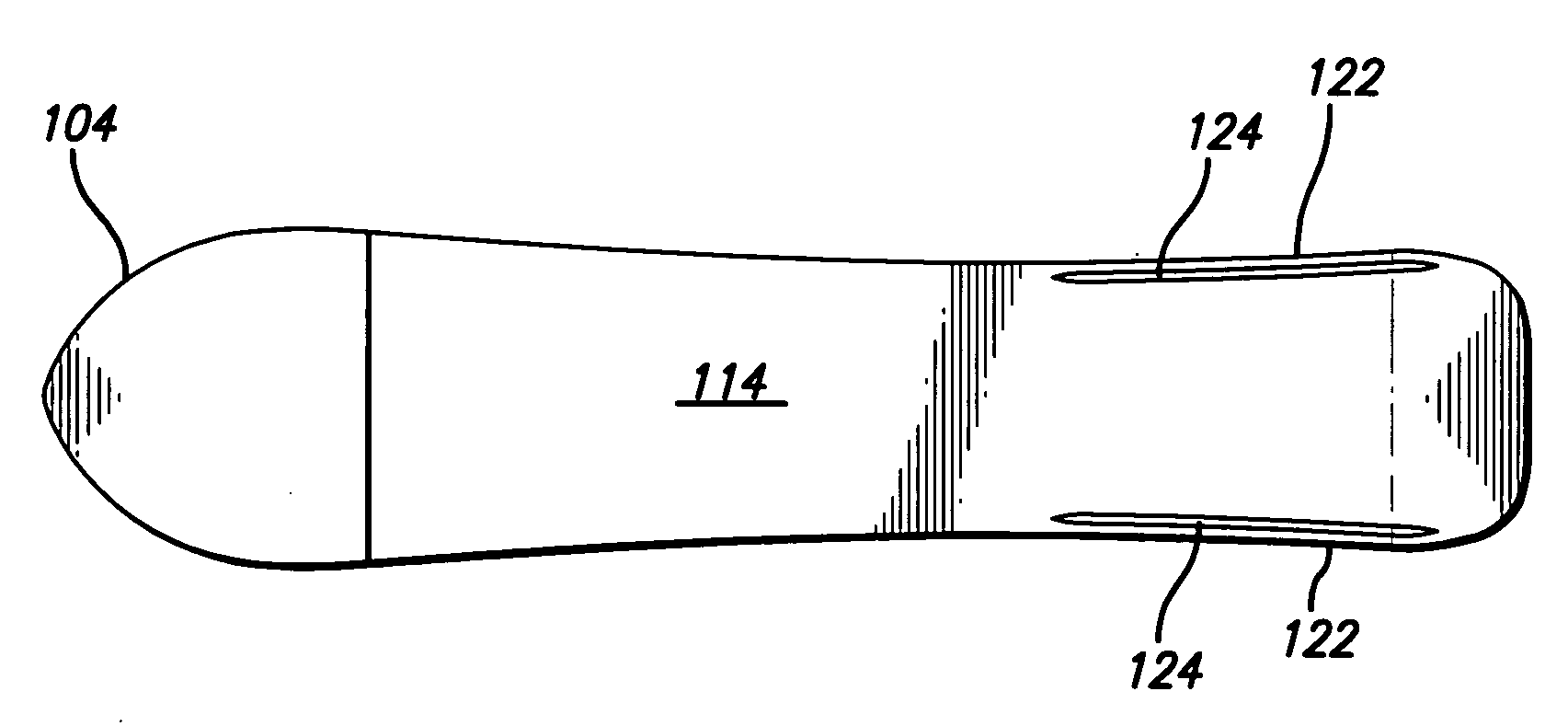
Figure 1 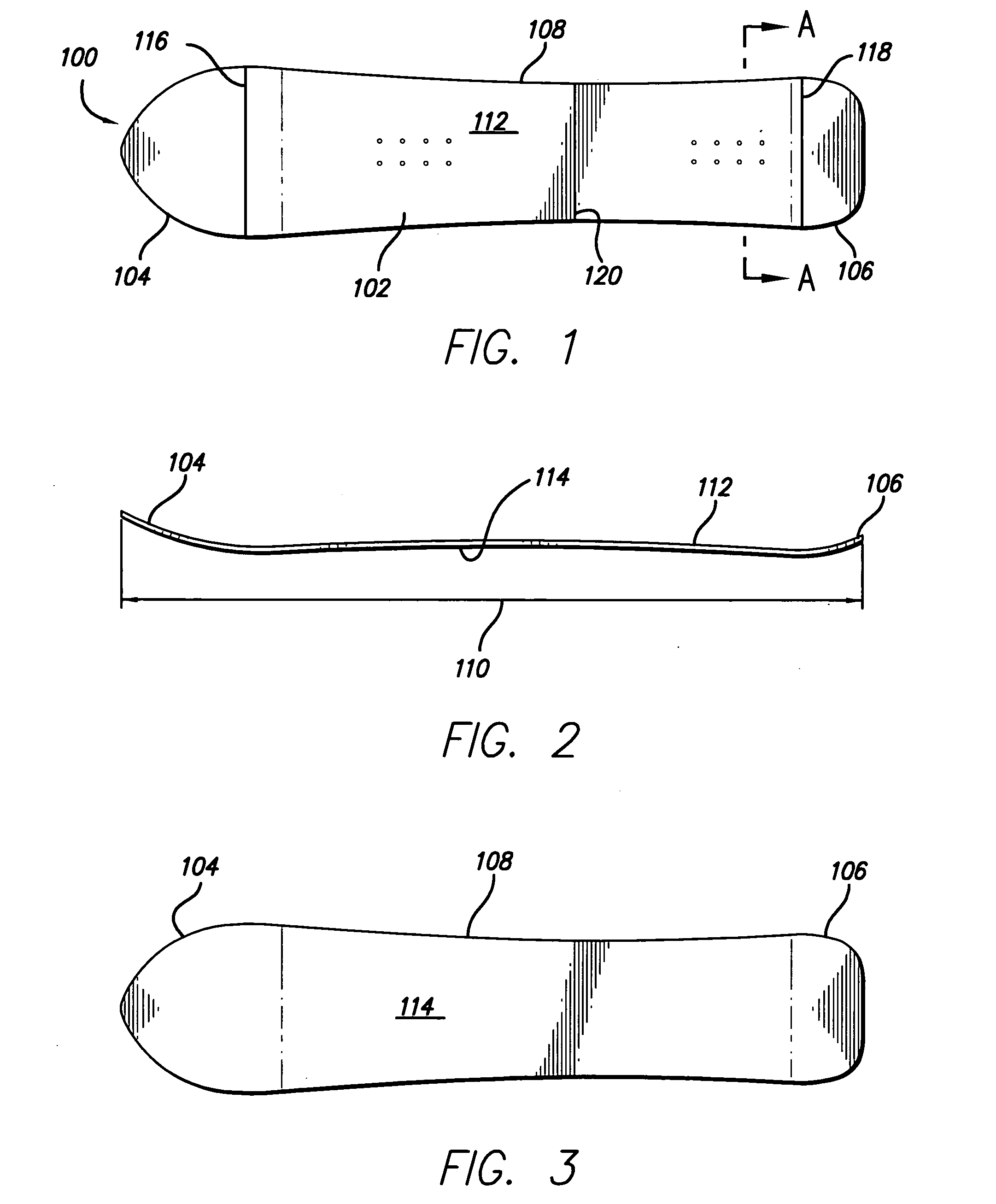
Figure 2 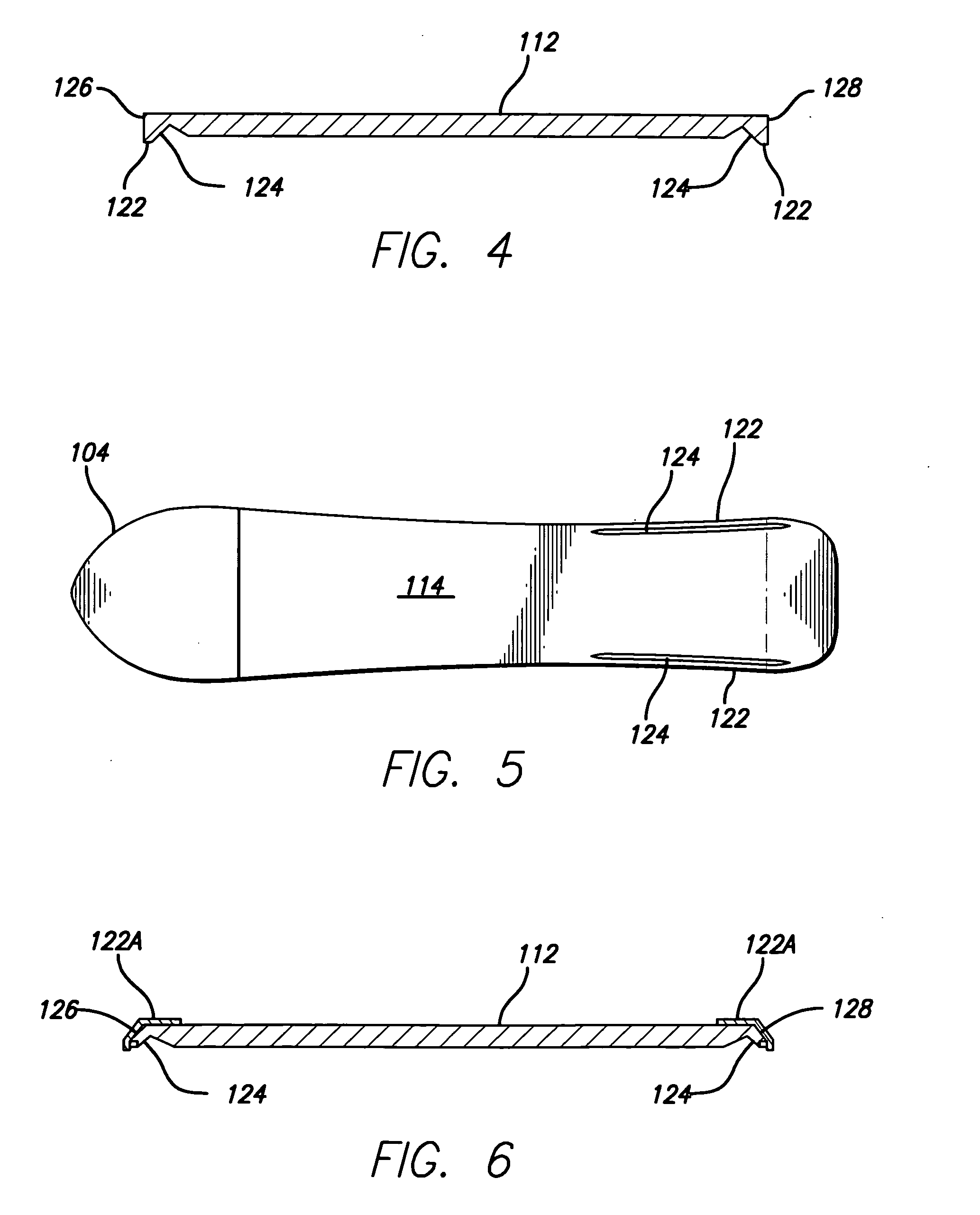
Figure 3
Abstract
Description
TECHNICAL FIELD
[0001] This invention relates to snowboards and snowboarding.BACKGROUND ART
[0002] Snowboarding has its roots in surfing. For the typical snowboarder of today, a dual-directional board is unnecessary. To perform maneuvers similar to surfing and skateboarding, a uni-directional board with control shifted further to the back foot is optimal. When attempting to maneuver a standard snowboard the tail is a burden and takes away from the control needed to perform surf- and skate-like maneuvers. In fact the tail is a burden in many situations and when reduced or omitted is much more efficient. For example, when riding through moguls the tail of a conventional snowboard can easily catch an edge, while the performance enhanced snowboard is easily maneuverable through these same moguls. The sport of snowboarding has strayed from its roots for too long, and it is time for the performance enhanced snowboard to pick up where it left off.DISCLOSURE OF INVENTION
[0003] The invention is d...
Examples
Embodiment Construction
[0017]The detailed description set forth below in connection with the appended drawings is intended as a description of presently-preferred embodiments of the invention and is not intended to represent the only forms in which the present invention may be constructed or utilized. The description sets forth the functions and the sequence of steps for constructing and operating the invention in connection with the illustrated embodiments. However, it is to be understood that the same or equivalent functions and sequences may be accomplished by different embodiments that are also intended to be encompassed within the spirit and scope of the invention.
[0018]Referring to the figures, the invention generally comprises a performance enhanced snowboard 100 having an extended, generally planar deck 102 with a nose 104, a tail 106, and a central section 108 that connects the nose 104 and the tail 106. The deck 102 also has an overall length 110, a top surface 112, and a bottom surface 114.
[001...