
Folding display and work furniture item
a technology for working furniture and display items, applied in the field of folding exhibition and working furniture, can solve the problems of poor structural rigidity, difficult handling, hard work, etc., and achieve the effect of reducing time and effort and fewer pieces
Patent Information
- Authority / Receiving Office
- US · United States
- Patent Type
- Applications(United States)
- Current Assignee / Owner
- Publication Date
- 2010-08-26
Smart Images
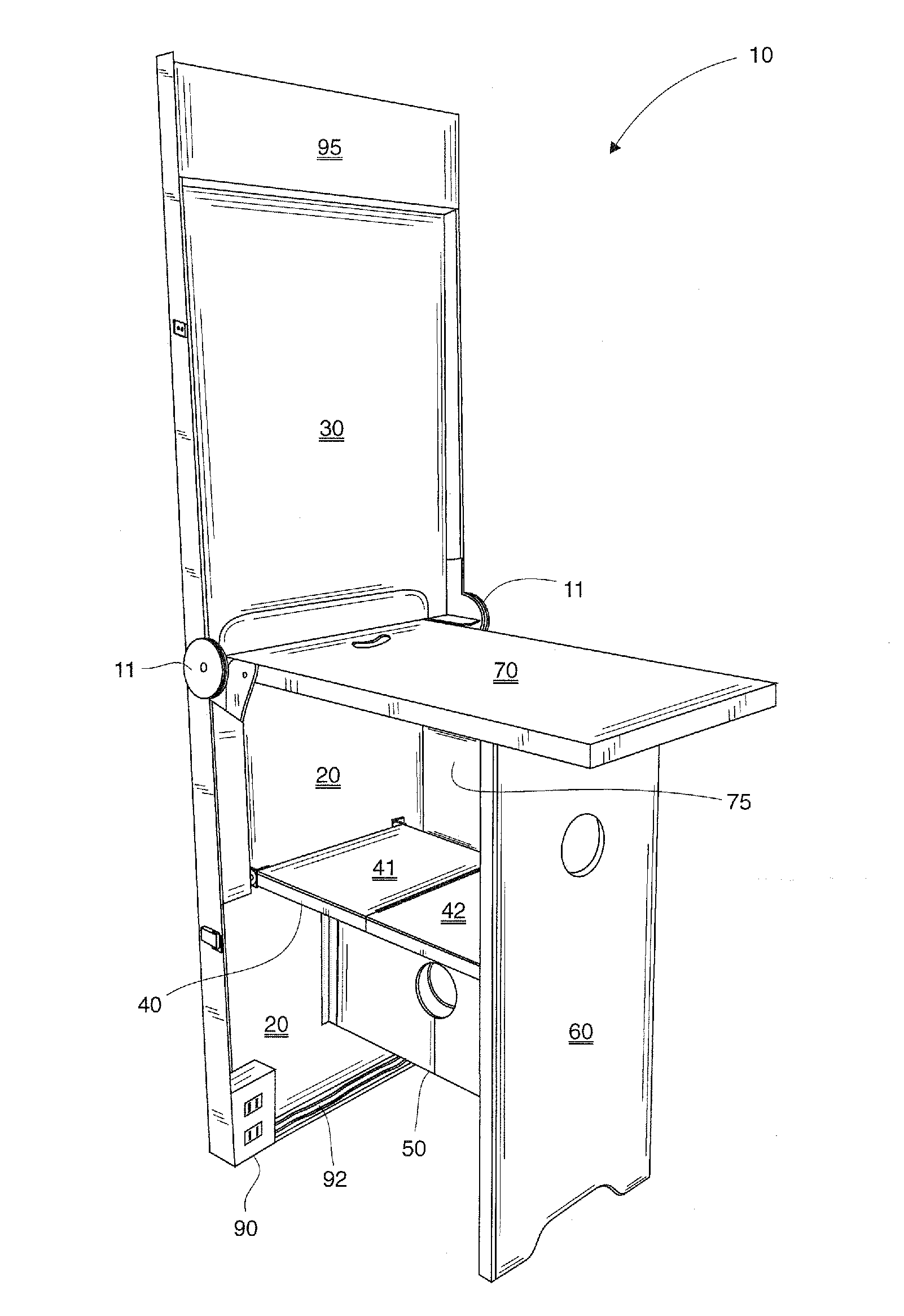
Figure 1 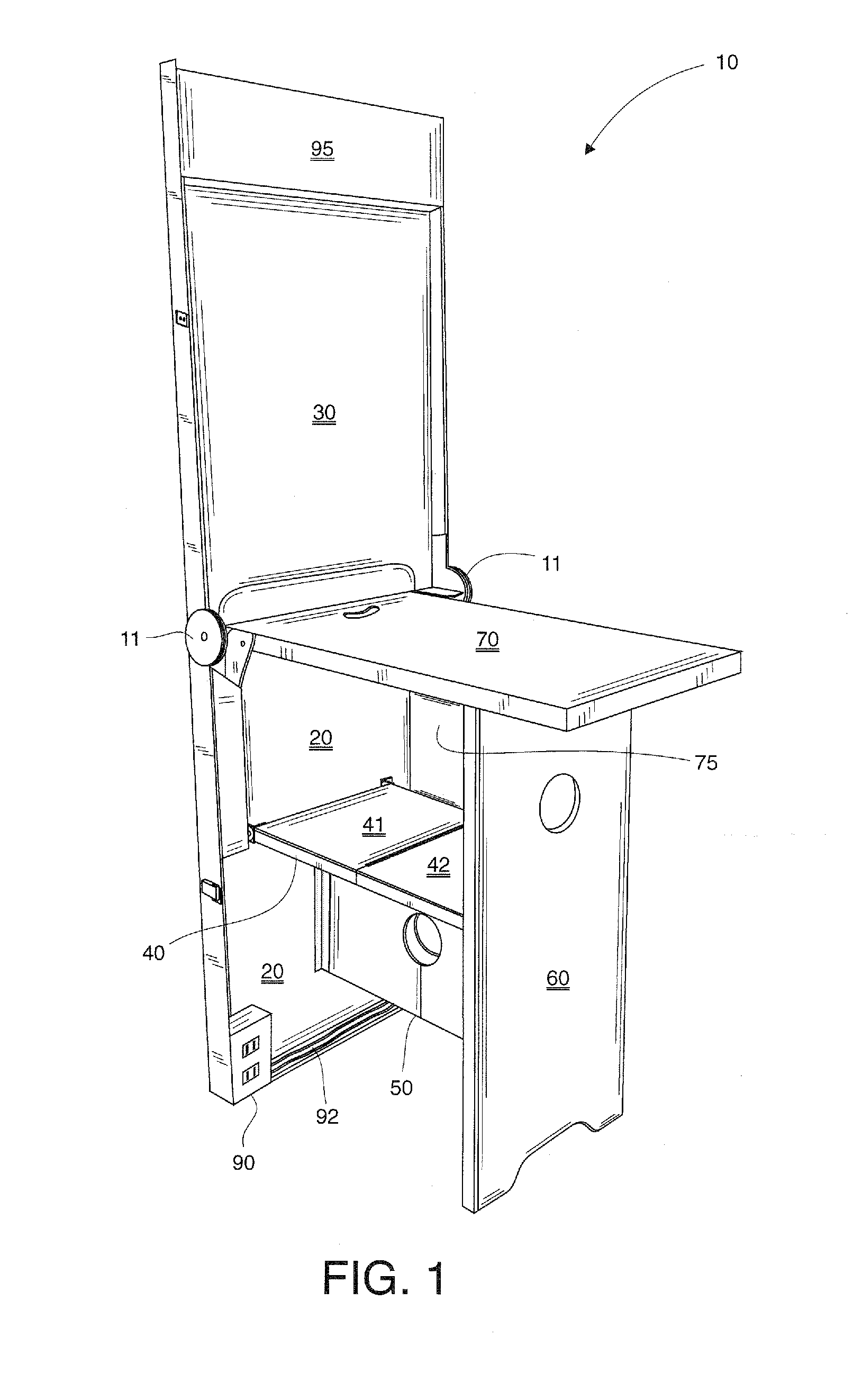
Figure 2 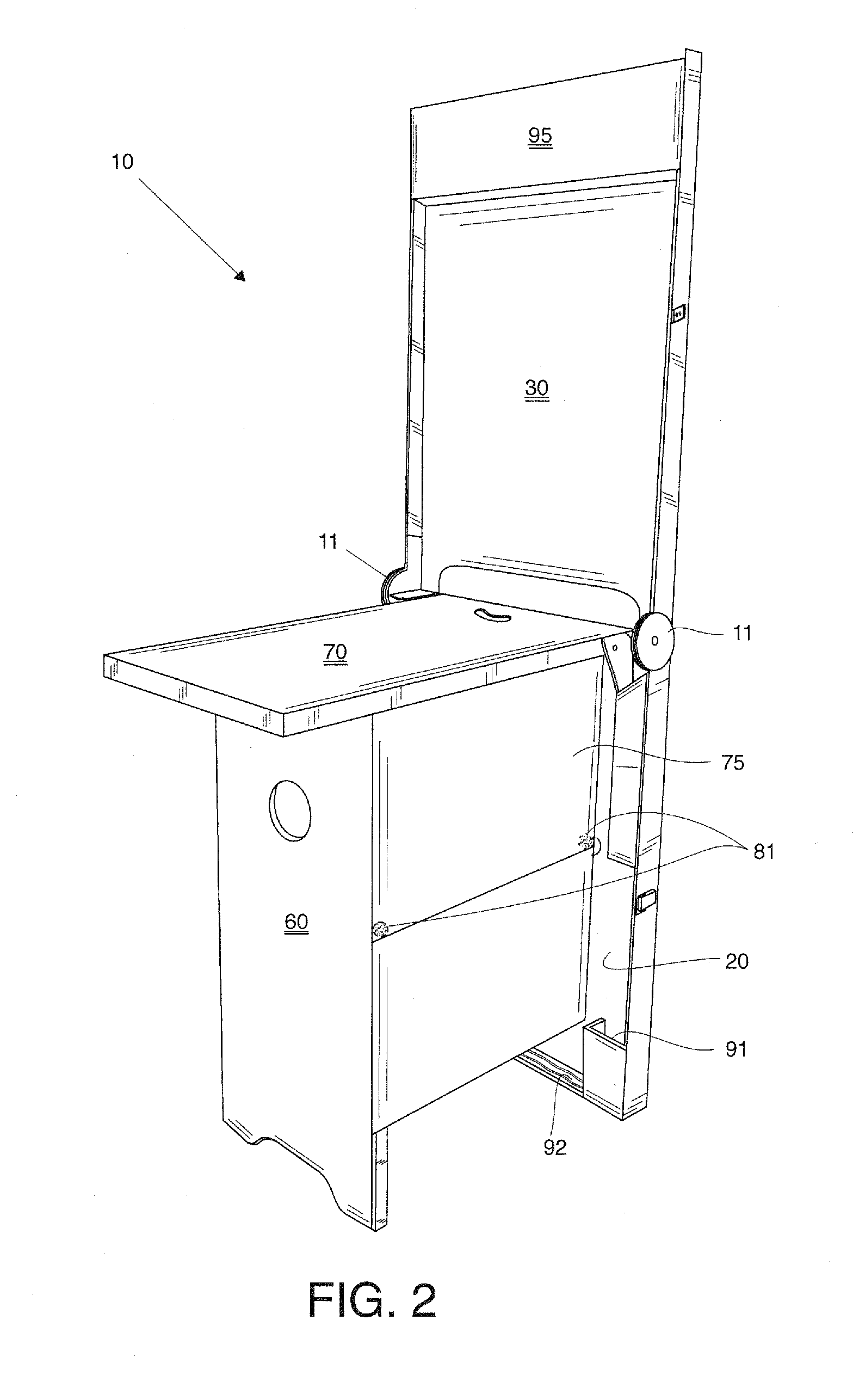
Figure 3
Abstract
Description
FIELD OF THE INVENTION
[0001] The present invention relates to the techniques employed in the manufacture and design of furniture, displays and counters used in locations referred to as “points of sale”, where products and services are offered to the public, and more particularly, it relates to a foldable exhibition and working furniture.BACKGROUND OF THE INVENTION
[0002] In different places where public converge for the acquisition and diffusion of products and services, such as exhibitions, conventions, information centers, and so on, the use of furniture and displays is necessary such that people can contact suppliers and get to know their products. In this regard, a great variety of these pieces of furniture is available and built in wood, metal, with shelves and partitions; however, in general terms, they are bulky, difficult to handle, and their transportation results a hard work as they take up too much space.
[0003] A known solution in the prior art has been the creation of foldab...
Examples
Embodiment Construction
[0040]With reference to the accompanying drawings, and more specifically to FIGS. 1 to 4, a foldable exhibition and working furniture 10 is shown in the “upright” position, the furniture 10 is constructed according to one preferred embodiment of the present invention, which shall be considered only as illustrative and not limitative thereof. The foldable exhibition and working furniture 10 comprises a lower wall 20 to which an upper wall 30 is hingedly attached by a pair of hinges 11 laterally opposite one to the other. As can be seen, the upper wall 30 extends upwards from the lower wall 20 such as if both walls 20 and 30 were a single wall. In a certain manner, the lower wall 20 and the upper wall 30 are the most important elements of the exhibition and working furniture 10, since they form a housing when the exhibition and working furniture 10 is folded, as will be described and illustrated below.
[0041]Referring to FIGS. 1 to 5, FIGS. 1 and 3 show a shelf 40 inside the furniture,...