

Slime-controlling agent for activated carbon, method for passing water through activated carbon device, and method and apparatus for treating organic-matter-containing water
a technology of activated carbon and oxidizer, which is applied in the direction of treatment water, non-contaminated water treatment, alkali/alkaline-earth metal chloride active ingredients, etc. it can solve the problems of inability to achieve sufficient sterilization effect, inability to say industrially advantageous methods, and inability to control the oxidizer in the middle and lower parts, etc. , to achieve the effect of preventing biofouling, reducing flux, and inhibiting proliferation of viable cells
Patent Information
- Authority / Receiving Office
- US · United States
- Patent Type
- Applications(United States)
- Current Assignee / Owner
- Publication Date
- 2011-12-08
Smart Images
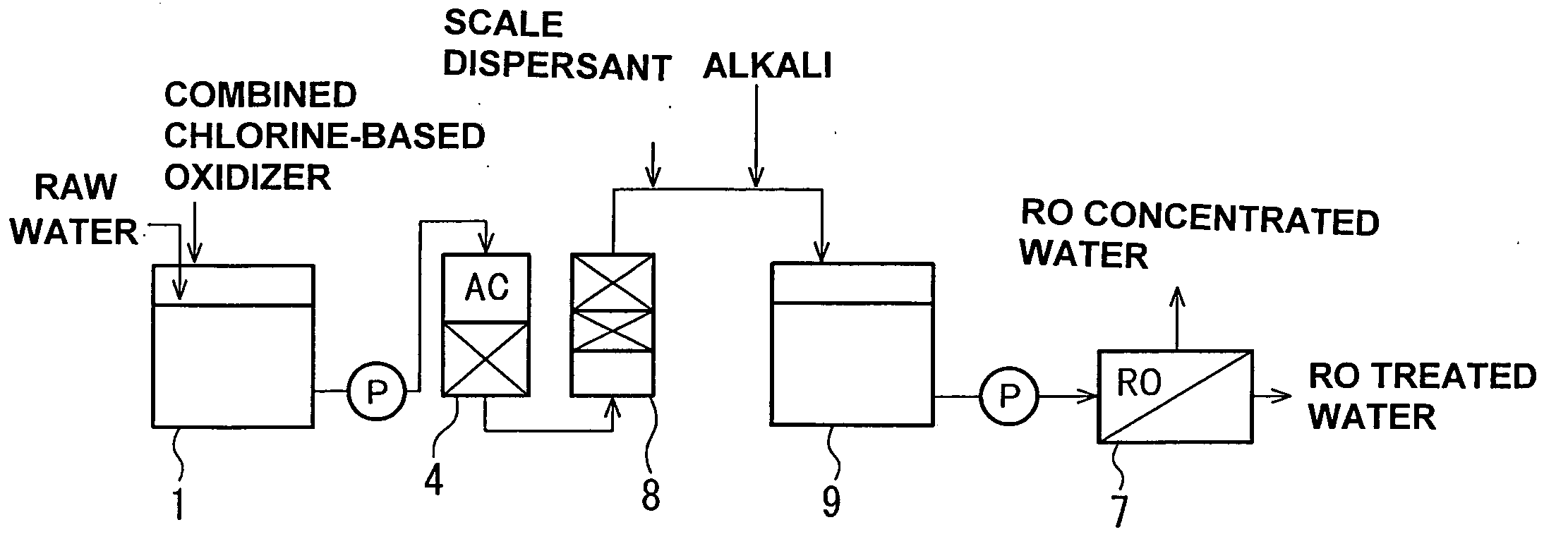
Figure 1 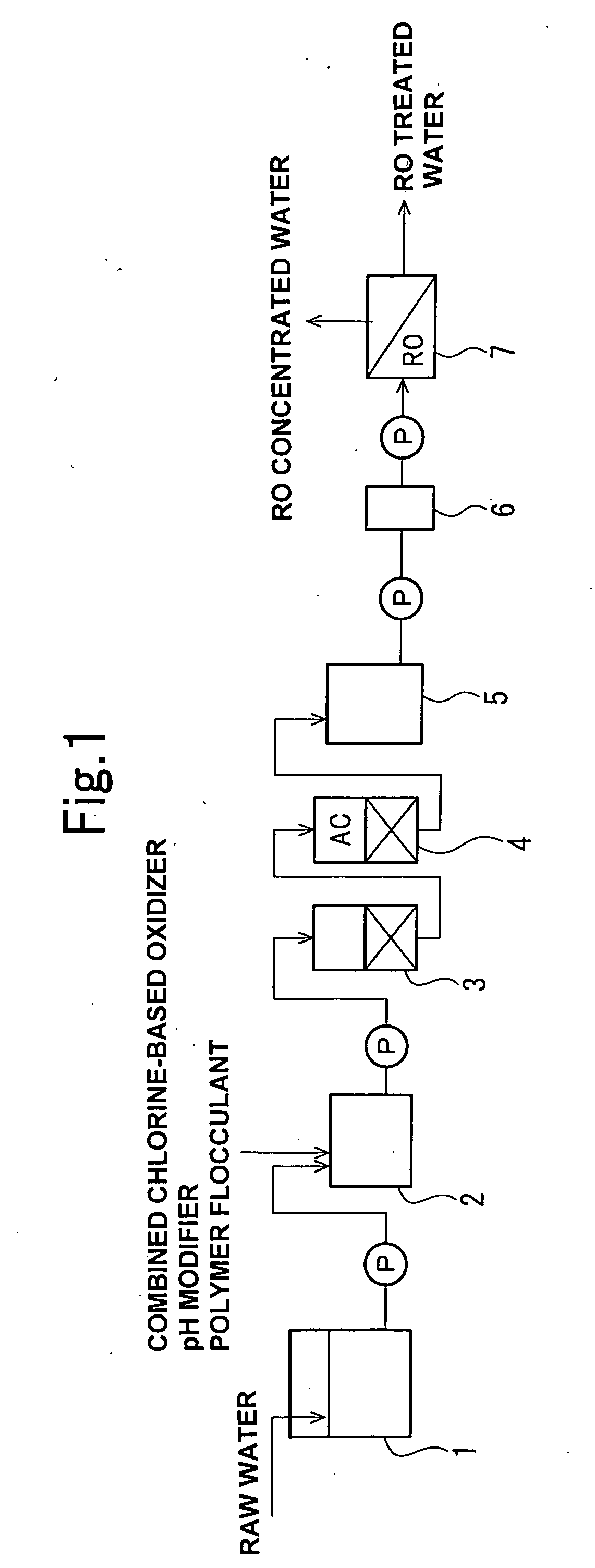
Figure 2 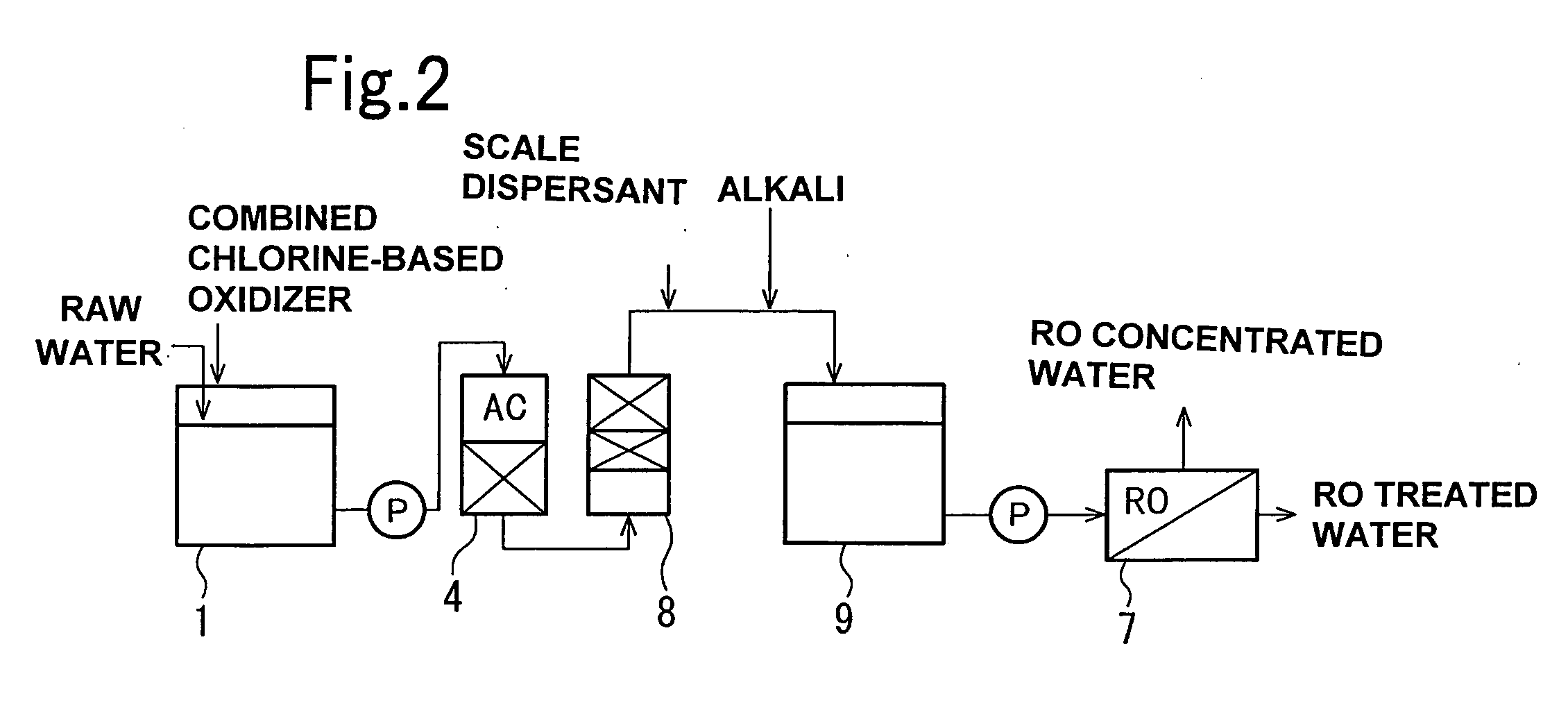
Figure 3
Abstract
Description
FIELD OF INVENTION
[0001] The present invention relates to slime-controlling agents for activated carbon and methods for passing water through an activated carbon device utilizing the slime-controlling agent. In addition, the present invention relates to methods and apparatuses for treating organic-matter-containing water by using the slime-controlling agent. In a system for manufacturing ultrapure water used in an electronic device factory or in a system for treating and collecting high-concentration and low-concentration organic-matter (TOC)-containing drainage drained from the electronic device factory by using a membrane separation device utilizing a reverse osmosis (RO) membrane, the present invention relates to, in particular, a method and apparatus for treating organic-matter-containing water, including preventing a decrease in flux in an RO membrane separation device due to membrane surface attachment of organic matter (i.e., organic matter fouling) or preventing a decrease in...
Examples
examples
[0086]Hereinafter, by referring to Examples and Comparative Examples, the present invention is more specifically described.
Example and Comparative Example of Embodiment Shown in FIG. 1
example 1
[0087]To industrial water containing 1 mg / LasC of TOC was added, as a combined chlorine concentration, 5 mg-Cl2 / L of a slime-controlling agent including a combined chlorine agent produced from sodium hypochlorite and a sulfamic acid compound (specifically, sodium sulfamate) (a molar ratio of 1 mol of the sulfamine compound to effective chlorine is 1.5). Then, flocculation filtration treatment was carried out under conditions in which the additive amount of PAC (polyaluminum chloride) was 10 mg / L and the pH was 6. The flocculation filtration treated water was made to pass through an activated carbon tower under conditions at the SV of 20 hr−1. Then, the water was made to pass through an RO membrane separation device (an ultralow-pressure aromatic polyamide-type RO membrane, “ES-20”, manufactured by NITTO DENKO CORPORATION) under conditions at the flow volume of 60 L / hr and at the recovery rate of 80%. The pH of RO supply water was 5.5.
example 2
[0091]To drainage containing a nonionic detergent and having the TOC concentration of 20 mg / L and the calcium concentration of 5 mg / L was added, as a combined chlorine concentration, 1 mg-Cl2 / L of the same slime-controlling agent as Example 1. Then, flocculation filtration treatment was carried out under conditions in which the additive amount of PAC (polyaluminum chloride) was 20 mg / L and the pH was 6.5. The flocculation filtration treated water was made to pass through an activated carbon tower of an immobilized bed type under conditions at the SV of 20 hr−1, and the water was made to pass through a softening tower under conditions at the SV of 15 hr−1. After that, 10 mg / L (i.e., five-fold excess by weight per calcium ion concentration of treated water from a softening tower) of a chelator-based scale inhibitor (Welclean A801, manufactured by Kurita Water Industries, Ltd.) was added, and NaOH was added to set pH to 10.5. After that, the RO membrane separation treatment was carried...