
Copolymer composed of a polyphenylene and a flexible chain component
a polyphenylene and flexible chain technology, applied in the field of polyphenylene, can solve the problems of insufficient strength, insufficient rigidity in combination with high tensile strength and vibration resistance, and inability to meet the requirements of certain applications, and achieve the effect of convenient or inexpensive production and/or commercial availability, easy or less expensiv
Patent Information
- Authority / Receiving Office
- US · United States
- Patent Type
- Applications(United States)
- Current Assignee / Owner
- Publication Date
- 2012-11-29
- Estimated Expiration
- Not applicable · inactive patent
Smart Images
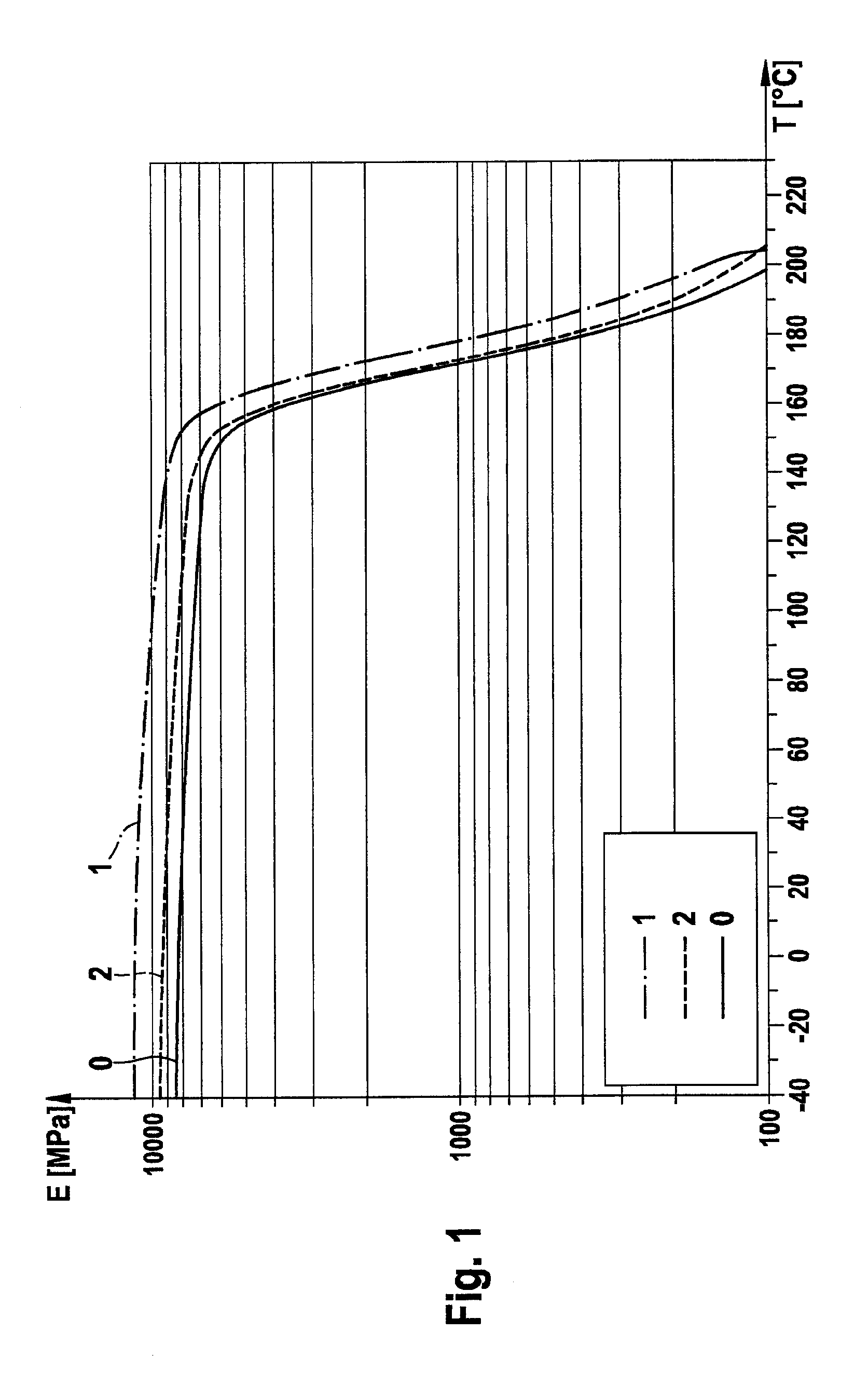
Figure 1 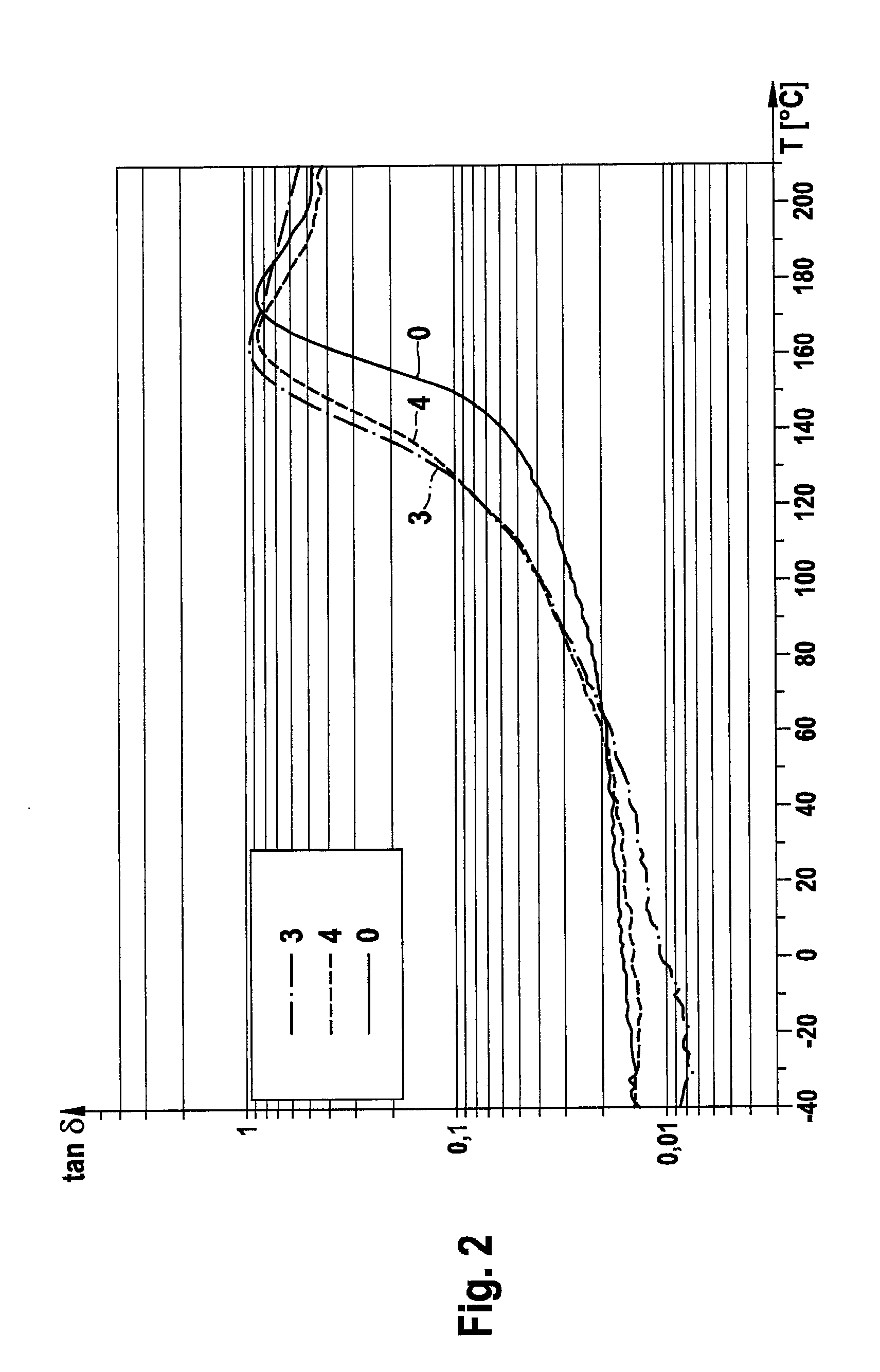
Figure 2 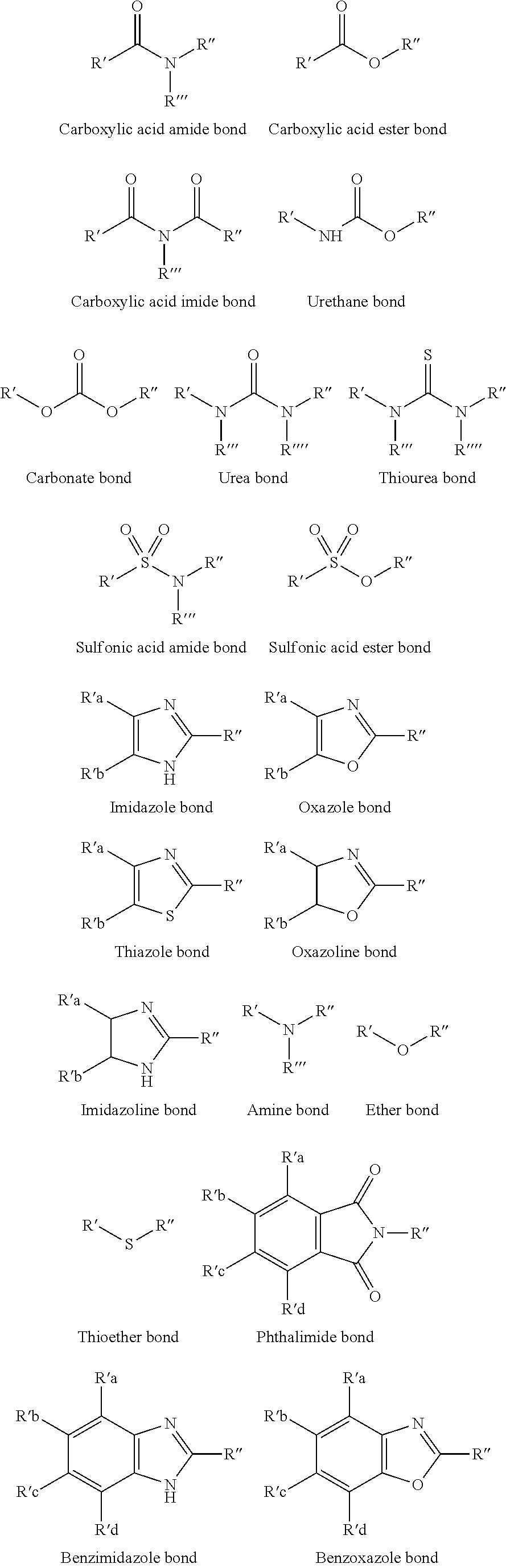
Figure 3
Abstract
Description
FIELD OF THE INVENTION
[0001] The present invention relates to a copolymer, a polymer mixture including such a copolymer, a method for preparing such a copolymer, and the use of such a copolymer.BACKGROUND INFORMATION
[0002] Thermoplastic polymers available heretofore usually have inadequate mechanical properties for certain applications, in particular at elevated temperatures and under the influence of media such as fuel, motor oil, and brake fluid. In particular, the rigidity in combination with a high tensile strength and vibration resistance is frequently inadequate.
[0003] Certain glass fiber-reinforced polyamides may have a high tensile strength in the processing direction (flow direction); however, materials of this type are often anisotropic, and do not have sufficient strength transverse to the processing direction (flow direction).
[0004] Polyphenylenes may have high mechanical strengths and rigidities. Several polyphenylenes are discussed in U.S. Pat. No. 5,654,392 and U.S. Pat. ...
Examples
examples
1. Preparation of tolyl ester-terminated poly(benzoyl-para-phenylene) (PBP-2E)
[0069]
[0070]8.2 L anhydrous, degassed N-methyl-2-pyrrolidinone (NMP), 17.11 g (0.13 mol) anhydrous nickel(II) chloride (NiCl2), 79.1 g (0.53 mol) anhydrous sodium iodide (NaI), 432.0 g (6.6 mol) activated zinc, and 415.8 g (1.59 mol) triphenylphosphine were placed in a 10-liter reactor having a KPG stirrer, an internal thermometer, and a reflux condenser, under nitrogen counterflow. The mixture was then stirred for approximately 3.5 h at an internal temperature of approximately 60° C. At this temperature, 1104.4 g (4.4 mol) 2,5-dichlorobenzophenone and 13.15 g (0.053 mol) 3-chlorobenzoic acid tolyl ester were subsequently added under nitrogen counterflow. During the initial two hours, the internal temperature was held by cooling the reactor so that 80° C. was not exceeded. Stirring was subsequently performed for 2 h at an internal temperature of approximately 70° C. After the reaction was complete, the coo...