
Feedback information relating to a mobile communications system using carrier aggreregation
a mobile communications system and aggreregation technology, applied in the direction of digital transmission, signal allocation, transmission path sub-channel allocation, etc., can solve the problems of inefficient system operation, erroneous ack/nack signalling in the uplink, and corrupted harq buffer in the receiver, so as to reduce the likelihood of such symbols being confused for each other and minimize the error probability of a state
Patent Information
- Authority / Receiving Office
- US · United States
- Patent Type
- Applications(United States)
- Current Assignee / Owner
- Publication Date
- 2013-11-28
Smart Images
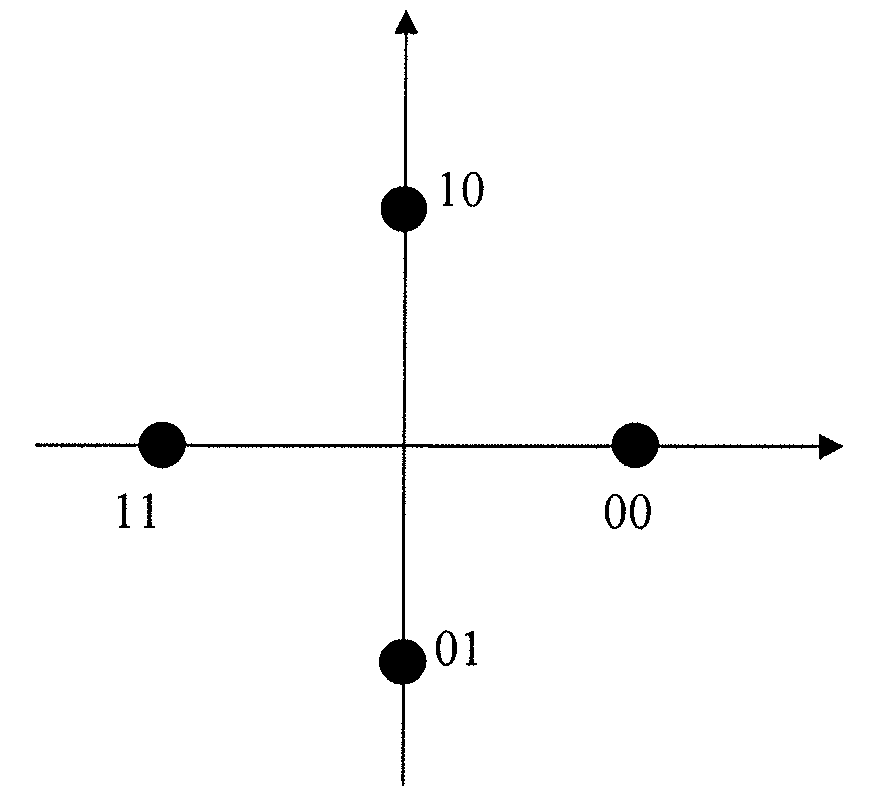
Figure 1 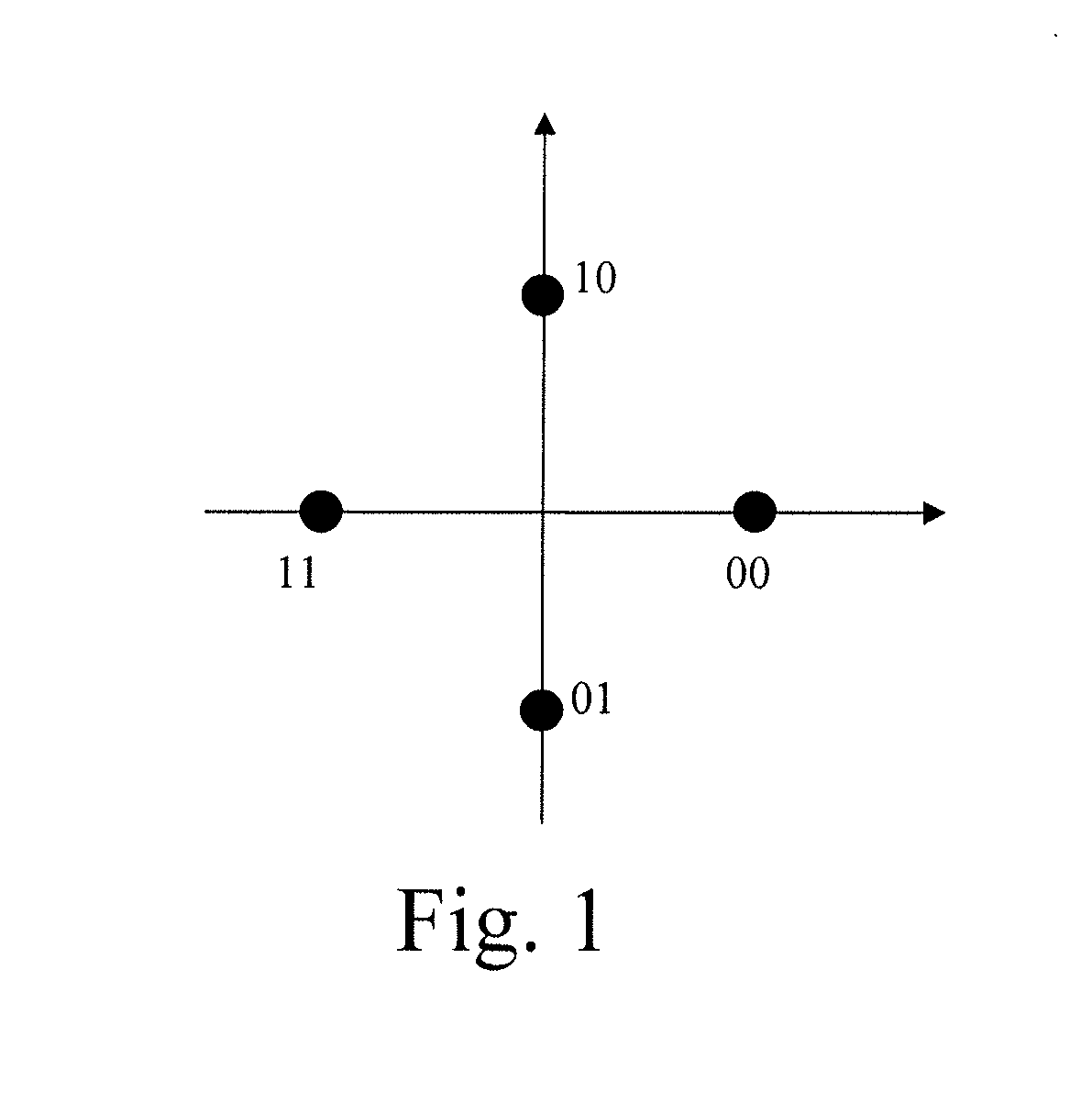
Figure 2 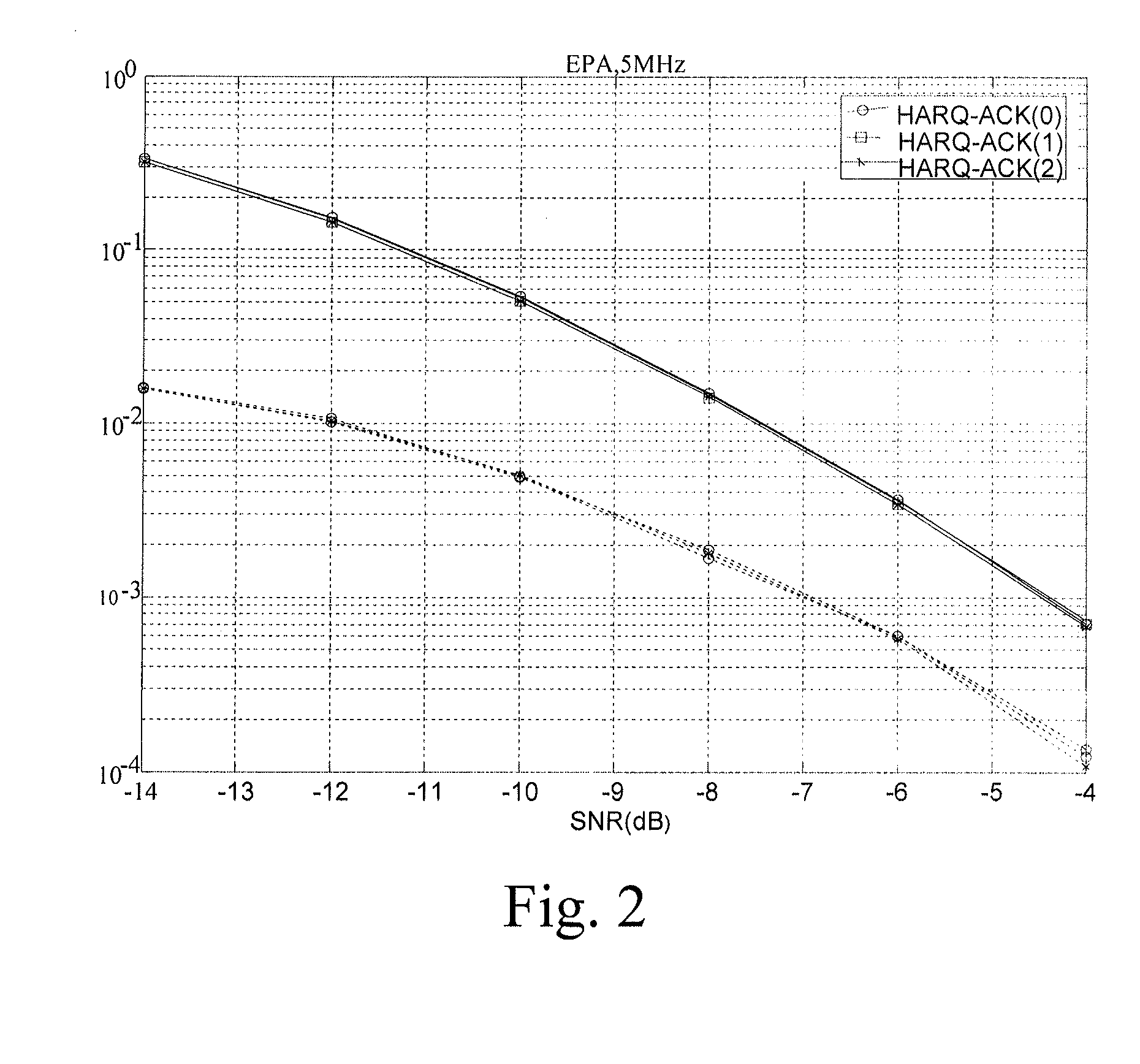
Figure 3
Abstract
Description
CROSS-REFERENCE TO RELATED APPLICATIONS
[0001] This application is a continuation of U.S. patent application Ser. No. 13 / 764,421, filed on Feb. 11, 2013, which is a continuation of International Application No. PCT / CN2010 / 076994, filed on Sep. 16, 2010, The afore-mentioned patent applications are hereby incorporated by reference in their entireties.FIELD OF THE INVENTION
[0002] The present invention concerns a method for encoding a number of feedback information messages in a mobile radio communications system using carrier aggregation. Further it concerns a mobile terminal and a radio basestation for a mobile radio communications system.BACKGROUND ART
[0003] In Long Term Evolution Advanced (LTE-Advanced) systems, multiple component carriers can be aggregated in uplink and downlink, respectively. For example, to provide high data rates, the User Equipment (UE) can receive simultaneous transmissions on multiple downlink component carriers. For one UE, each component carrier is used for tra...
Examples
first embodiment
[0033]In this first embodiment, the invention applies to the case where for a HARQ-ACK field, one codeword is used for encoding information of a first kind (e.g., NACK and NACK / DTX) and one codeword is used for encoding information of a second kind (e.g., ACK) and both codewords comprise the same channel and no other codewords in this HARQ-ACK field use that channel.
[0034]Consider HARQ-ACK(0) in Table 2 and suppose codeword (nPUCCH(1),0,1) was transmitted. This codeword represents NACK or NACK / DTX for HARQ-ACK(0). A codeword that represent a different information, i.e., ACK, for HARQ-ACK(0) which comprises the same channel is (nPUCCH(1),1,0). No other codewords in HARQ-ACK(0) use channel nPUCCH(1). If the channel is correctly detected, a NACK-to-ACK error occurs if (nPUCCH(1),1,0) if is detected. According to this invention, the error events are primarily due to the detection of the modulation symbols, both the NACK-to-ACK and ACK-to-NACK error probabilities are minimized by that th...
second embodiment
[0035]In the method according to the invention, there is, for the at least one feedback information message, one codeword corresponding to information of a first kind and two codewords corresponding to information of a second kind. This is exemplified in the following.
[0036]In this second embodiment, the invention applies to the case where for a HARQ-ACK field, two codewords are used for encoding information of a first kind (e.g., NACK and NACK / DTX) and one codeword is used for encoding information of a second kind (e.g., ACK) and all codewords comprise the same channel and no other codewords in this HARQ-ACK field comprise that channel.
[0037]For example in Table 2, for HARQ-ACK(0), the codewords (nPUCCH(2),0,1) and (nPUCCH(2),0,0) represent NACK or NACK / DTX. A codeword that represent a different information, i.e., ACK, for HARQ-ACK(0) which comprises the same channel is (nPUCCH(2),1,1). If the channel is correctly detected, a NACK-to-ACK error occurs if nPUCCH(2),1,1) is detected. ...
third embodiment
[0039]In this third embodiment, the invention applies to the case where for a HARQ-ACK field, K>1 codewords are used for encoding information of a first kind (e.g., NACK and NACK / DTX) and K codewords are used for encoding information of a second kind (e.g., ACK) and all codewords comprise the same channel and no other codewords in this HARQ-ACK field comprise that channel.
[0040]According to this invention the error probability is minimized by that the modulation symbols for these 2K codewords are chosen such that the distance of the modulation symbols is maximized between at least one of the codewords representing information of a first kind and at least one of the codewords representing information of a second kind.
[0041]For any of the variants of the method according to the invention, a first kind of information may be any combination or single state of Negative-Acknowledgement (NACK), Negative-Acknowledgement (NACK) / Discontinuous Transmission (DTX). Discontinuous Transmission (DT...