
Pest control materials
a technology of materials and pests, applied in the field of materials, can solve the problems of rapid death, and achieve the effects of reducing insecticidal contact, facilitating direct mechanical interaction and abrasion, and valuable time and energy
Patent Information
- Authority / Receiving Office
- US · United States
- Patent Type
- Applications(United States)
- Current Assignee / Owner
- Publication Date
- 2014-02-13
- Estimated Expiration
- Not applicable · inactive patent
Smart Images
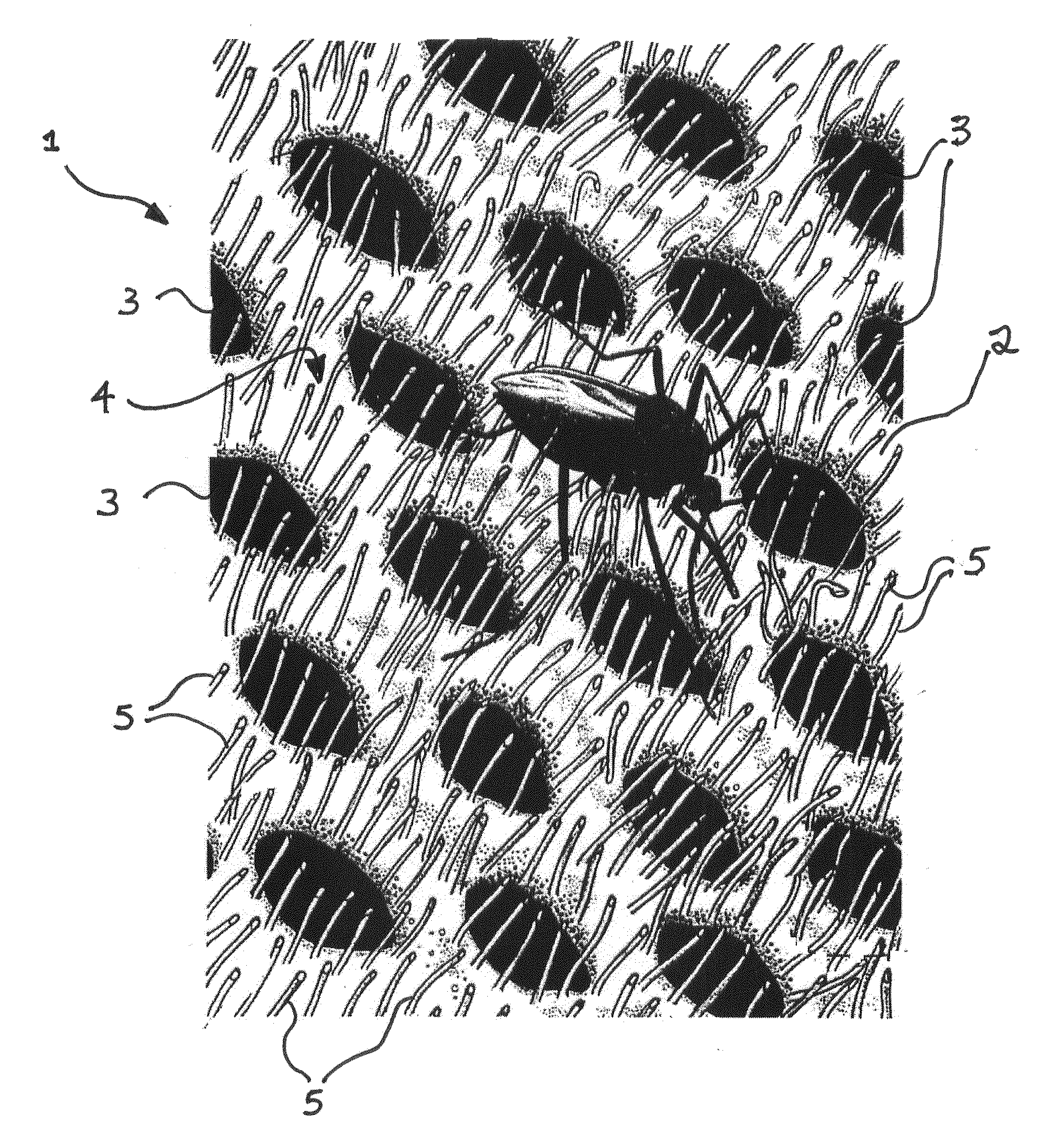
Figure 1 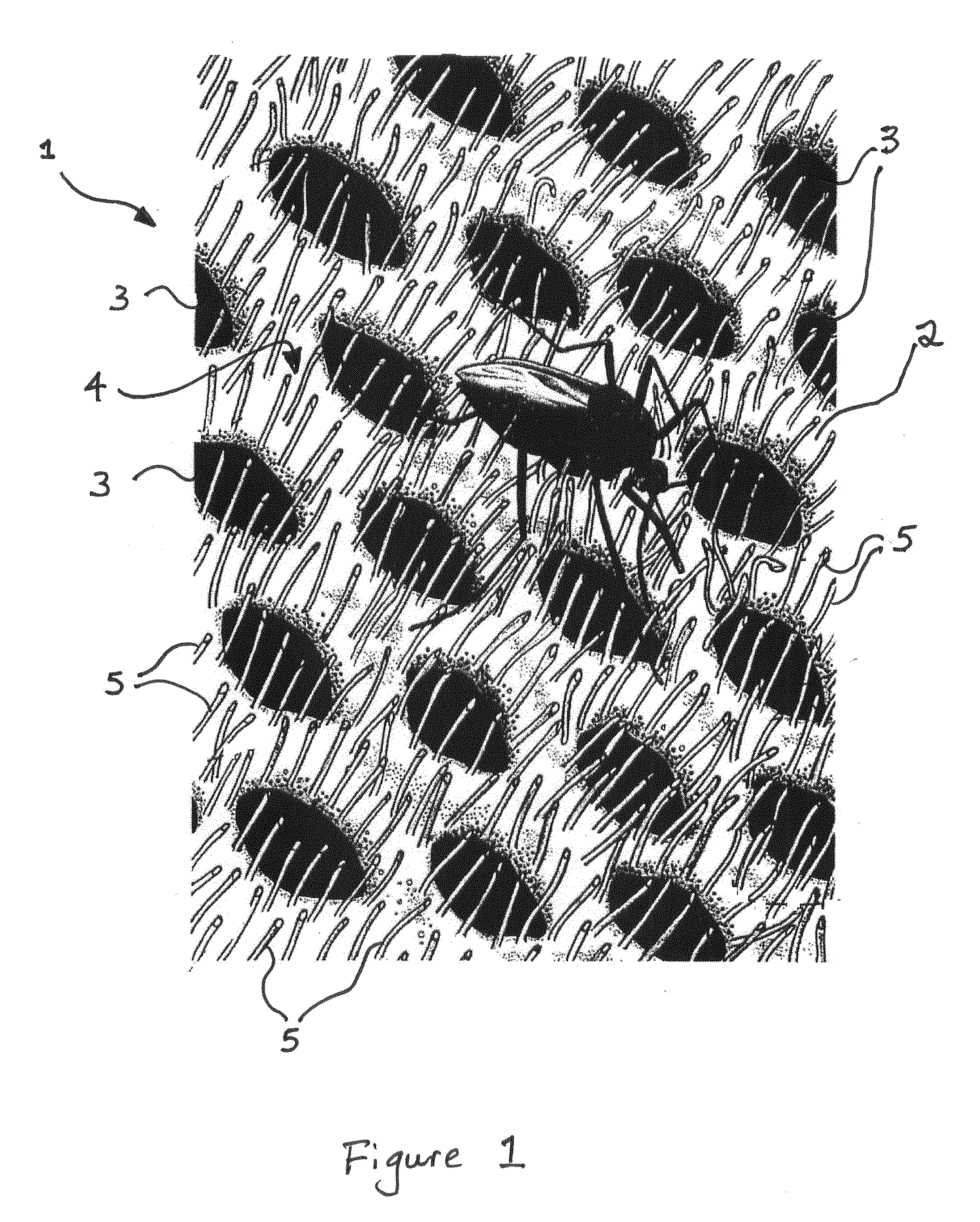
Figure 2 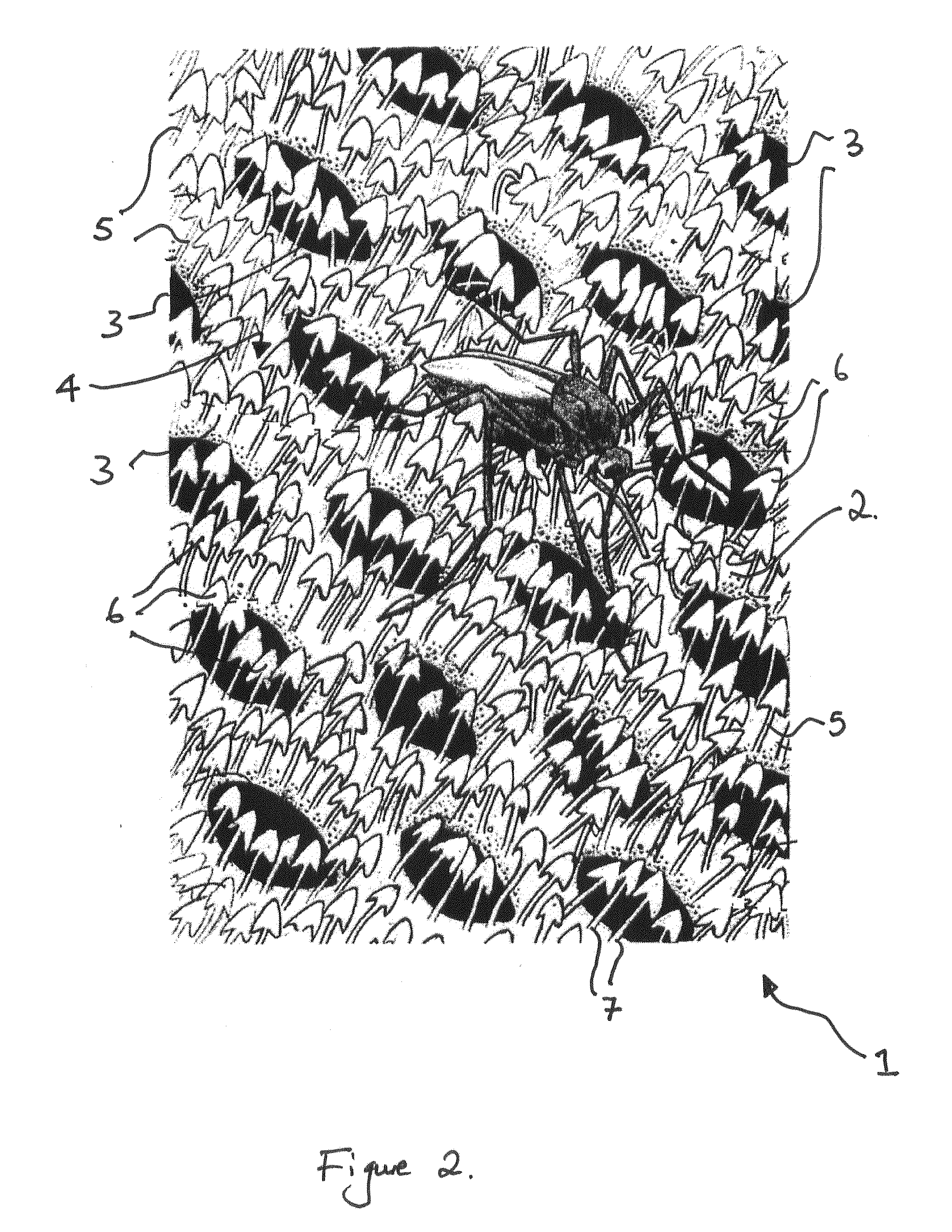
Figure 3
Abstract
Description
FIELD OF INVENTION
[0001] This present invention relates to novel materials and to methods of their manufacture. In particular, the present invention provides a pest control material that provides physical protection against insects as well as providing insecticidal functionality; and to methods of preparation of such a material.BACKGROUND TO THE INVENTION
[0002] Mosquito nets and crop protection nets both act by providing a physical barrier to insects. The former are designed to protect people or animals sleeping under them from the bites of haematophagous insects such as mosquitoes, phlebotomine sand flies, simuliid black flies, horse flies and midges and thus preventing transmission of the pathogens causing diseases such as malaria and leishmaniasis. More recent developments involve treating the mesh with conventional insecticides (especially pyrethroids) by impregnation of the fibres, or by incorporating these chemicals into the polymer material of the yarn, which then diffuses over...
Examples
example 2
[0085]An open mesh structure according to the invention was prepared via a split spacer fabric using the following general methods:
[0086]The base fabric, prepared by known methods, was a planar split warp knitted spacer mesh fabric produced from monofilament yarns (PET): 10 mm thickness. The area density of the unslit warp knitted spacer mesh was ca. 280-320 g / m2 and the exact weight selected depending on the required aperture size. The surface filaments were selected from 75 dtex or 167dtex textured PET) although other linear densities can be utilised depending on the required area density of the resulting material.
[0087]The projection filaments were 0.07 mm PET monofilament. Other dimensions may be selected depending on the stiffness and compression characteristics of the projecting filaments required in the final product after slitting.
[0088]The slitting of the spacer fabric takes place in-plane down the centre of the mesh fabric. After slitting the resulting open mesh material w...