
Nasal Venti System
Patent Information
- Authority / Receiving Office
- US · United States
- Current Assignee / Owner
- Publication Date
- 2014-06-12
- Estimated Expiration
- Not applicable · inactive patent
Smart Images
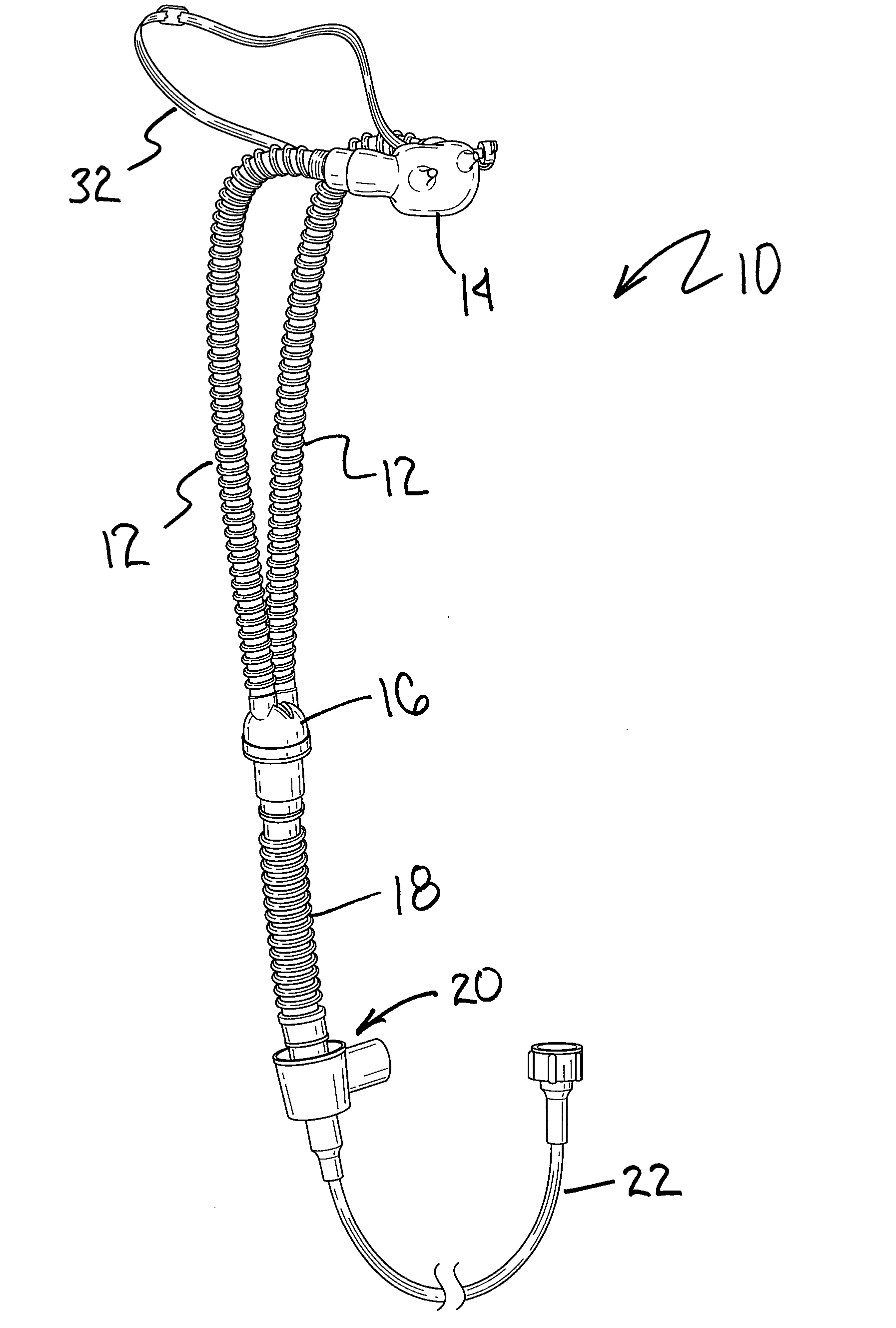
Figure 1 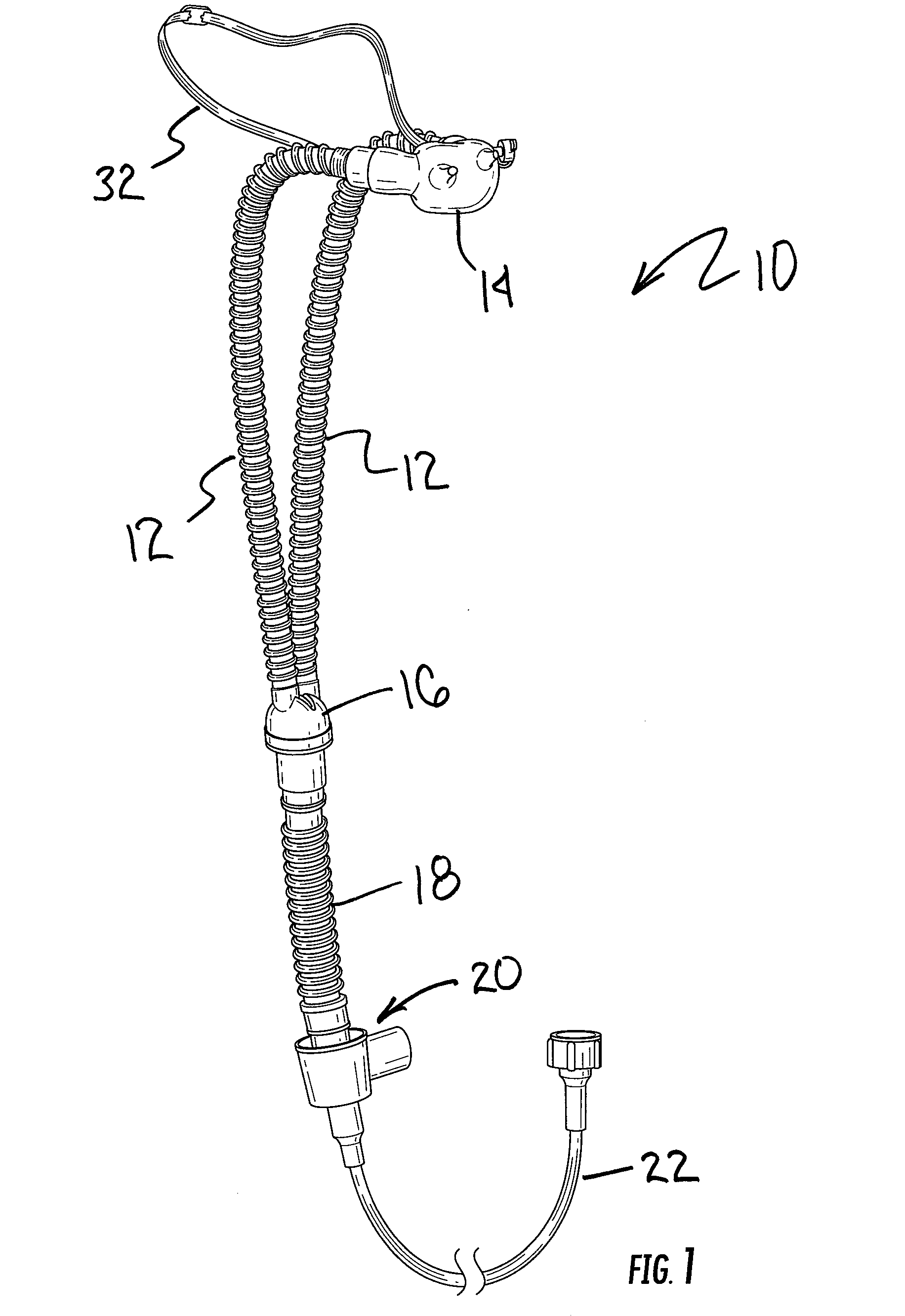
Figure 2 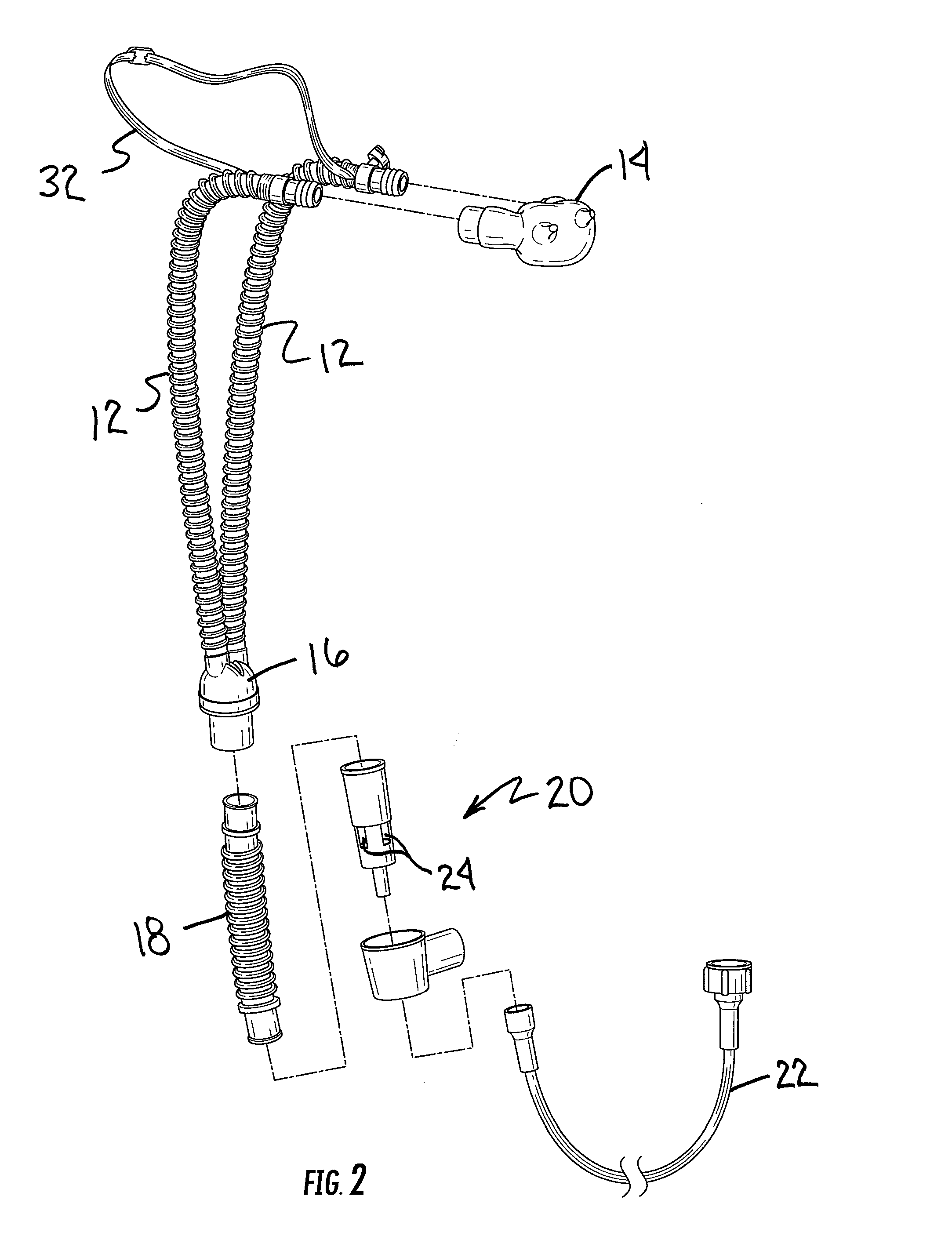
Figure 3
Abstract
Description
TECHNICAL FIELD
[0001] The present device relates to ventilation systems. More specifically, the device relates to non-invasive, nasal ventilation systems.BACKGROUND OF THE INVENTION
[0002] Breathing is an involuntary action that most people probably take for granted. We breathe to get oxygen into our lungs and ultimately to oxygenate blood so that the oxygen can be carried to all parts of the body where it is needed. However, struggling to breath, even for a moment, is an experience which can cause panic in the strongest of individuals. Every day patients with most any type of chronic respiratory disorder can know the panic of struggling to take a normal breath, and then another. Many of such patients are admitted to a hospital where they can be connected to a mechanical assisted breathing machine (i.e., a ventilator) that alternately pushes air (possibly including a high-concentration of oxygen) into the lungs and withdraws carbon dioxide from the lungs, either invasively or noninvasi...
Examples
Embodiment Construction
[0016]While this invention is susceptible of embodiments in many different forms, there is shown in the drawings and will herein be described in detail at least one preferred embodiment of the invention with the understanding that the present disclosure is to be considered as an exemplification of the principles of the invention and is not intended to limit the broad aspect of the invention to any of the specific embodiments illustrated.
[0017]Referring to FIGS. 1-4, there is illustrated a noninvasive breathing assembly, generally designated by the numeral 10. The particular illustrated assembly 10 is for use with a portable fluid source, such as an oxygen tank. However, it should be understood that the principles of the invention may be more broadly applied to other analogous uses and devices.
[0018]As can be seen in FIGS. 1 and 2, the assembly 10 is comprised of parts that are commonly used to deliver high-flow noninvasively. Specifically, the assembly 10 comprises a pair of corruga...