
System of intravenous fluid/medication delivery that employs signature flow amplitudes or frequencies to facilitate the detection of intravenous infiltration
a technology of intravenous fluid and signature flow, which is applied in the field of intravenous fluid delivery system and methods of monitoring intravenous catheter/cannulaassociated venous occlusion, can solve the problems of substantial patient morbidity, tissue swelling and tissue damage, and practices that have not clearly been demonstrated to reduce the rate of phlebitis, etc., and achieve the effect of altering the polarity of the magnetic field generated by the magnetic coil
Patent Information
- Authority / Receiving Office
- US · United States
- Patent Type
- Applications(United States)
- Current Assignee / Owner
- Publication Date
- 2015-11-26
Smart Images
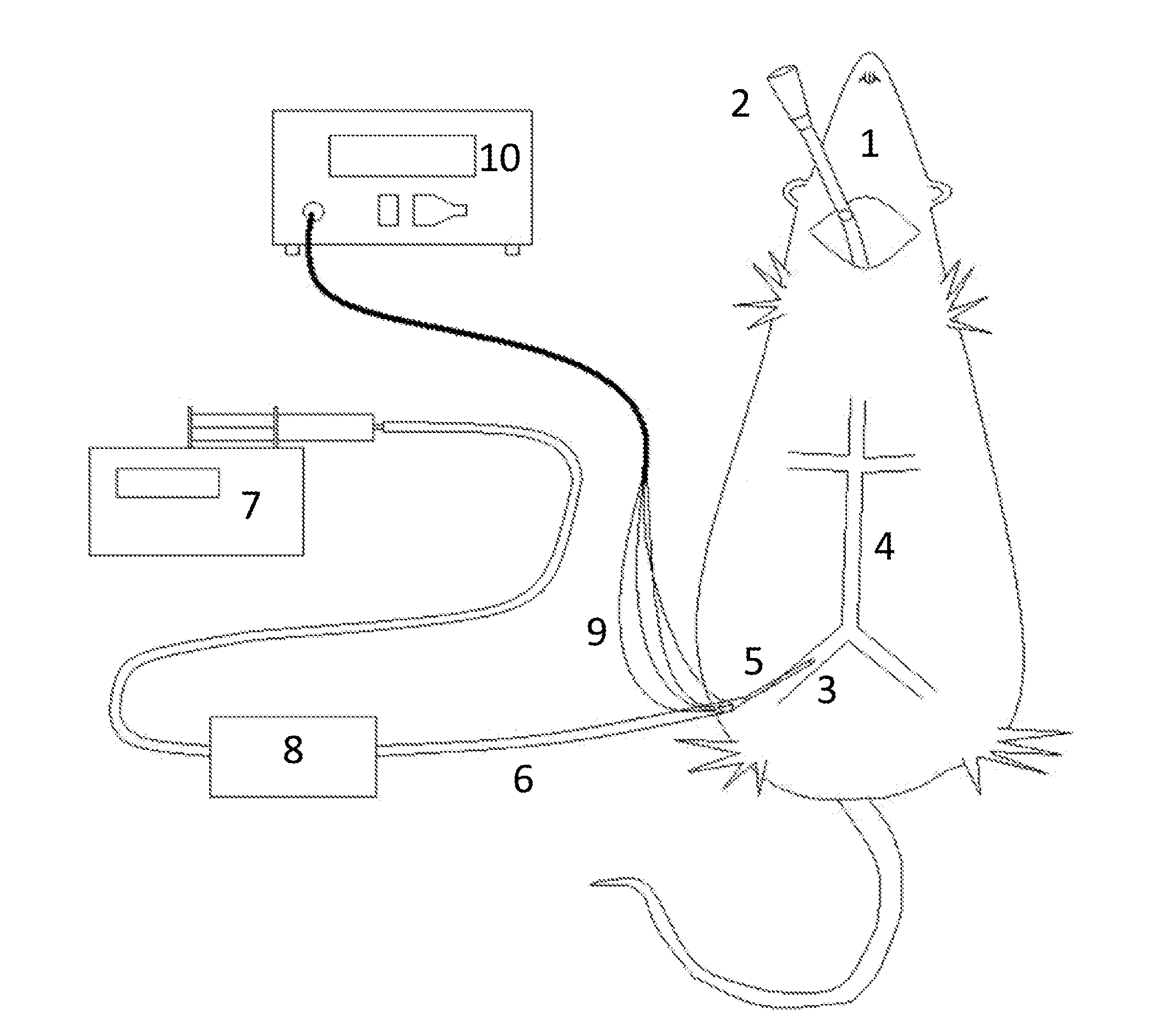
Figure 1 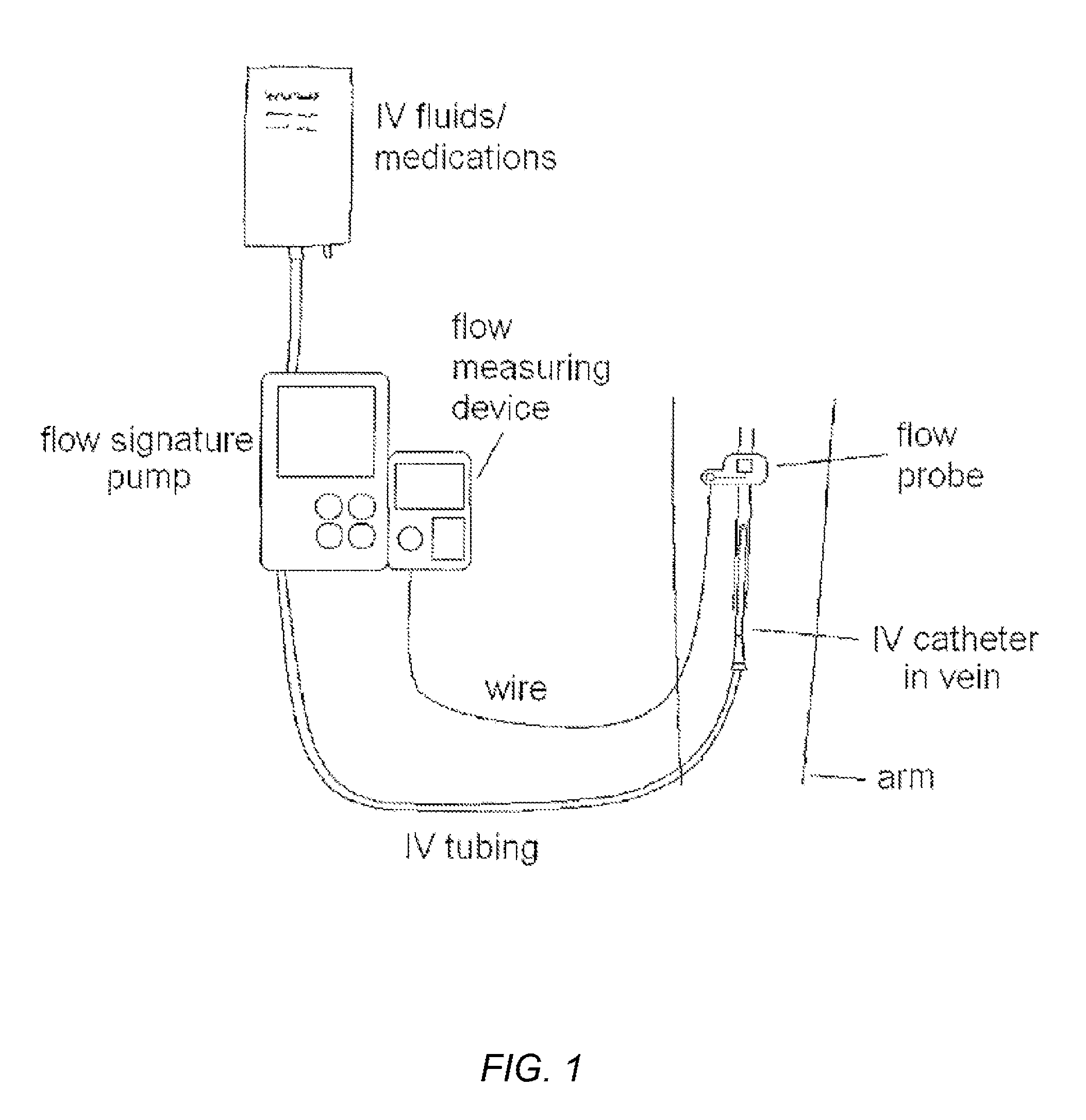
Figure 2 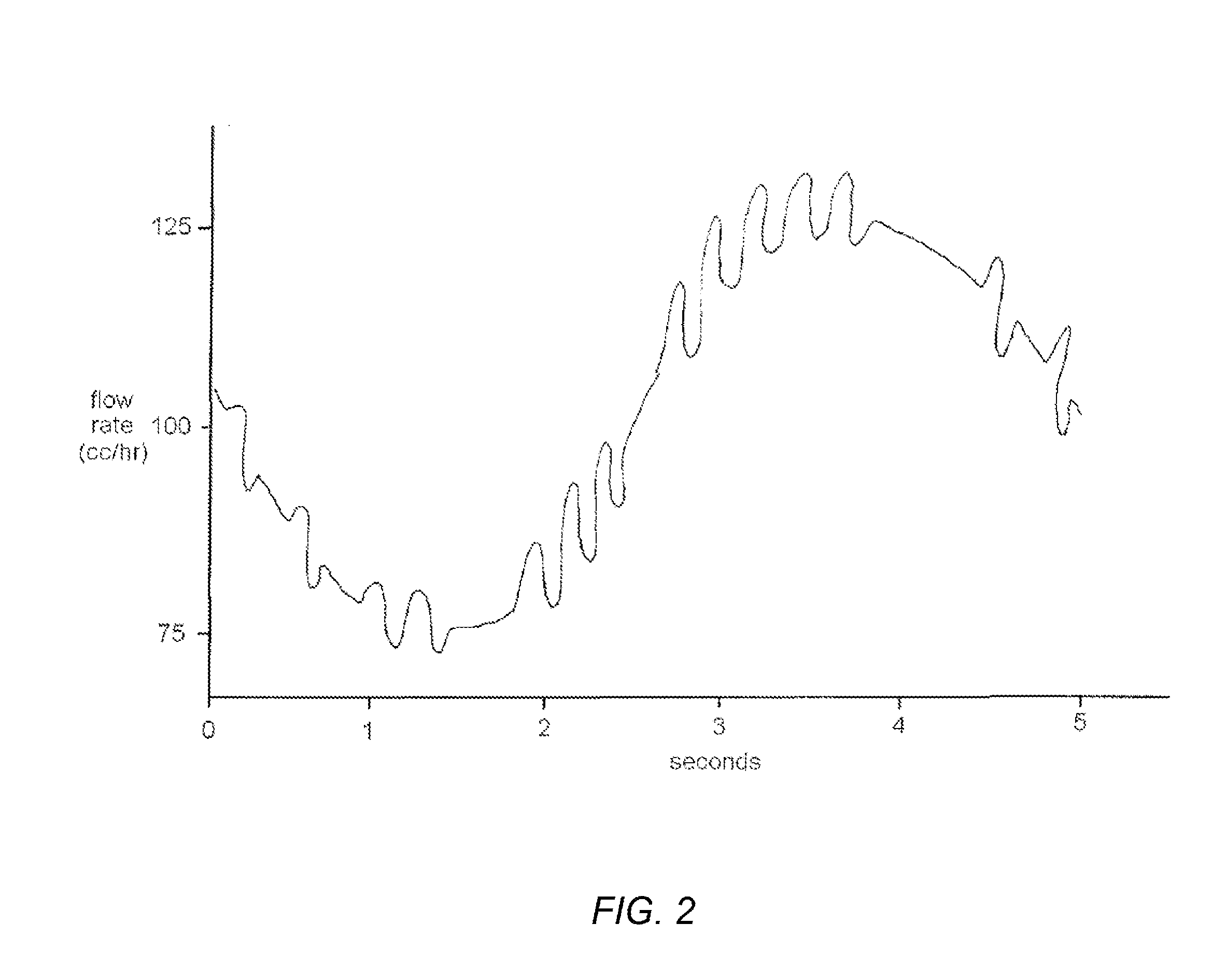
Figure 3
Abstract
Description
BACKGROUND OF THE INVENTION
[0001] 1. Field of the Invention
[0002] The invention generally relates to the intravenous delivery of fluids. More particularly the invention relates to systems and methods of monitoring intravenous catheter / cannula-associated venous occlusion.
[0003] 2. Description of the Relevant Art
[0004] An estimated 150 million intravenous (“IV”) devices are placed in hospitals in the United States each year for the delivery of fluids and / or medications. The most common complication of these devices is IV infiltration, also referred to as phlebitis, that may result in substantial patient morbidity and that, at a minimum, requires removal and replacement of the IV. The risk of IV infiltration has been quoted as ranging from 2-67% of all IV lines. In one recent large study, roughly one third of all IV lines had to be replaced due to phlebitis. This has led hospitals to adapt labor-intensive algorithms that involve the regular rotation of IV lines every 2-3 days. Unfortunatel...
Examples
Embodiment Construction
[0034]As discussed above, when phlebitis occurs the vein becomes occluded. As a result, fluid flow in the vein ceases and fluid flow is diverted to the extra-vascular subcutaneous tissues, causing tissue swelling and damage. Approaches to identifying IV infiltration early would be to identify the interruption of the flow of IV fluids in the vein downstream of the IV device and / or to identify electrical changes in the extra-vascular subcutaneous tissues due to tissue swelling. Conventional IV delivery systems deliver a slow, uniform flow of IV fluids at a set rate which is difficult to monitor and the interruption of such flow may produce a non-specific signal change. If IV fluids were delivered using signature flow frequencies and / or amplitudes, preserved flow in the downstream vein would be more readily identifiable as would its interruption. Furthermore, measurement of electrical changes in the tissues might be able to identify the transfer of the signature flow frequency and / or a...