
Method and device for forging a workpiece in bar form
Patent Information
- Authority / Receiving Office
- US · United States
- Current Assignee / Owner
- Publication Date
- 2017-11-09
Smart Images
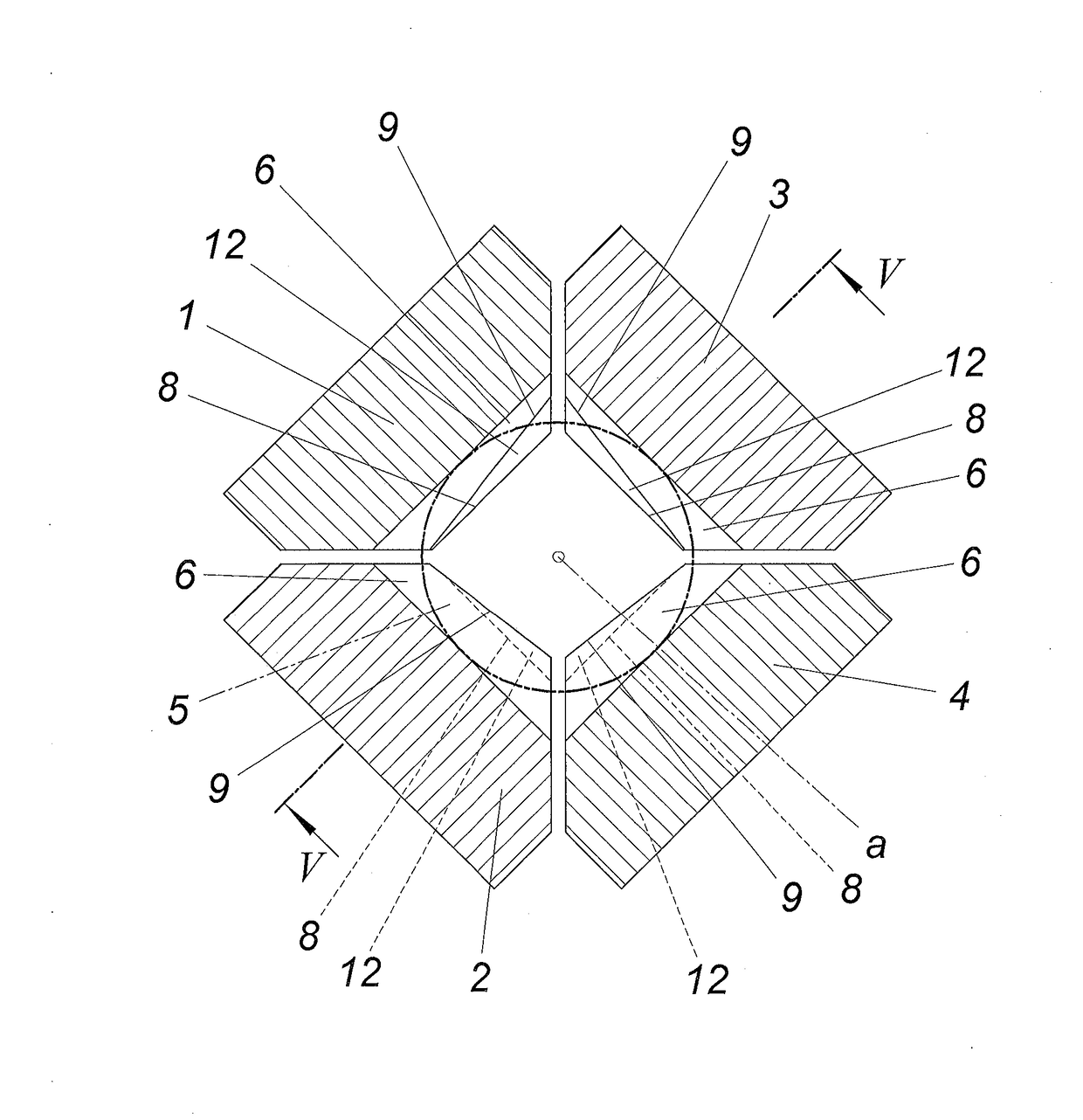
Figure 1 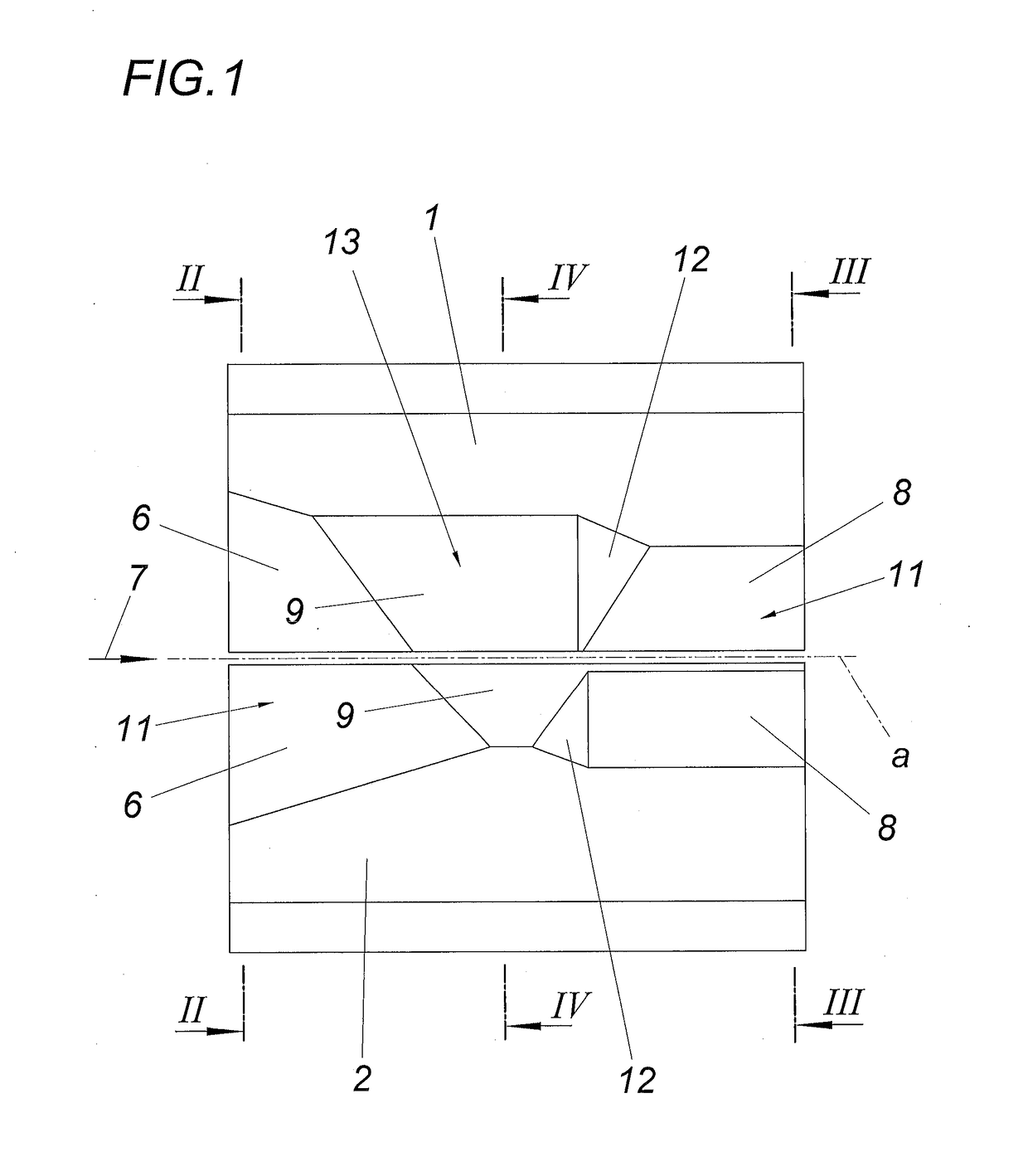
Figure 2 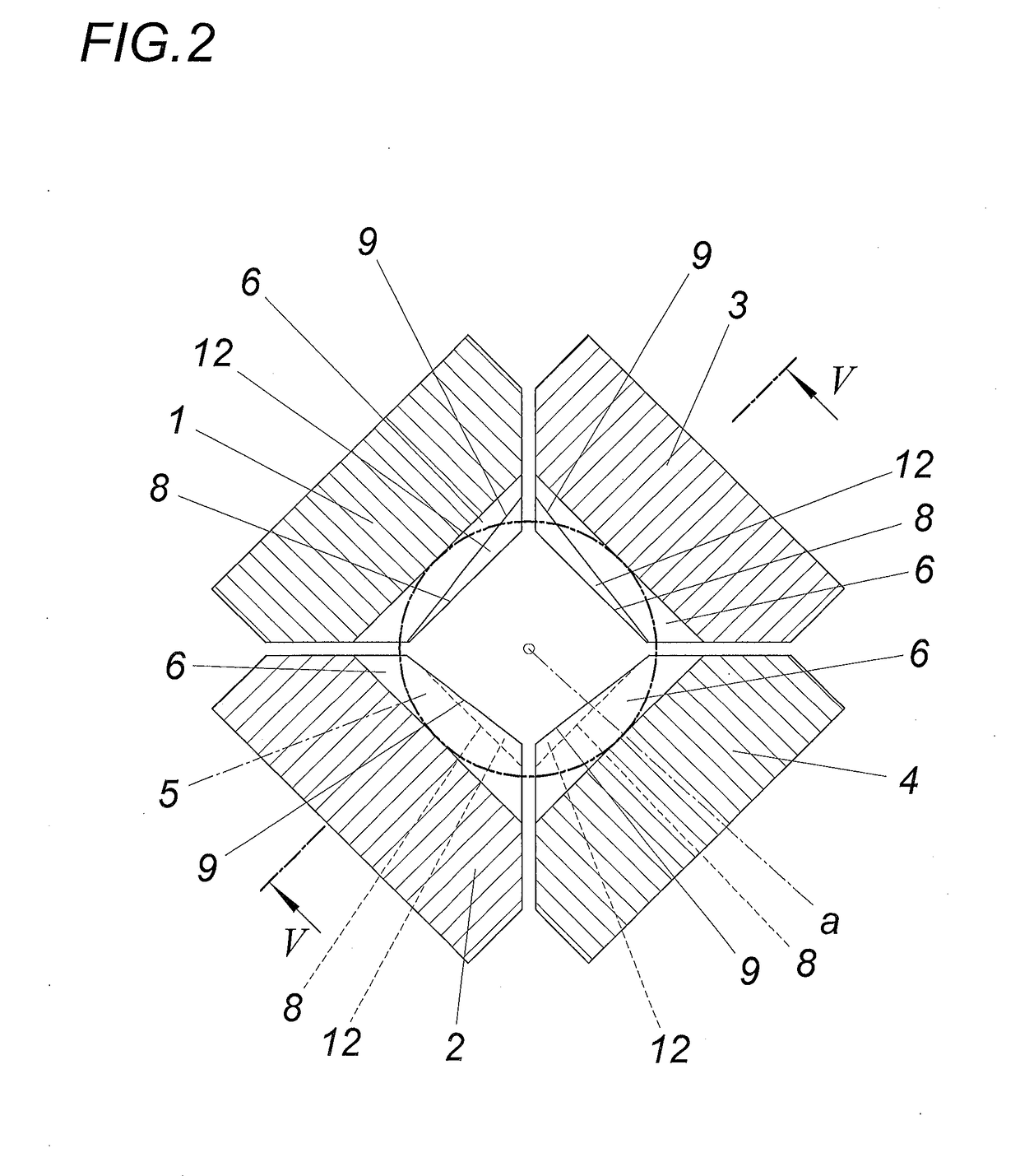
Figure 3
Abstract
Description
TECHNICAL FIELD
[0001] The invention relates to a method for forging a rod-shaped workpiece which is deformed with the aid of forging tools in the sense of a cross-sectional displacement perpendicular to the forging axis and is subjected to an axial advancement and possibly a rotation about the forging axis during the pauses in the engagement of the forging tools, and to a device for carrying out the method.PRIOR ART
[0002] During the forging of workpieces which are subjected to an axial advancement and possibly a rotation about the forging axis during the pauses in the engagement of the forging tools, not only is a cross-sectional reduction of the workpiece blank achieved by means of the forging tools arranged in pairs opposite one another and acting radially on the workpiece blank, but also the grain structure of the workpiece is improved. The change in the grain structure depends on various forging parameters, such as the forging temperature, the rate of advancement, the size of the ...
Examples
Example
WAY OF IMPLEMENTING THE INVENTION
[0019]Of the forging device constructed in a known manner, only the four forging tools 1, 2, 3, 4 are shown in the illustrated exemplary embodiment, said forging tools being arranged in pairs opposite one another and being able to be acted upon radially in relation to a forging axis a, the setting shown forming the mould cavity for a rod-shaped workpiece 5 that is indicated in dash-dotted line. Said forging tools 1, 2, 3, 4 form inlet-side moulding surfaces 6, which create a mould cavity coaxial to the forging axis a and which give rise to a cross-sectional reduction on account of their course being inclined in the advancement direction 7. On the outlet side, moulding surfaces 8 are provided, which likewise define a mould cavity coaxial to the forging axis a and advantageously ensure an additional cross-sectional reduction, which aids the central guidance of the workpiece 5 in the region of the outlet-side moulding surfaces 8. The outlet-side mouldin...