

Method for detection of analytes via polymer complexes
Patent Information
- Authority / Receiving Office
- US · United States
- Current Assignee / Owner
- Publication Date
- 2019-02-14
Smart Images
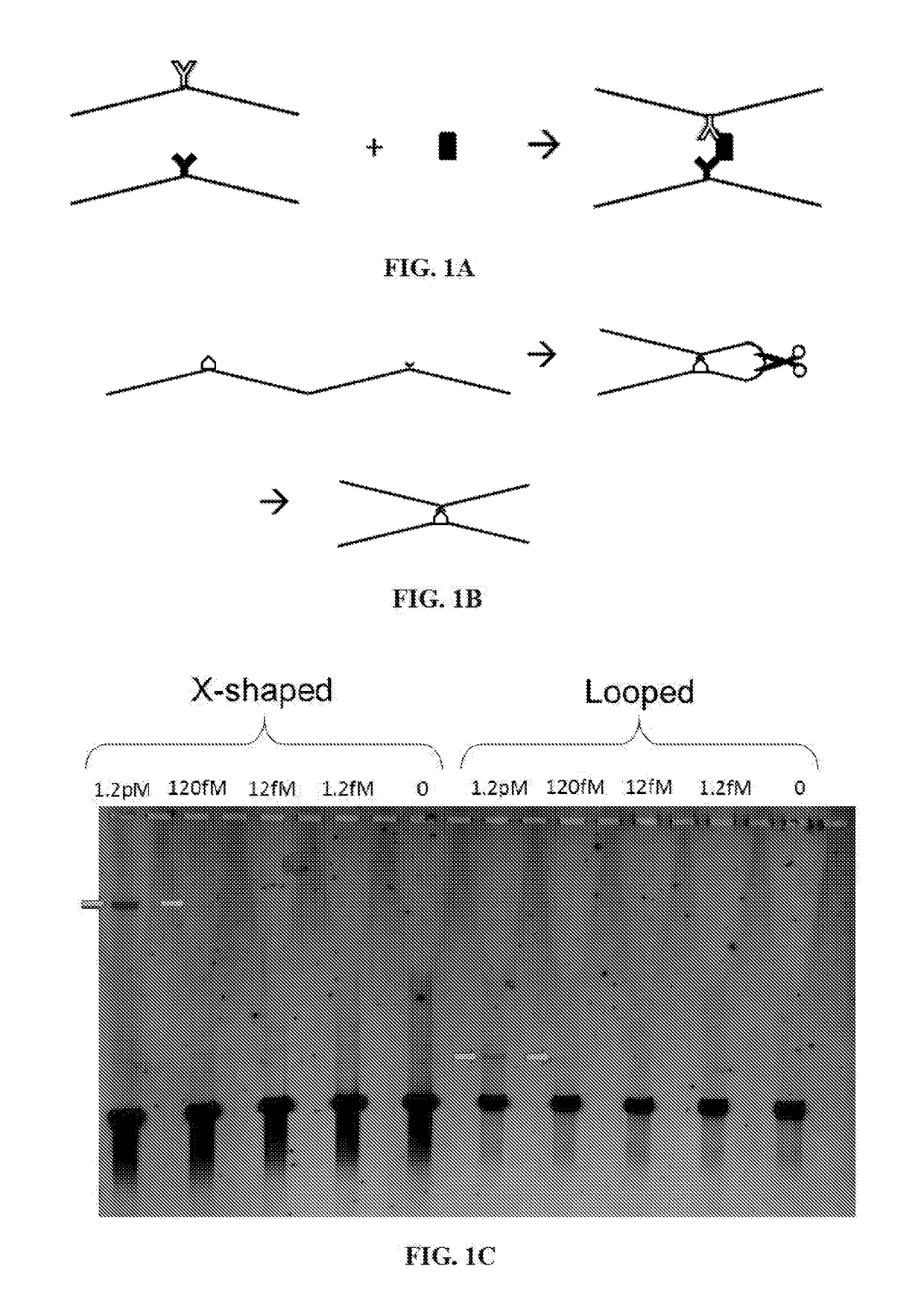
Figure 1 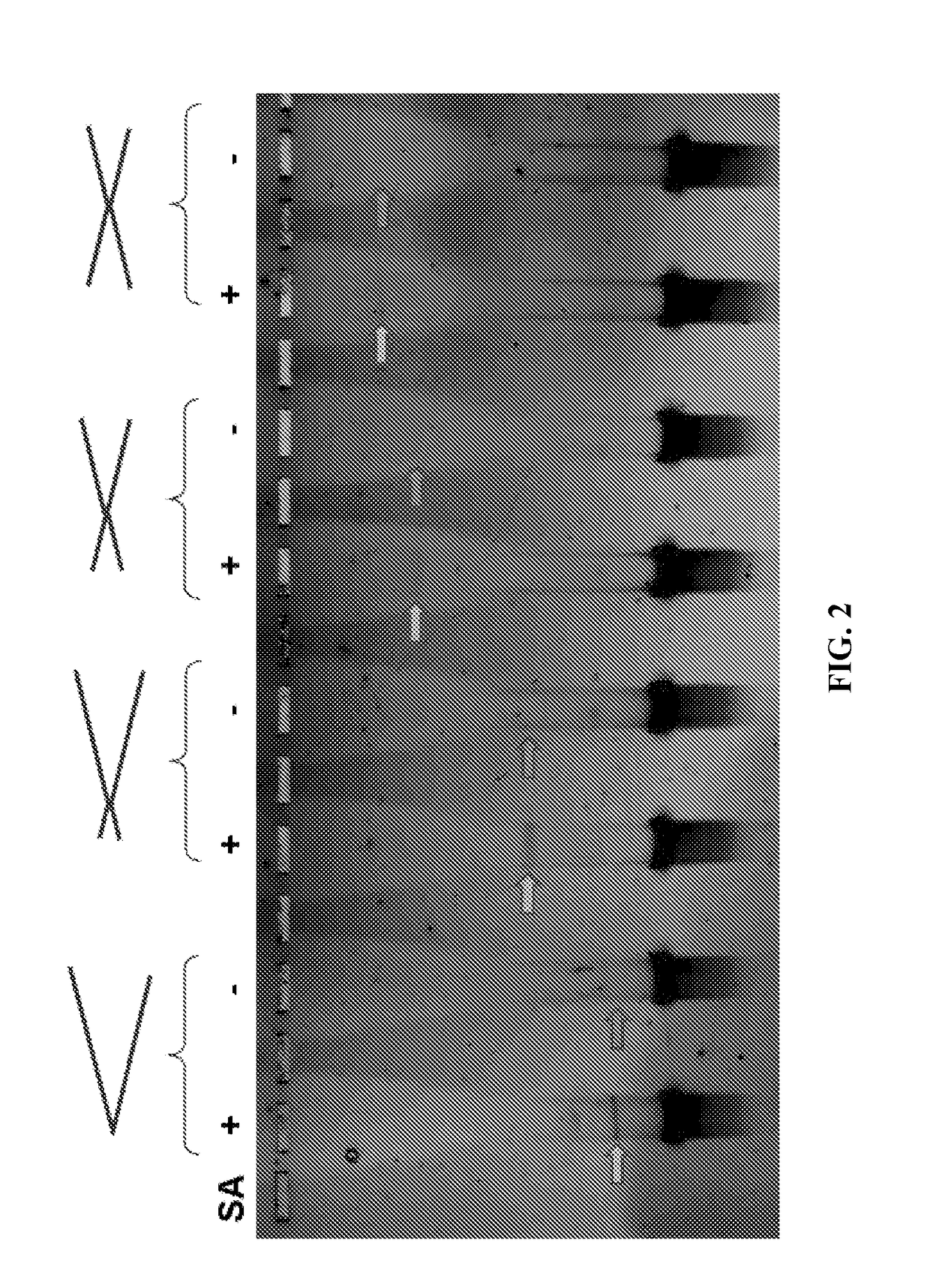
Figure 2 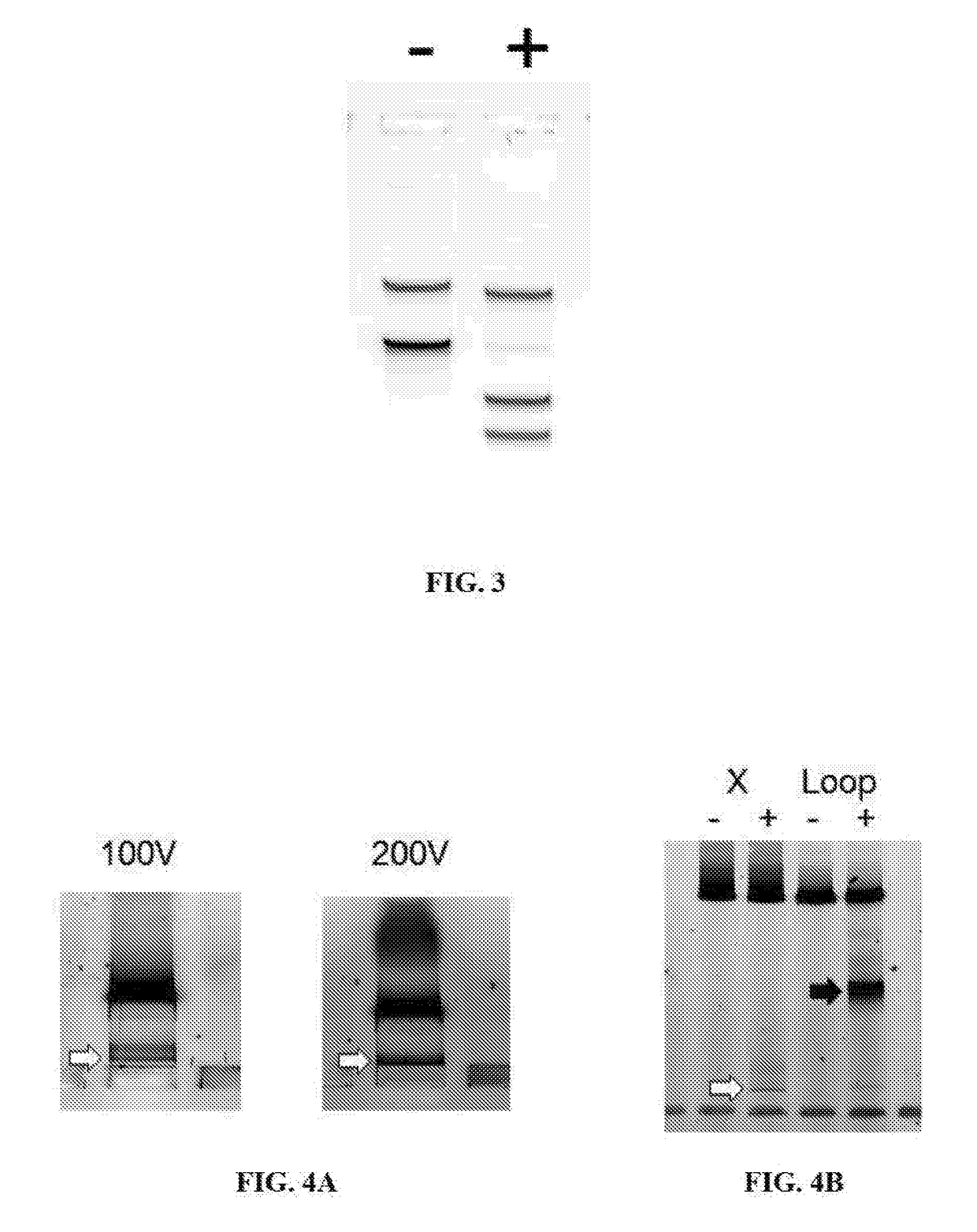
Figure 3
Abstract
Description
RELATED APPLICATION
[0001] This application claims the benefit under 35 U.S.C. § 119(e) of U.S. Provisional Application Ser. No. 62 / 293,306 filed on Feb. 9, 2016, entitled “METHOD FOR DETECTION OF ANALYTES VIA POLYMER COMPLEXES”, the entire contents of which are incorporated by reference herein.BACKGROUND OF INVENTION
[0002] Various clinical and non-clinical applications require analyte detection. Such analytes may be present in very low concentrations (or copies) and this poses a challenge to detection. In addition, some applications may benefit from the ability to detect not just a single analyte but a panel of analytes which together for a profile of a condition or predisposition to a condition. Assays intended for consumer use would similarly benefit from ease of use.SUMMARY OF INVENTION
[0003] Provided herein are methods and compositions for use in detecting and quantifying analytes such as single compounds or complexes comprising two or more components. The methods and compositions ...
Examples
Embodiment Construction
[0034]This disclosure provides new and surprisingly improved approaches to detect analytes and molecular interactions. Some of these approaches employ polymer pairs that are able to bind to an analyte, such as a single molecule or compound, or a multicomponent complex, thereby undergoing a conformational change from single, optionally linear, polymers to a polymer-analyte complex typically having an X-shaped structure, with four free ends, and an analyte bridge. Unexpectedly, the difference in structure between the bound and unbound (e.g., essentially linear) states allows for significantly better separation between bound and unbound states, as compared to other methods of the prior art. Moreover, these methods can be used to detect analytes with low noise, thereby allowing for sensitive detection of low abundance analytes. Various descriptions provided herein refer solely to analytes but it is to be understood that this is for the sake of brevity and that multicomponent complexes a...