
Electronically Controllable Resistor
a technology of electronic control and resistor, applied in the field of electric engineering and electronics, can solve problems such as impossible prior art results and technical results
Patent Information
- Authority / Receiving Office
- US · United States
- Patent Type
- Applications(United States)
- Current Assignee / Owner
- Publication Date
- 2022-04-21
Smart Images
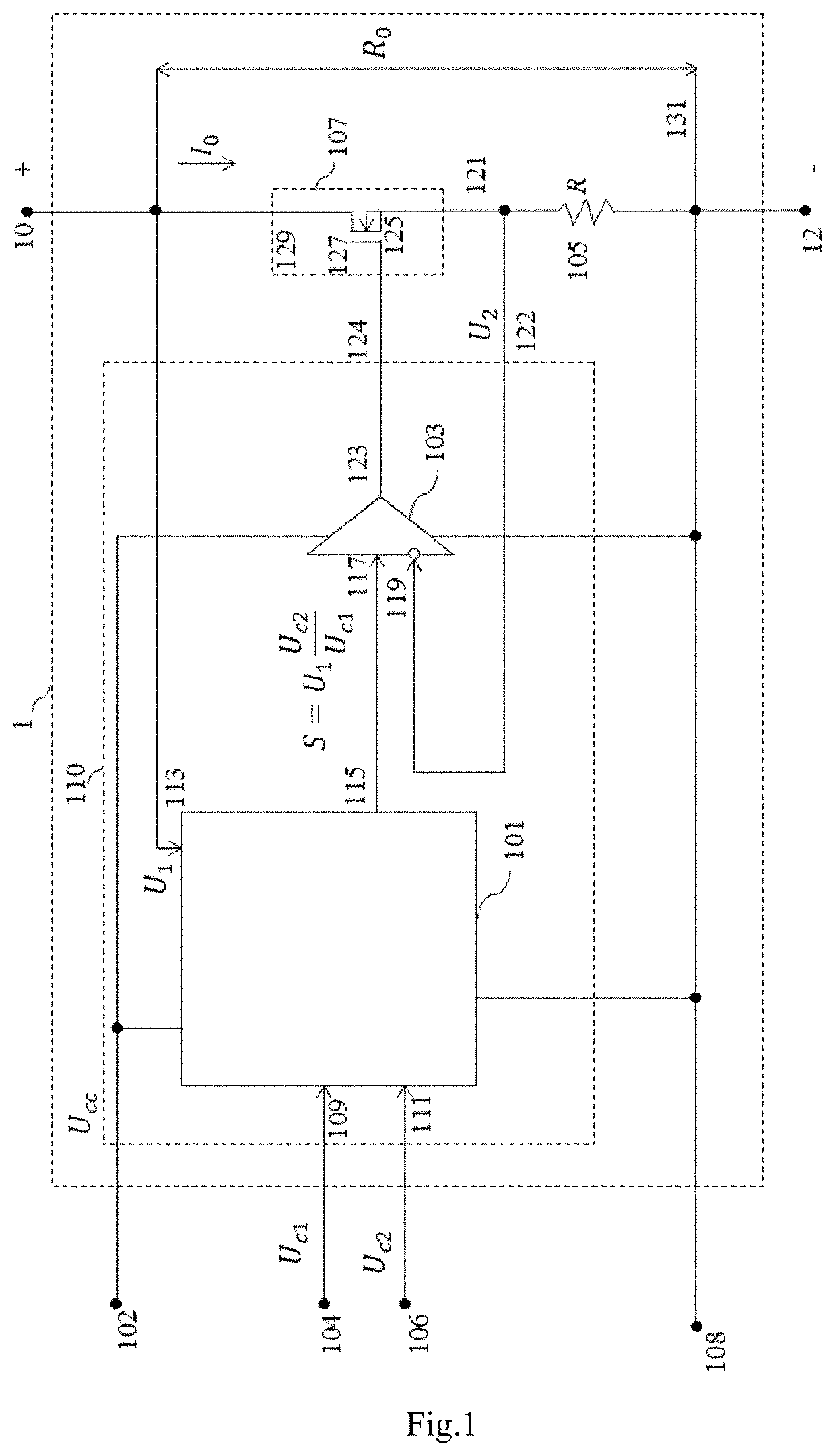
Figure 1 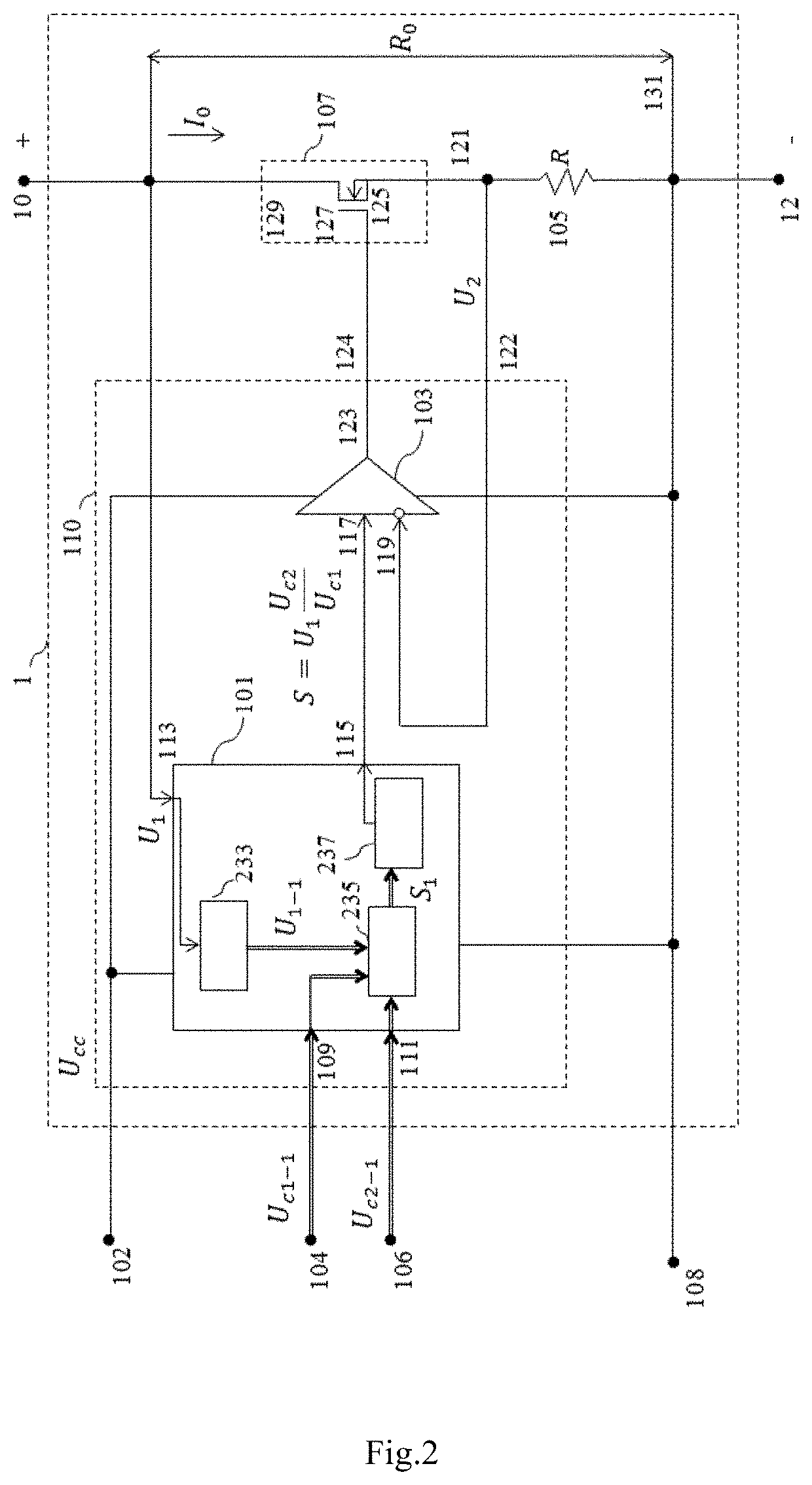
Figure 2 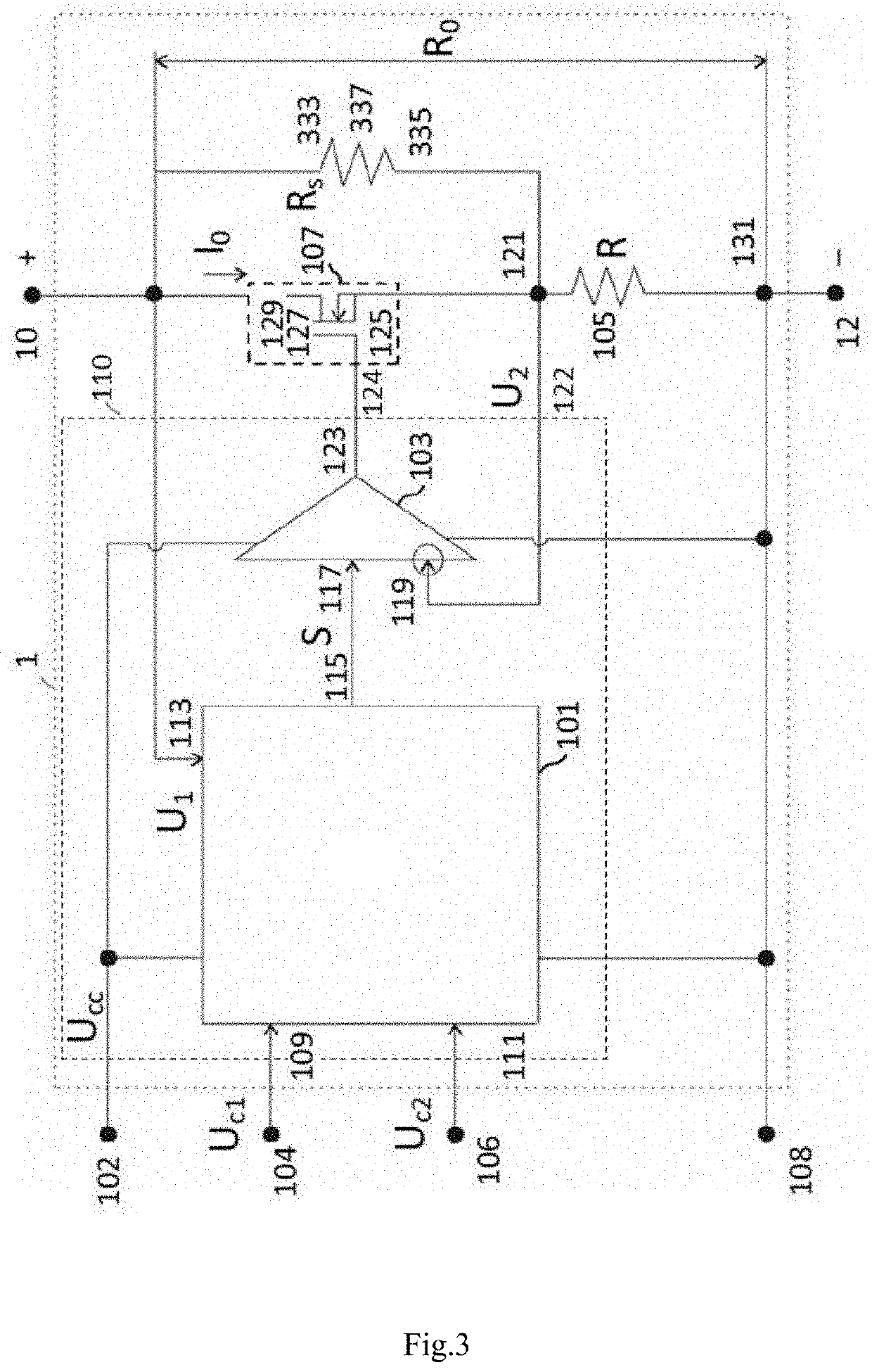
Figure 3
Abstract
Description
BACKGROUND OF THE INVENTION1. Field of the Invention
[0001] The present invention relates to electrical engineering and electronics and is intended to control changes of resistance of a portion of an electric circuit using electronic means.2. Description of Related Art
[0002] Known in the art have been means to electronically control resistance of a portion of an electric circuit with the use of voltage controllable variable resistors. One of those designs, specifically, an electronically controllable resistor (ECR) including a field effect transistor (FET) is described in Electronic Circuits: Handbook for Design and Application, by U. Tietze et al., Springer, 1978, FIG. 5.19. Controlling voltage is applied directly to an input of the ECR represented by the gate of a FET. As the controlling voltage varies, so does the resistance of the FET channel. In this way, control of resistance of a portion of an electric circuit (and, consequently, control of voltage, current and power of wanted e...
Examples
Embodiment Construction
[0042]For purposes of better understanding of the present invention, the following definitions are introduced.
[0043]Voltage converter—a component of an electric circuit adapted to convert controlling voltages into an intermediate signal, the value of the intermediate signal being able to be set equivalent (equal) to a set ratio of signals from sources of controlling voltages. The voltage converter can have various implementations, including, but not limited to, analog IC, microprocessors, programmed logic arrays, etc.
[0044]Executive element—a component of an electric circuit provided with three terminals, one of the terminals being a control input. The executive element can have various implementations, including, but not limited to, those using MOS transistors, bipolar transistors (including those with insulated gate), electronic tubes, etc.
[0045]Presented in FIGS. 1 and 2 is an electronically controllable resistor (ECR) 1 comprising a voltage converter 101, a subtractor 103 (inclu...