
Antisense gene systems of pollination control for hybrid seed production
a technology of antisense gene and hybrid seed, which is applied in the direction of peptides, transferases, peptide sources, etc., can solve the problems of limited commercial production of hybrid seed by using gametocides, high cost, and labour intensive hybrid seed production, so as to avoid use, speed up development, and increase the number of lines
Patent Information
- Authority / Receiving Office
- US · United States
- Patent Type
- Patents(United States)
- Current Assignee / Owner
- Publication Date
- 2001-02-06
- Estimated Expiration
- Not applicable · inactive patent
Smart Images
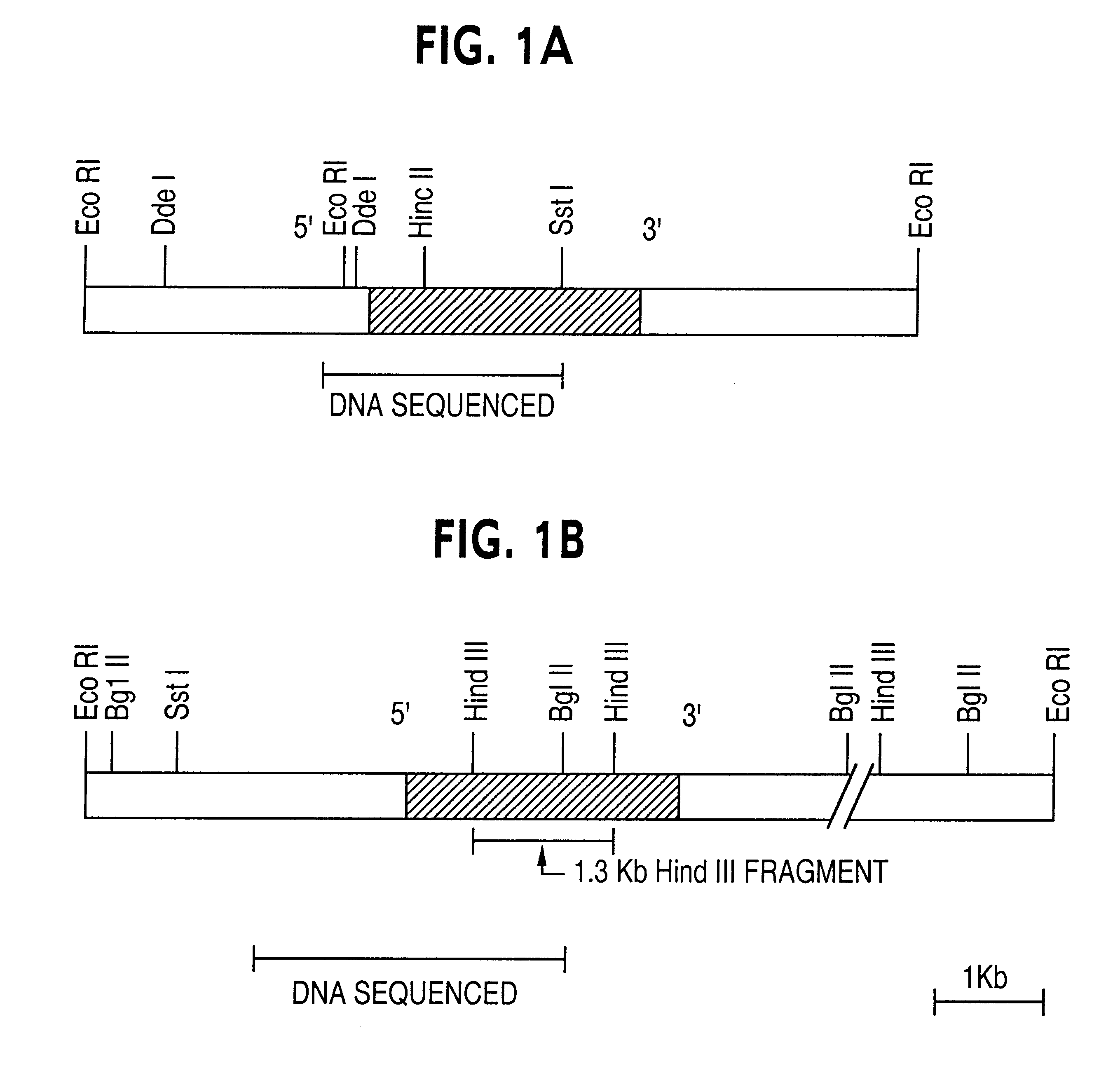
Figure 1 
Figure 2 
Figure 3
Abstract
Description
The present invention relates to a method for producing male sterile plants and hybrid seed, to genetic material used to impart the male sterility trait and to new products produced by said method, namely, genetically transformed plants carrying the male sterile trait, male sterile plants and hybrid seed produced by pollinating said plants with pollen from male fertile plants.Production of hybrid seed for commercial sale is a large industry. Hybrid plants grown from hybrid seed benefit from the heterotic effects of crossing two genetically distinct breeding lines. The agronomic performance of this offspring is superior to both parents, typically in vigour, yield, and uniformity. The better performance of hybrid seed varieties compared to open-pollinated varieties makes the hybrid seed more attractive for farmers to plant and thereby commands a premium price in the market place.In order to produce hybrid seed uncontaminated with selfed seed pollination control methods must be impleme...
Examples
example 2
In this example we use the same promoter as in example 1 and a different pollen specific sense coding sequence (clone L 19) to construct the antisense gene and transform plant cells derived from a plant of the species Brassica napus.
To the vector PAL 1107 was added a 1.3 Kb Hind III restriction fragment containing coding sequence from clone L 19. This fragment was first made blunt by Klenow treatment and this blunt ended fragment was cloned into the unique Sma l site of PAL 1107. Clones containing this 1.3 Kb Hind III fragment in the antisense orientation were chosen and used for the transformation of Brassica napus stem epidermal layer peels as described above.
example 3
In this example, we transform tobacco which was previously transformed to hygromycin resistance with and antisense that blocks the hygromycin resistance gene under the control of a pollen specific promoter derived from Brassica napus (clone L 4).
The 0.8 Kb Bam HI restriction endonuclease fragment encoding the hygromycin phosphotransferase gene (Gritz and Davies, 1983 Gene 25:179-185) was isolated from the plasmid pVU1011 supplied by S. Scofield of the Plant Breeding Institute, Cambridge, U.K. pVU 1011 is BIN 19 into which has been added a CaMV 35S promoter controlling the expression of the hygromycin phosphotransferase gene followed by the nos terminator. The 0.8 Kb Bam HI restriction endonuclease fragment was ligated into the single Bam HI restriction endonuclease site in PAL 1107 previously described in example 1. Clones containing the 0.8 kb hygromycin phosphotransferase gene fragment in PAL 1107 were restriction mapped and one which contained said fragment in the antisense orien...
example 4
In this example we repeat the procedure used in example 3 with Brassica napus.
The vectors described in example 3 were also used for the production of male sterile plants in Brassica napus. The vectors PAL 1107 HYGAS and pGUS-HYG were used for transformation of thin stem epidermal layers of Brassica napus, cv. Westar stems. The cocultivation was performed using surface sterilized stem epidermal layer peels as described in example 1. The vector pGUS-HYG was used for an initial transformation, then plants resistant to hygromycin were recovered.
For the production of male sterile plants in the plasmid PAL 1107 HYGAS was used to retransform Brassica napus stem epidermal peels from plants that had been previously transformed to hygromycin resistance using the hygromycin phosphotransferase gene in PGUS-HYG.
Retransformed Brassica napus plant cells containing the sense hygromycin gene from PGUS-HYG and the antisense hygromycin gene in PAL 1107 HYGAS were exposed to hygromycin at 10 ugs. per m...