
Self-selection of radio frequency channels to reduce co-channel and adjacent channel interference in a wireless distributed network
a distributed network and radio frequency channel technology, applied in the field of wireless communication systems, can solve the problems of high labor intensity, large time and expense, and slow and laborious methods, and achieve the effect of saving time and cost of deployment and saving time and expens
Patent Information
- Authority / Receiving Office
- US · United States
- Patent Type
- Patents(United States)
- Current Assignee / Owner
- Publication Date
- 2007-02-06
Smart Images
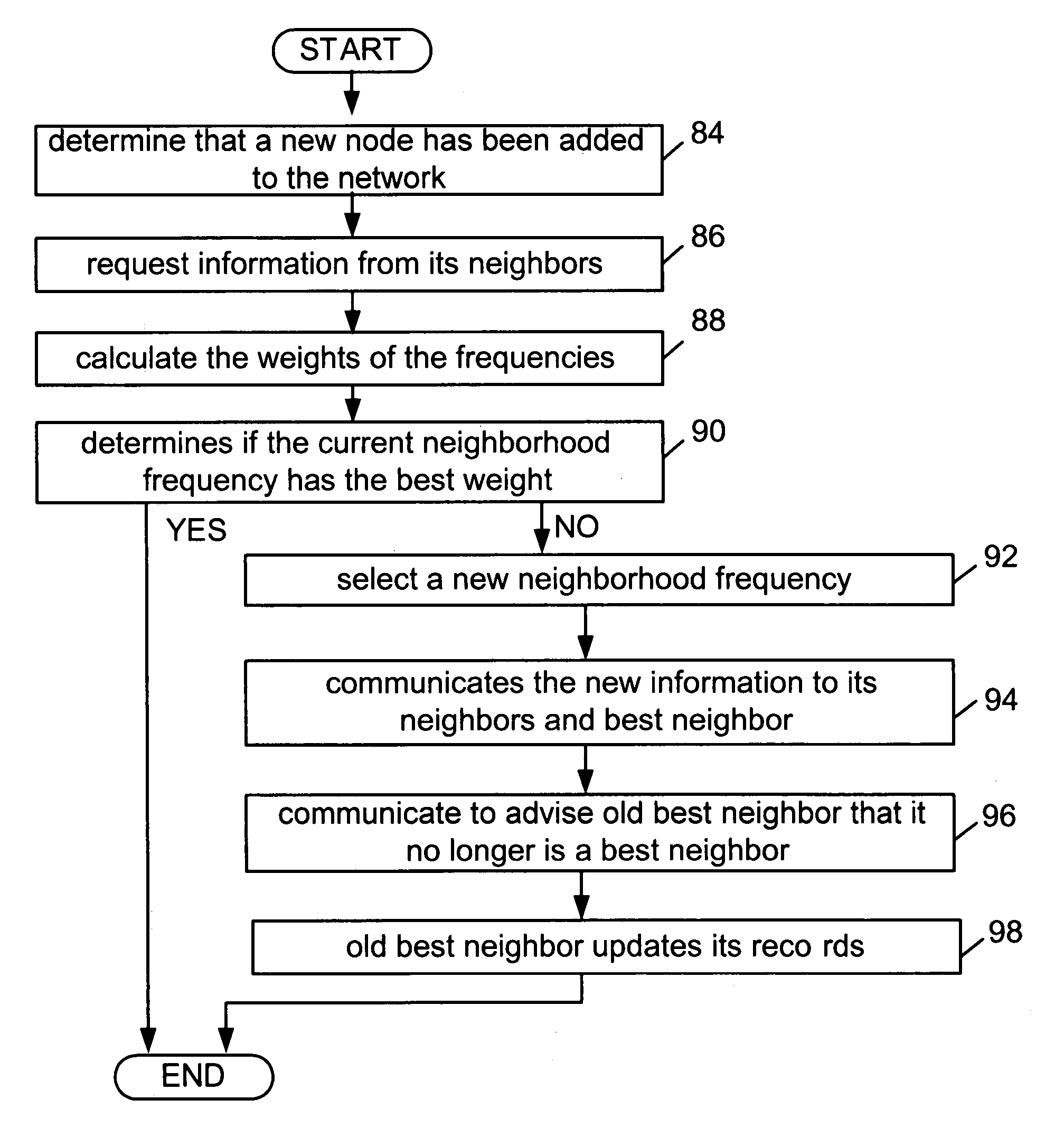
Figure 1 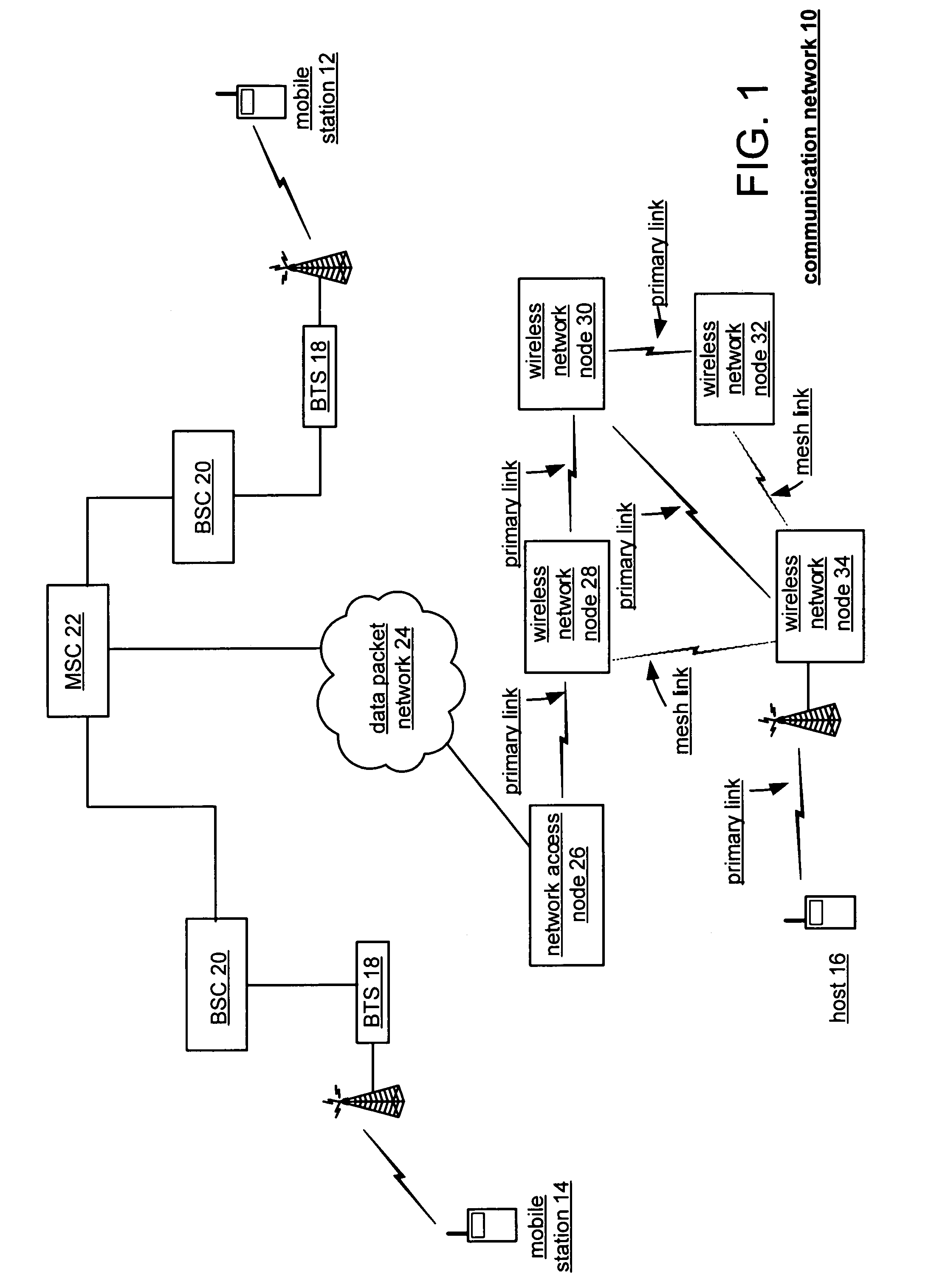
Figure 2 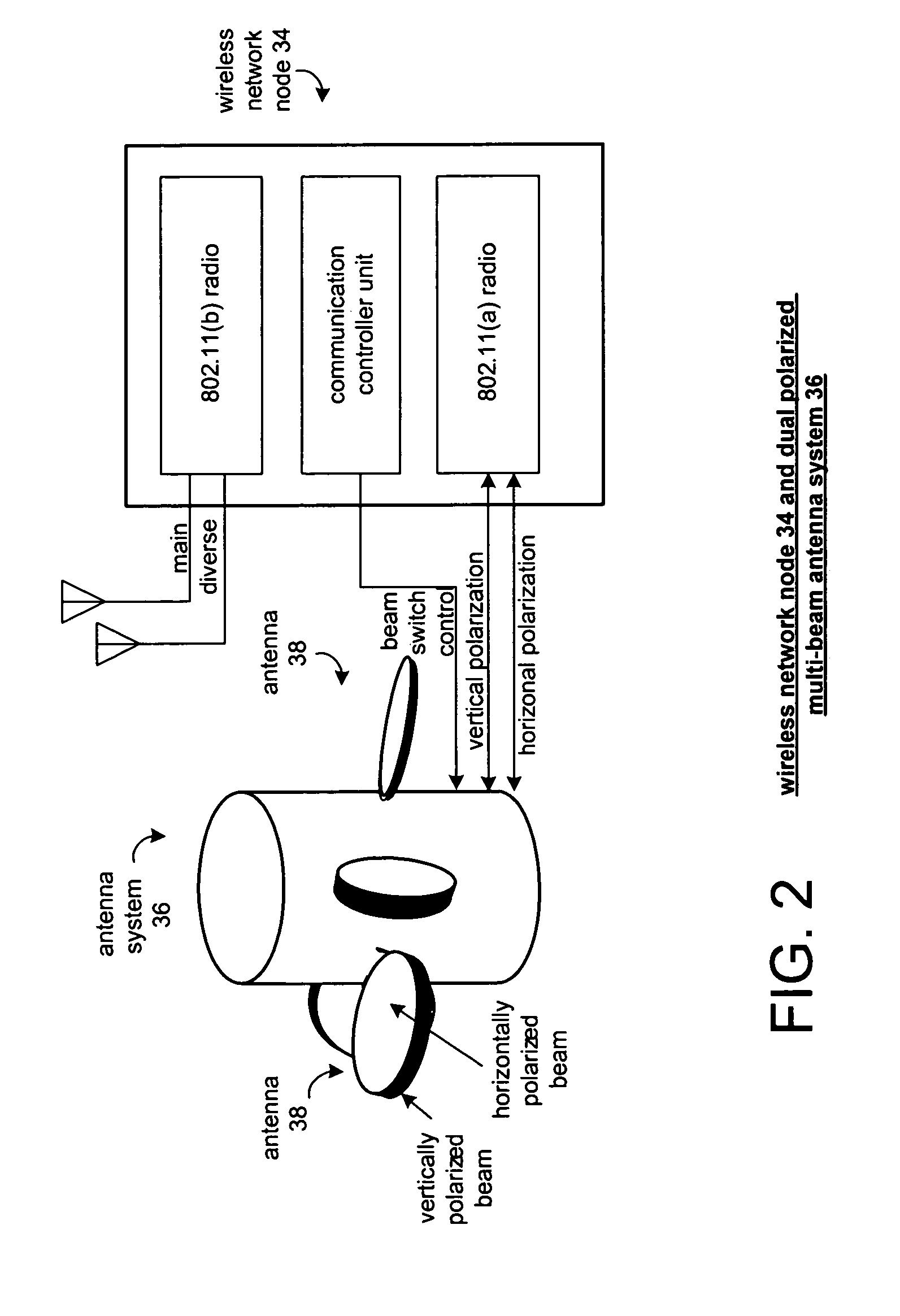
Figure 3
Abstract
Description
CROSS REFERENCE TO RELATED APPLICATIONS
[0001] This application is related to and incorporates by reference and claims priority under 35 U.S.C. 119 the following provisional applications for patent:
[0002] 1) U.S. Patent Application Ser. No. 60 / 446,617 filed on Feb. 12, 2003 and entitled “System for Coordination of Multi Beam Transit Radio Links for a Distributed Wireless Access System”;
[0003] 2) U.S. Patent Application Ser. No. 60 / 446,618 filed on Feb. 12, 2003 and entitled “Rendezvous Coordination of Beamed Transit Radio Links for a Distributed Multi-Hop Wireless Access System”;
[0004] 3) U.S. Patent Application Ser. No. 60 / 446,619 filed on Feb. 12, 2003 and entitled “Distributed Multi-Beam Wireless System Capable of Node Discovery, Rediscovery and Interference Mitigation”;
[0005] 4) U.S. Patent Application Ser. No. 60 / 447,527 filed on Feb. 14, 2003 and entitled “Cylindrical Multibeam Planar Antenna Structure and Method of Fabrication”;
[0006] 5) U.S. Patent Application Ser. No. 60 / 447,643 f...
Examples
Embodiment Construction
[0047]FIG. 1 is a functional block diagram of a communication network formed according to one embodiment of the present invention. A communication network 10 is configured to allow a plurality of mobile stations, such as mobile stations 12 and 14 of a cellular network and a client 16 of a wireless local area network (WLAN), to communicate with each other regardless of geographic location as long as they are located in an area that is served by a service node (e.g., an wireless network node). As may be seen, each of the mobile stations 12 and 14 communicate by way of a base station transceiver system (BTS) 18, a base station controller (BSC) 20, and a mobile switching center (MSC) 22. As is known by one of average skill in the art, MSCs, such as MSC 22, provide network switching for cellular traffic according to a mobile station's location. More specifically, each MSC is coupled to at least one BSC, which, in turn, is coupled to at least one BTS. The operation of cellular networks as...