
Photoresist polymer and photoresist composition containing the same
a technology of photoresist polymer and composition, applied in the field of photoresist polymer and photoresist composition, can solve the problems of difficult to improve the ler of the pattern, improper use at 157 nm wavelength, and more severe ler when using arf photoresist materials, etc., to achieve excellent transmittance, low light absorption, and thermal resistance and adhesive properties. good
Patent Information
- Authority / Receiving Office
- US · United States
- Patent Type
- Patents(United States)
- Current Assignee / Owner
- Publication Date
- 2008-03-04
- Estimated Expiration
- Not applicable · inactive patent
Smart Images
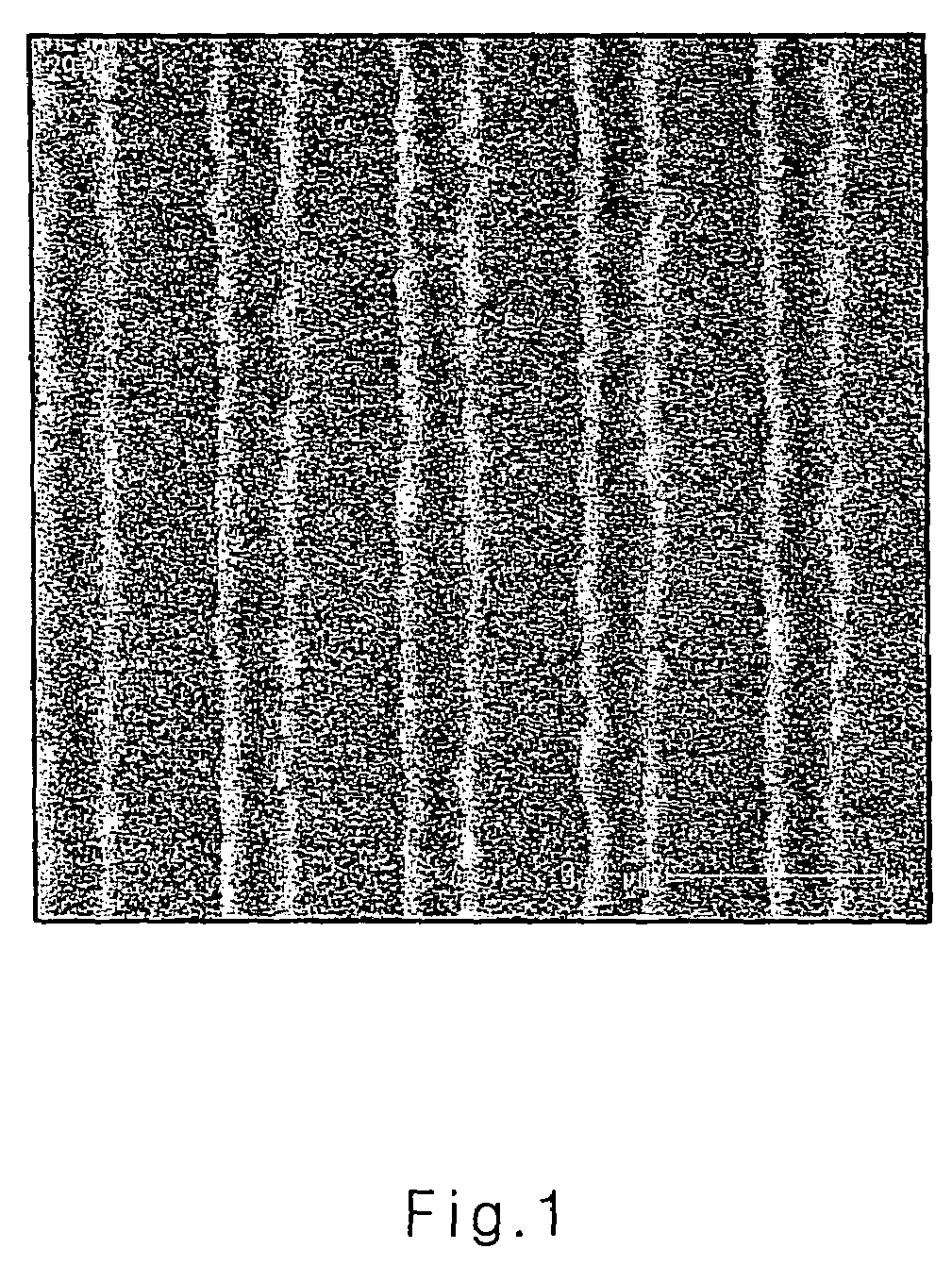
Figure 1 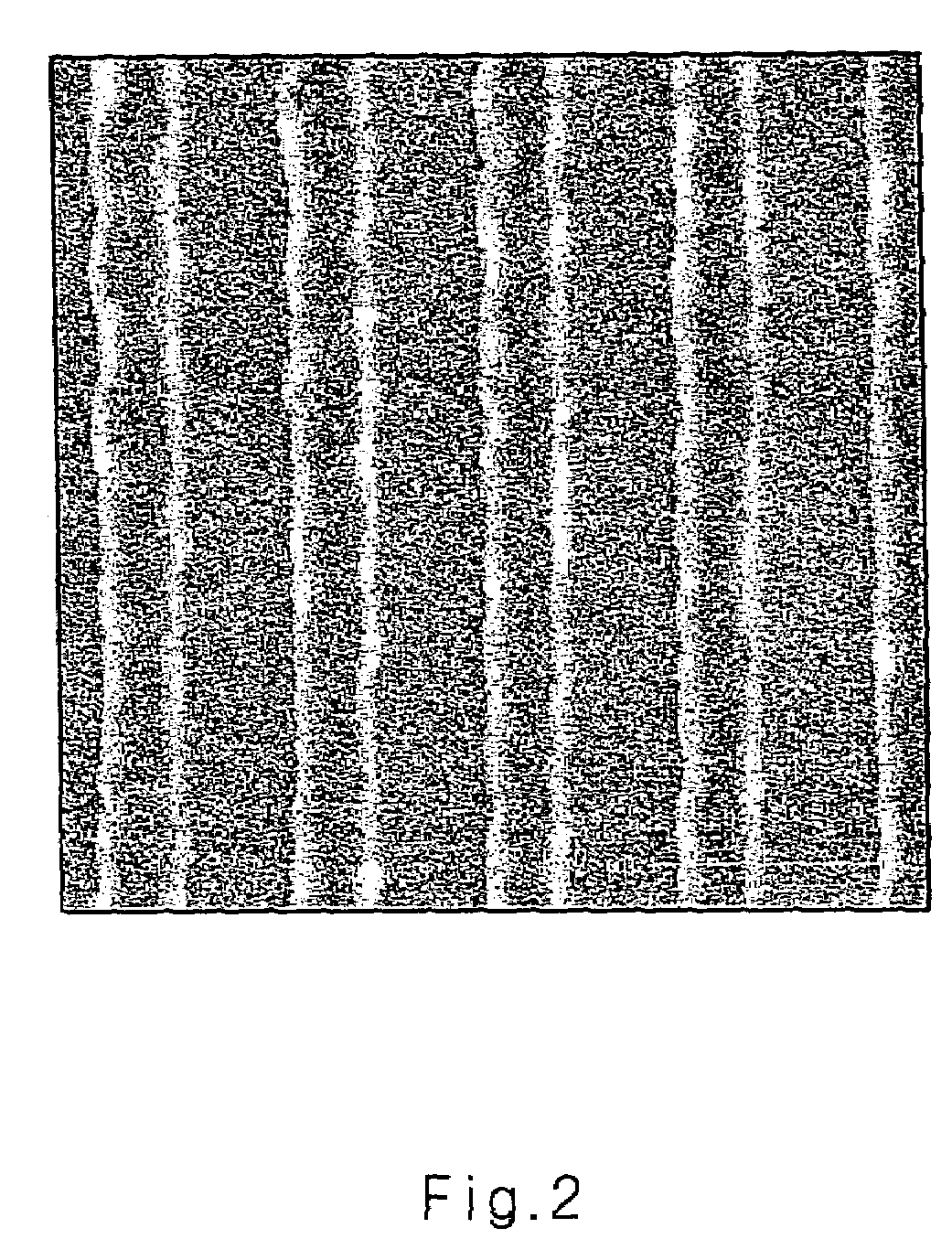
Figure 2 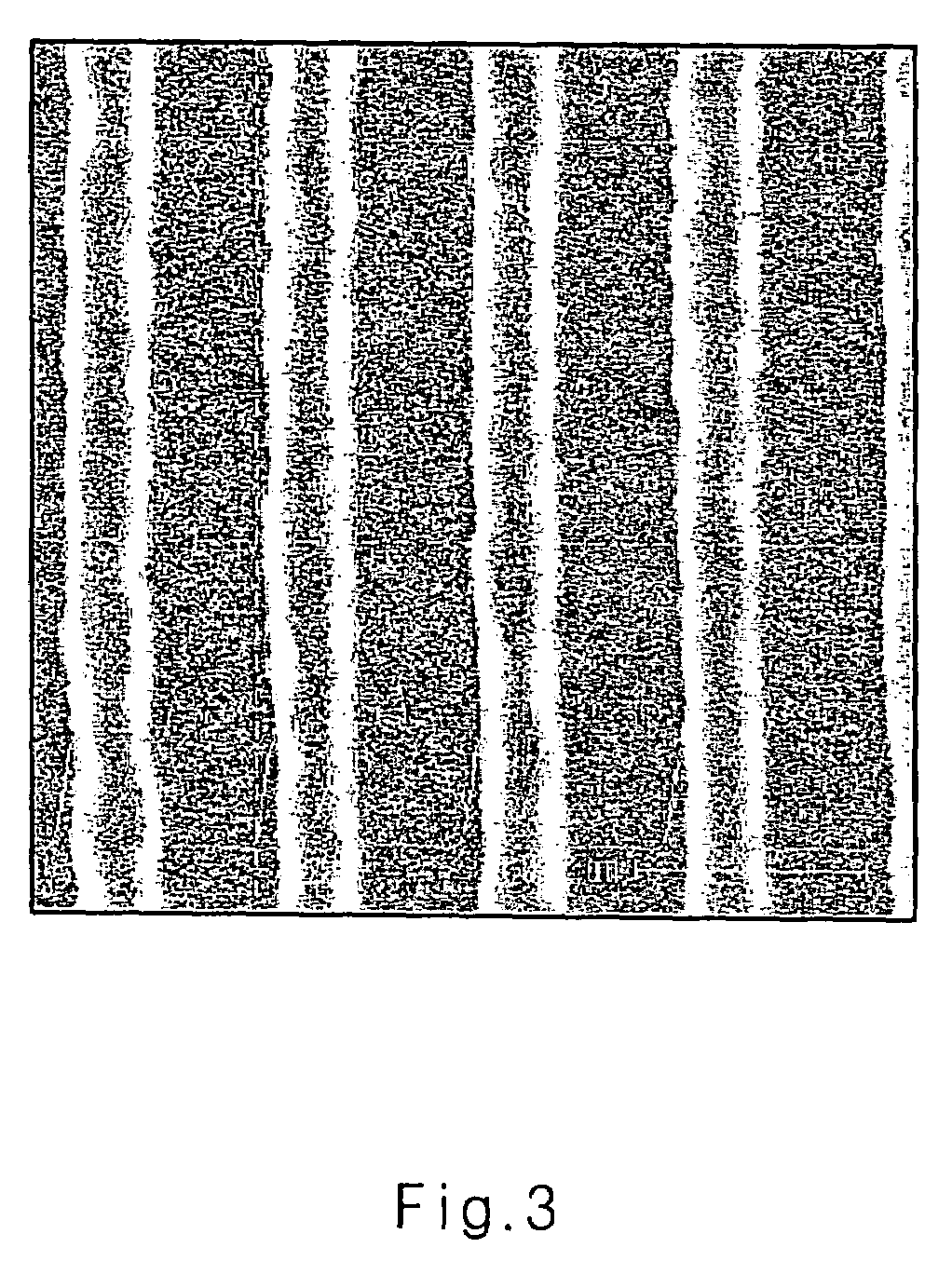
Figure 3
Abstract
Description
BACKGROUND
[0001] 1. Technical Field
[0002] The present invention relates to photoresist polymers and photoresist compositions comprising the same. More specifically, it relates to compounds represented by Formula 1 described herein as photoresist monomers, photoresist polymers containing the same, and photoresist compositions that have excellent transmittance, etching resistance, thermal resistance, adhesive property, and low light absorbance at a wavelength of 13 nanomometers (nm) as well as 193 nm and 157 nm and high affinity to a developing solution, thereby improving line edge roughness (hereinafter, referred to as “LER”).
[0003] 2. Description of the Related Art
[0004] In order to be used as photoresists for ArF and VUV (vacuum ultraviolet), photoresist polymers and photoresist compositions are required to have low light absorbance at wavelengths of 193 nm and 157 nm, excellent etching resistance and adhesive property on the substrate, and to be developed with 2.38 wt % and 2.6 wt % T...
Examples
example 1
Synthesis of Compound of Formula 1b
[0122]0.1M of 2,3,3-trimethyl-1,3-propane sultone was dissolved in tetrahydrofuran anhydride under a nitrogen atmosphere, and 0.1M of NaH was added thereto. The prepared solution was stirred for 10 minutes, and then 0.11M of vinyl bromide was added thereto. The obtained mixture was further reacted at room temperature for 3 hours. After the reaction was completed, the reacted mixture was filtered to remove NaBr. Then, by precipitation of the resulting material in a diethylether / pentane mixed solution, the compound of Formula 1b was obtained (yield: 92%).
example 2
Synthesis of Compound of Formula1c
[0123]The same procedure of Example 1 was performed using 2,2,3,3-tetramethyl-1,3-propane sultone instead of 2,3,3-trimethyl-1,3-propane sultone, and obtained the compound of Formula1c (yield: 96%).
example 3
Synthesis of Compound of Formula 1e
[0124]The same procedure of Example 1 was performed using 1,2,3,3-tetramethyl-1,3-propane sultone instead of 2,3,3-trimethyl-1,3-propane sultone, and obtained the compound of Formula 1e (yield: 92%).