
System and method for control of packet data serving node selection in a mobile internet protocol network
a packet data and network technology, applied in the field of packet data selection of mobile internet protocol network nodes, can solve the problem that network nodes may not be able to locate any available pdsn
Patent Information
- Authority / Receiving Office
- US · United States
- Patent Type
- Patents(United States)
- Current Assignee / Owner
- Publication Date
- 2008-03-18
- Estimated Expiration
- Not applicable · inactive patent
Smart Images
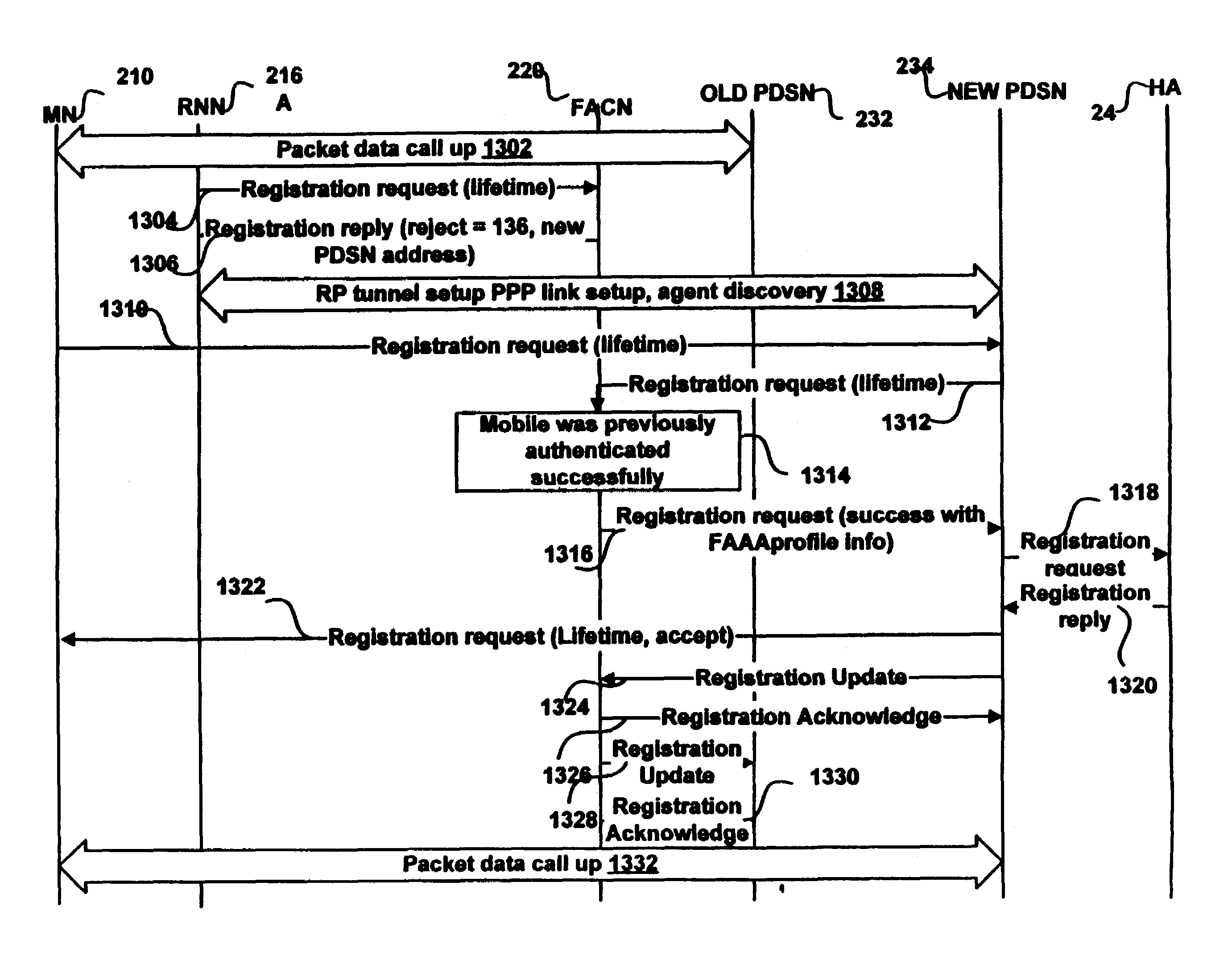
Figure 1 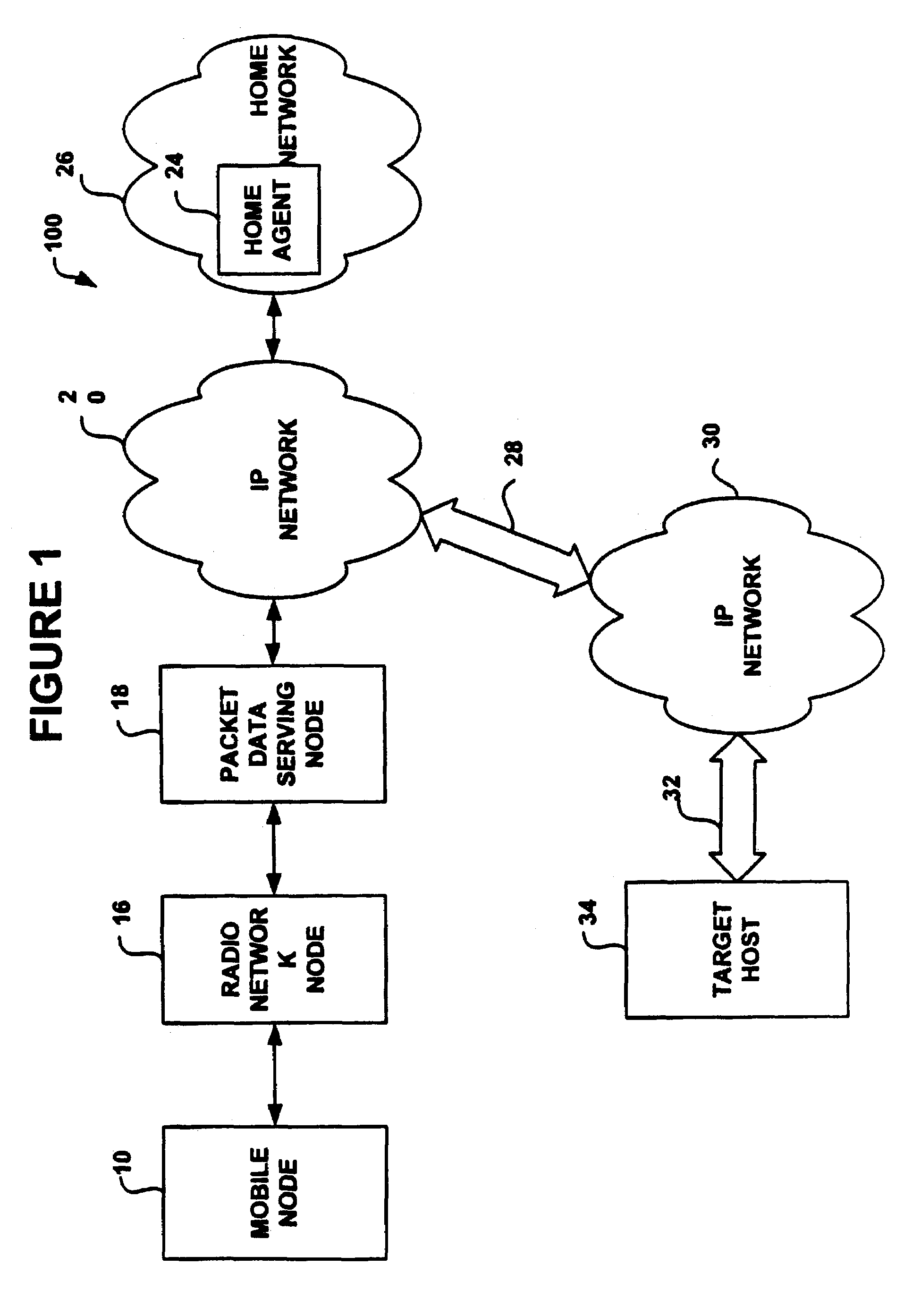
Figure 2 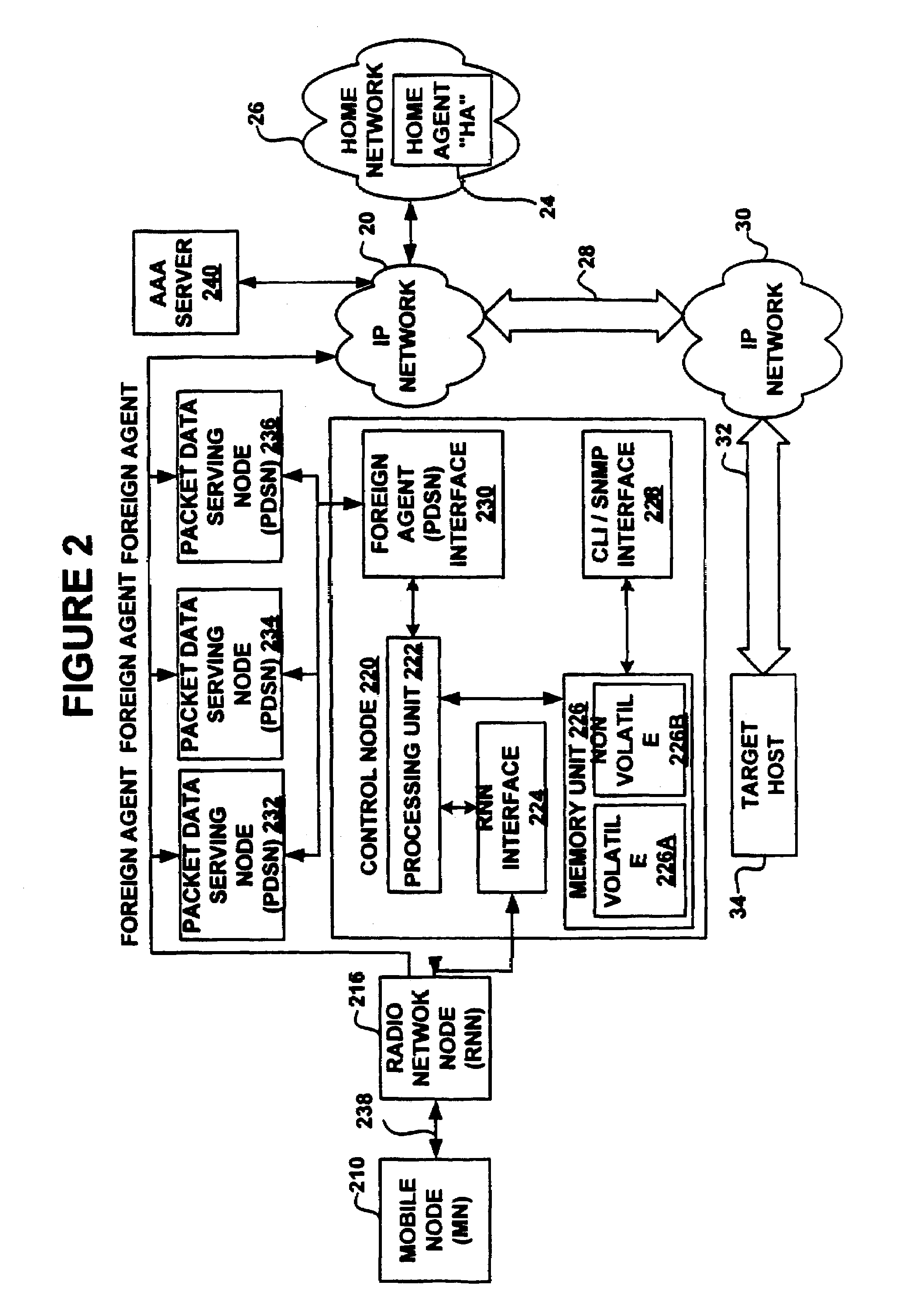
Figure 3
Abstract
Description
FIELD OF THE INVENTION
[0001] The present invention relates to communications in mobile Internet Protocol (“IP”) networks. More particularly, it relates to the selection of packet data serving nodes in mobile IP networks.BACKGROUND OF THE INVENTION
[0002] The Internet Protocol (“IP”) is an addressing protocol designed to route traffic within a network or between networks. The Internet Protocol is used on many computer networks including the Internet, intranets and other networks. Internet Protocol addresses are typically assigned to “immobile” nodes on a network. An immobile node may be moved to a different computer network, but is typically associated with a static physical location (e.g., 3Com Corporation in Santa Clara, Calif.) and an immobile Internet protocol address.
[0003] The Mobile Internet Protocol (hereinafter Mobile IP) allows “mobile” nodes to transparently move between different Internet Protocol sub-networks (“subnets”). Internet Protocol addresses are typically assigned to...
Examples
Embodiment Construction
[0038]FIG. 2 is a functional block diagram illustrating an embodiment of a network architecture suitable for application in a system for selecting foreign agents for mobile nodes in a mobile IP network. FIG. 2 describes network entities typically employed in third generation mobile IP networks; however, it should be understood that the present invention is not limited to the network architecture described hereinafter, and the methods and apparatus described herein may be applied for managing the selection of foreign agents in any existing or later developed mobile IP systems. Referring to FIG. 2, a client device, such as a mobile node 210, communicates with a remote client device, such as the target host 34, on the IP network 30. The mobile node 210 is connected to a first network device, such as a radio node or packet control function (PCF) 216, via a radio connection 238 on a radio access network. In one embodiment, the radio node may include a radio network node (“RNN”), a base s...