

Platen assembly, molding system and method for platen orientation and alignment
a platen and molding technology, applied in the field of mechanical devices, can solve the problems of rework or rejection of molded parts, exacerbate mold wear, and large molds, and achieve the effects of improving mold alignment, improving mold alignment, and increasing the weight of the overall platen design
Patent Information
- Authority / Receiving Office
- US · United States
- Patent Type
- Patents(United States)
- Current Assignee / Owner
- Publication Date
- 2010-07-13
Smart Images
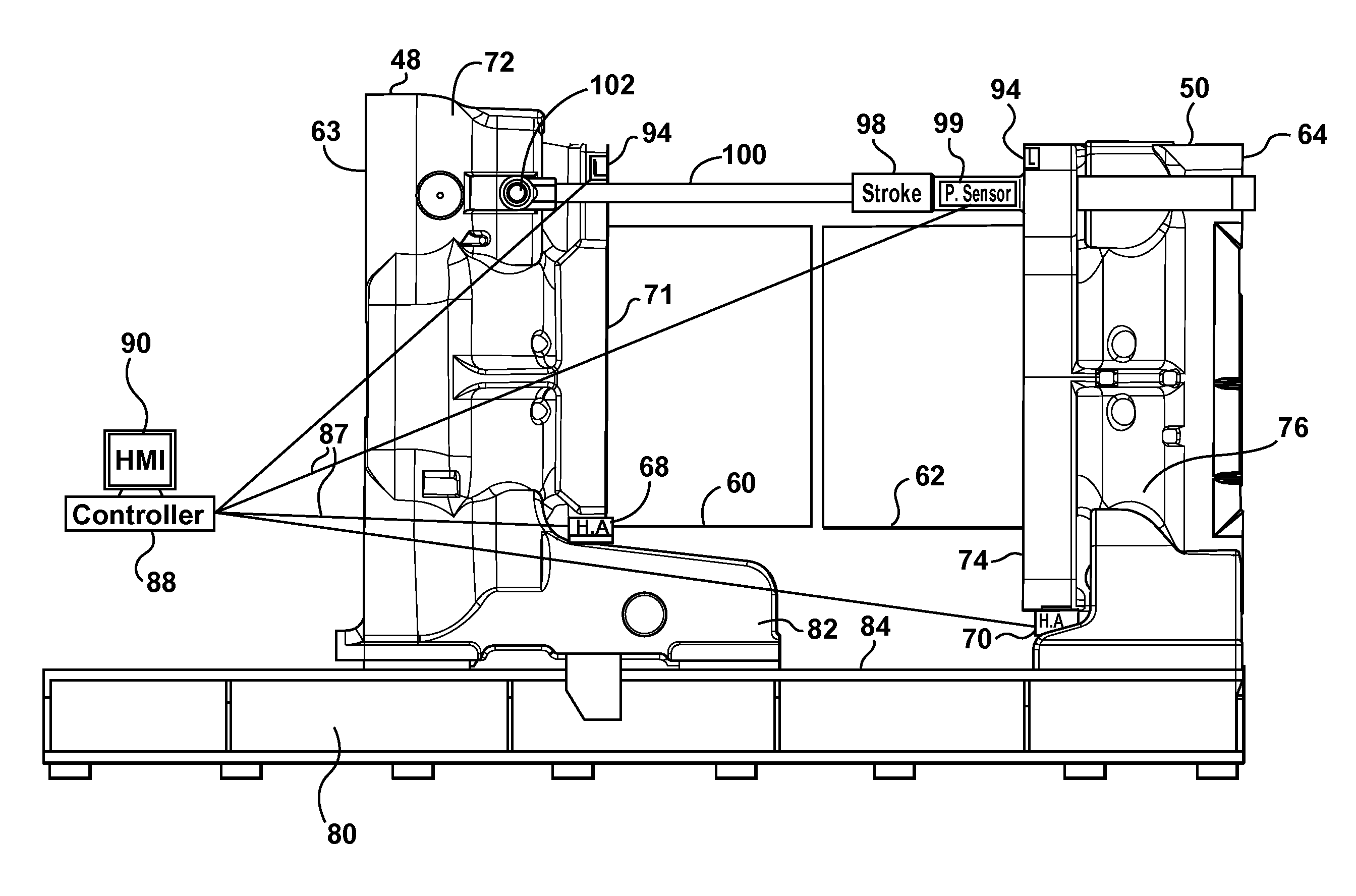
Figure 1 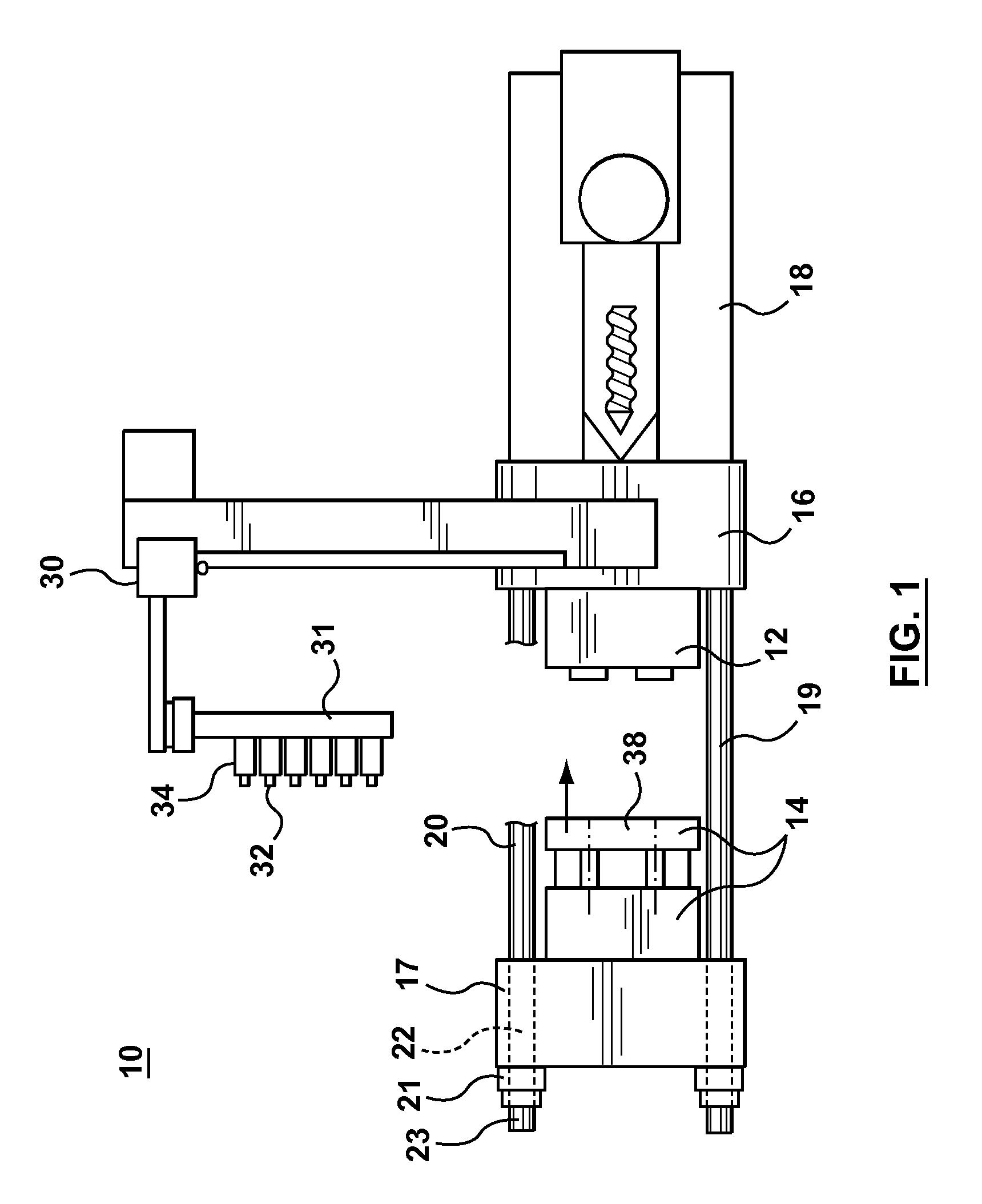
Figure 2 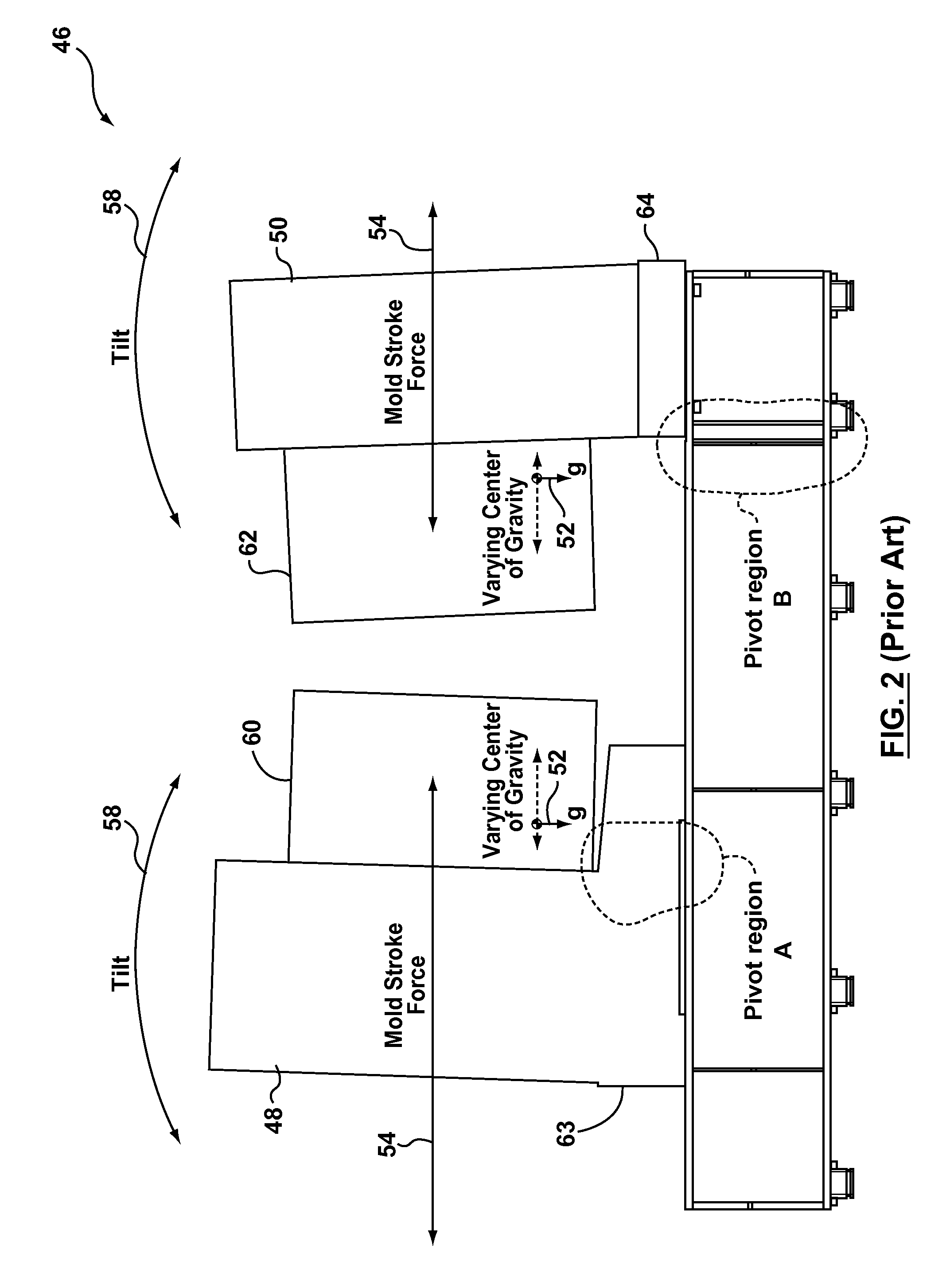
Figure 3
Abstract
Description
FIELD OF THE INVENTION
[0001] This invention relates, in general, to a platen onto which is mounted (within a molding machine environment) a mold. More particularly, but not exclusively, the present invention relates to a mechanism for platen alignment and orientation and to an ability to compensate for platen tilting caused by different mold masses and / or the application of dynamically varying mold stroke forces during clamping cycles.SUMMARY OF THE PRIOR ART
[0002] During the course of the life of an injection molding machine, it is not unreasonable to assume that the machine will be used to produce many different products from multiple different molds having different mold masses. Each mold contains a hot half and a cold half, with these complementary mold halves installed opposite each other on either a stationary platen and a moving platen. In order to permit the effective molding of parts, it is necessary for these mold halves to be securely attached to the platens and accurately ...
Examples
Embodiment Construction
[0035]FIG. 1 shows a typical injection molding machine 10 that can be adaptable to support platen anti-tilt mechanism according to the various embodiments of the present invention.
[0036]Like conventional machines, during each injection cycle, the molding machine 10 produces a number of plastic parts corresponding to a mold cavity or cavities defined by complementary mold halves 12, 14 located within the machine 10.
[0037]Since platen tilting is particularly problematic with heavy molds with large overhanging regions (extending outwardly of the mold mounting faces), the molding machine can be considered (for reasons of explanation only and without limitation) to be a large tonnage molding machine supporting a mold that is in excess of 20 tons and more typically a mold having a mass in the region of between about 40 tons to 100 tons.
[0038]FIG. 1 is shown for exemplary purposes as a two-platen system, although it could be a three-platen system or a molding system containing a centre-sec...