
Silicon composite particles, preparation thereof, and negative electrode material for non-aqueous electrolyte secondary cell
a technology of composite particles and negative electrodes, which is applied in the direction of non-metal conductors, cell components, meat/fish preservation by irradiation/electric treatment, etc., can solve the problems of poor cycle performance and most of them have not reached the practical level, and achieve good cycle performance
Patent Information
- Authority / Receiving Office
- US · United States
- Patent Type
- Patents(United States)
- Current Assignee / Owner
- Publication Date
- 2010-09-07
Smart Images
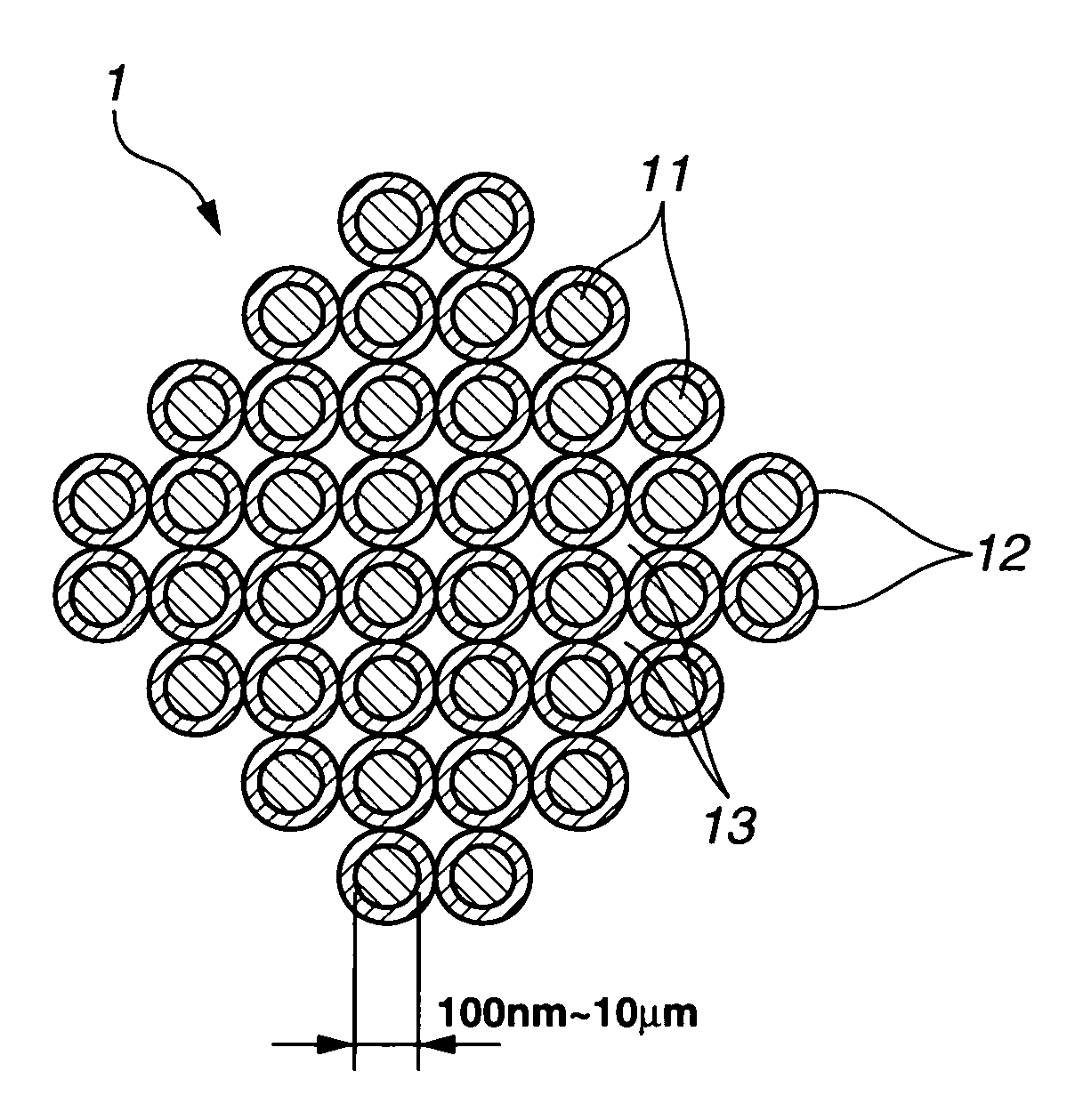
Figure 1 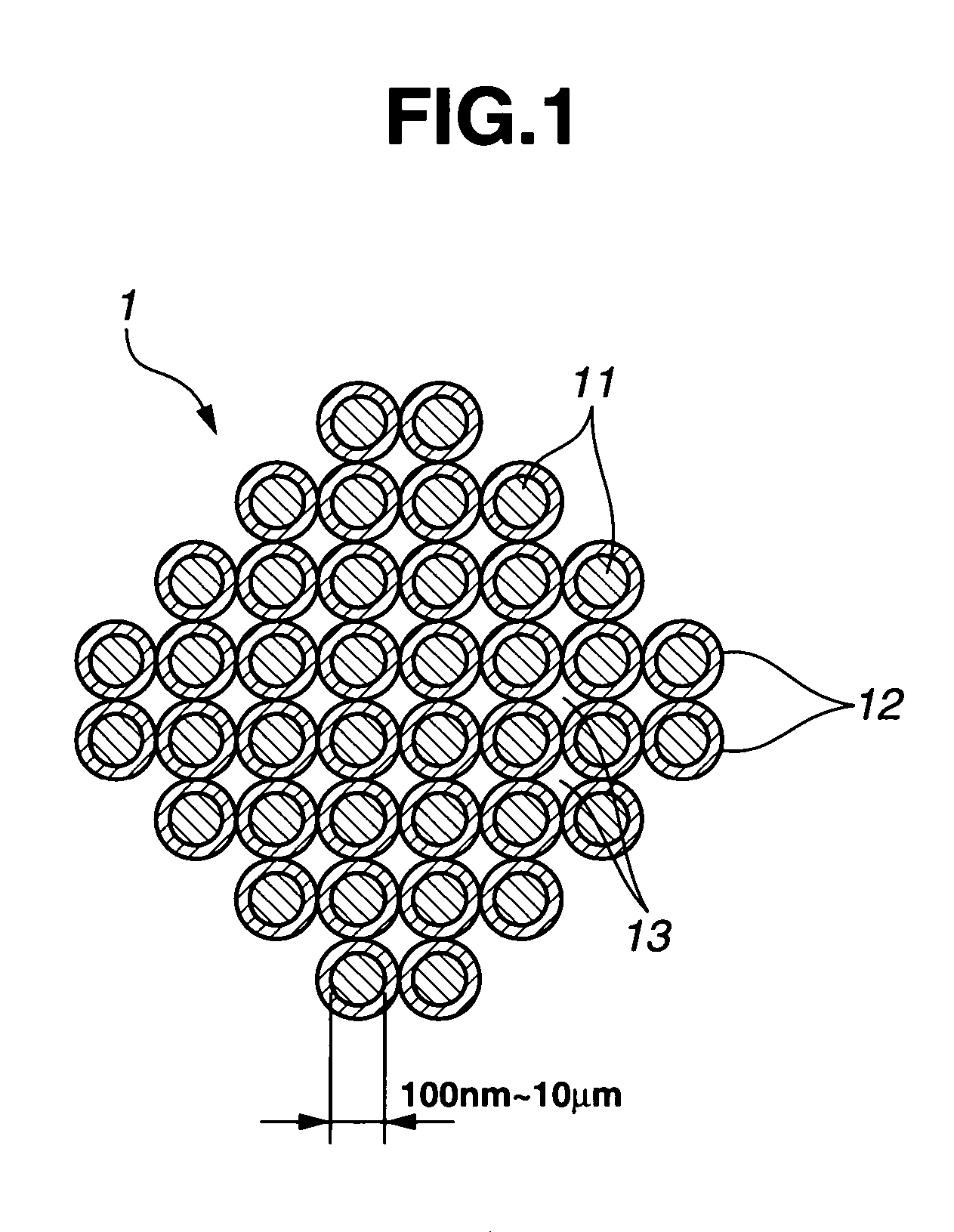
Figure 2 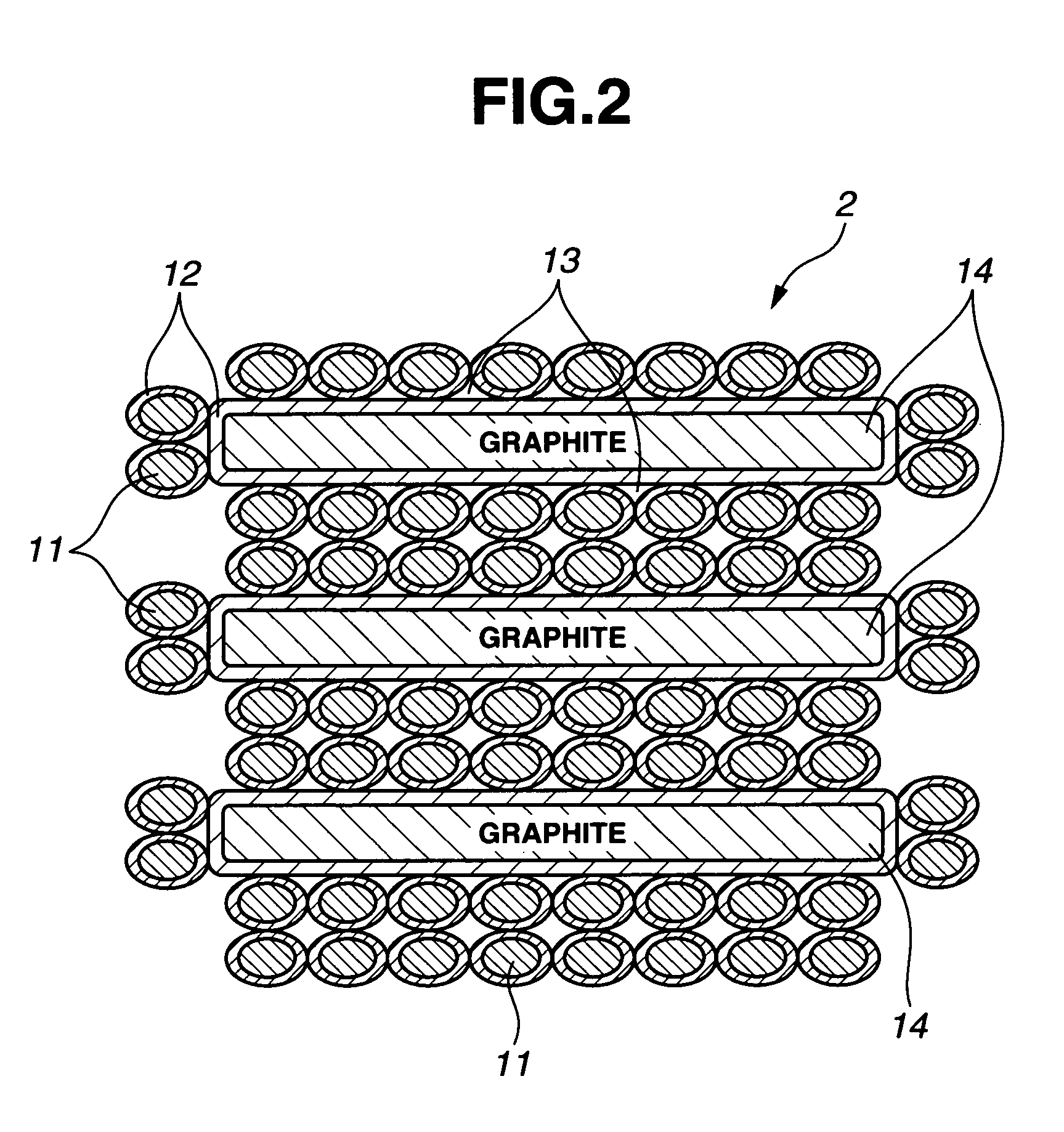
Figure 3
Abstract
Description
CROSS-REFERENCE TO RELATED APPLICATION
[0001] This non-provisional application claims priority under 35 U.S.C. §119(a) on Patent Application Nos. 2004-093074 and 2004-093169 filed in Japan on Mar. 26, 2004 and Mar. 26, 2004, respectively, the entire contents of which are hereby incorporated by reference.
[0002] This invention relates to silicon or silicon-carbon composite particles useful as a high capacity, negative electrode active material in lithium ion secondary cells, a method for preparing the same, and a negative electrode material for use in non-aqueous electrolyte secondary cells.BACKGROUND OF THE INVENTION
[0003] With the recent rapid progress of potable electronic equipment and communication equipment, secondary batteries having a high energy density are strongly desired from the standpoints of economy and size and weight reduction. Prior art known attempts for increasing the capacity of such secondary batteries include the use as the negative electrode material of oxides of V...
Examples
example 1
[0099]Metallic silicon of chemical grade (low Al silicon available from SIMCOA Operations Pty. Ltd., Australia, Al 0.05%, Fe 0.21%, Ca 0.003%) was crushed on a jaw crusher, and milled on a ball mill and then a bead mill using hexane as a dispersing medium until fine particles having an average particle size of about 1 μm were obtained. By passing the resulting suspension through a filter, removing the solvent in a nitrogen atmosphere, and cutting off a fraction of coarse particles by a pneumatic precision classifier (Nisshin Engineering Co., Ltd.), a powder having an average particle size of about 0.8 μm was obtained. To 100 g of the silicon fine particles were added a curable siloxane composition comprising 12 grams (g) of tetramethyltetravinylcyclotetrasiloxane (LS-8670, Shin-Etsu Chemical Co., Ltd.), 8 g of methylhydrogensiloxane (KF-99, Shin-Etsu Chemical Co., Ltd.) and 0.1 g of a platinum catalyst (1% chloroplatinic acid solution), and 30 ml of hexane. The mixture was fully mix...
example 2
[0105]Metallic silicon of chemical grade (low Al silicon available from SIMCOA Operations Pty. Ltd., Australia, Al 0.05%, Fe 0.21%, Ca 0.003%) was crushed on a jaw crusher, and milled on a ball mill and then a bead mill using hexane as a dispersing medium until fine particles having an average particle size of about 1 μm were obtained. The resulting suspension was passed through a filter, and the content of hexane was measured in this state. Based on this result, an amount of the patty silicon-hexane mixture corresponding to 100 g of silicon fine particles was metered. To the patty silicon-hexane mixture was added a curable siloxane composition comprising 12 g of tetramethyltetravinylcyclotetrasiloxane (LS-8670, Shin-Etsu Chemical Co., Ltd.), 8 g of methylhydrogensiloxane (KF-99, Shin-Etsu Chemical Co., Ltd.) and 0.1 g of a platinum catalyst (1% chloroplatinic acid solution). The mixture was fully mixed in patty form. The mixture was then dried and pre-cured at 60° C. and cured at 2...
example 3
[0108]100 g of metallic silicon of chemical grade (grade HG available from ELKEM, Norway, Al 0.10%, Fe 0.04%) and 1 g of divinyltetramethyldisilazane were weighed and placed in a closed container. After thorough mixing, the mixture was heated at 100° C. for one hour for silylation. The thus surface treated silicon powder, 100 g, was weighed and subsequently processed as in Example 1. There were yielded silicon composite particles (content of zero-valent silicon fine particles: 89% by weight, void content: 32% by volume as determined from a specific gravity measurement).
[0109]It was evaluated as the negative electrode active material for a lithium ion secondary cell as in Example 1. The results are shown in Table 1.